Varanasi, Part III

Wednesday, January 20 was our second full day in Varanasi.  Luckily it stopped raining so we were able to wander outside to the famous Ghats.  All the must see’s and must do’s are always great but for me, it’s observing the local people in their everyday ways that really wins my heart over.  No matter how rich or poor, skinny or fat, pretty or ugly, nice or mean one might be, seeing them in their zone is what helps me understand a culture on a whole new level.

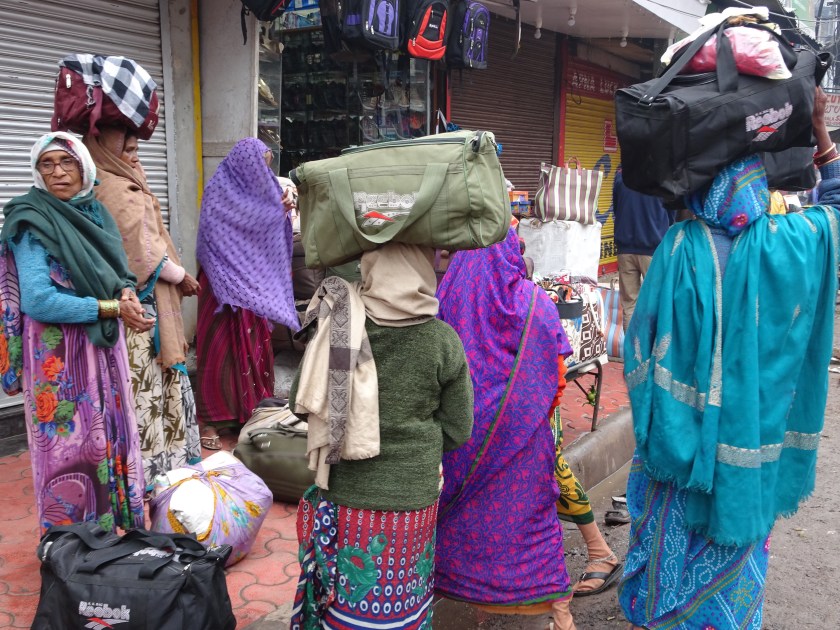
As we were walking around, I did just that (obviously in a way that didn’t get me hit by a car, trip over a goat, step in cow poop, etc.).  I tried to capture a few images that might help you envision what we are seeing:

A shoe repair man…

DSC00601.jpg

Just two buddies watching people people watch…

DSC00607.jpg

A true balancing act…

DSC00602.jpg

Prayer circle…

DSC00678.jpg

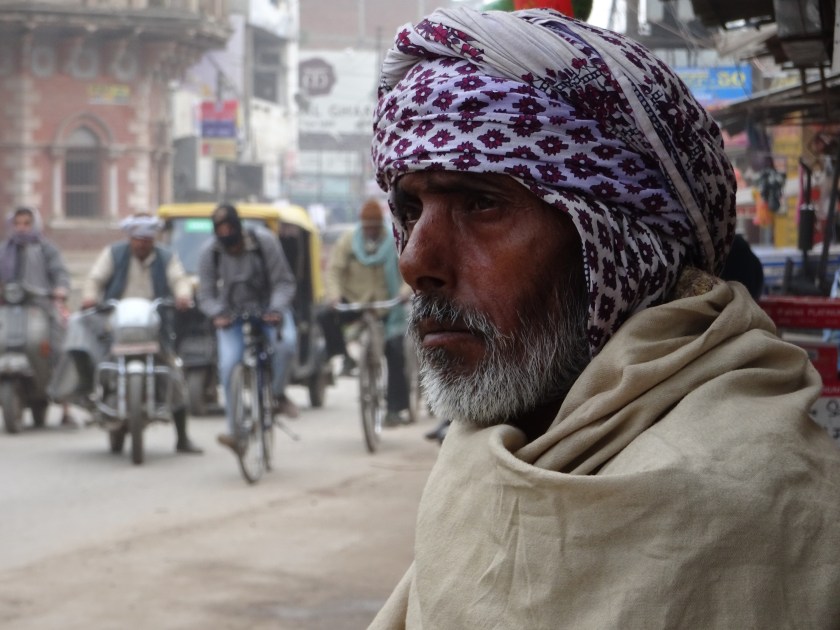
A man focused on everything and nothing…
DSC00756.jpg

The infamous Cobra music player…

DSC00705.jpg

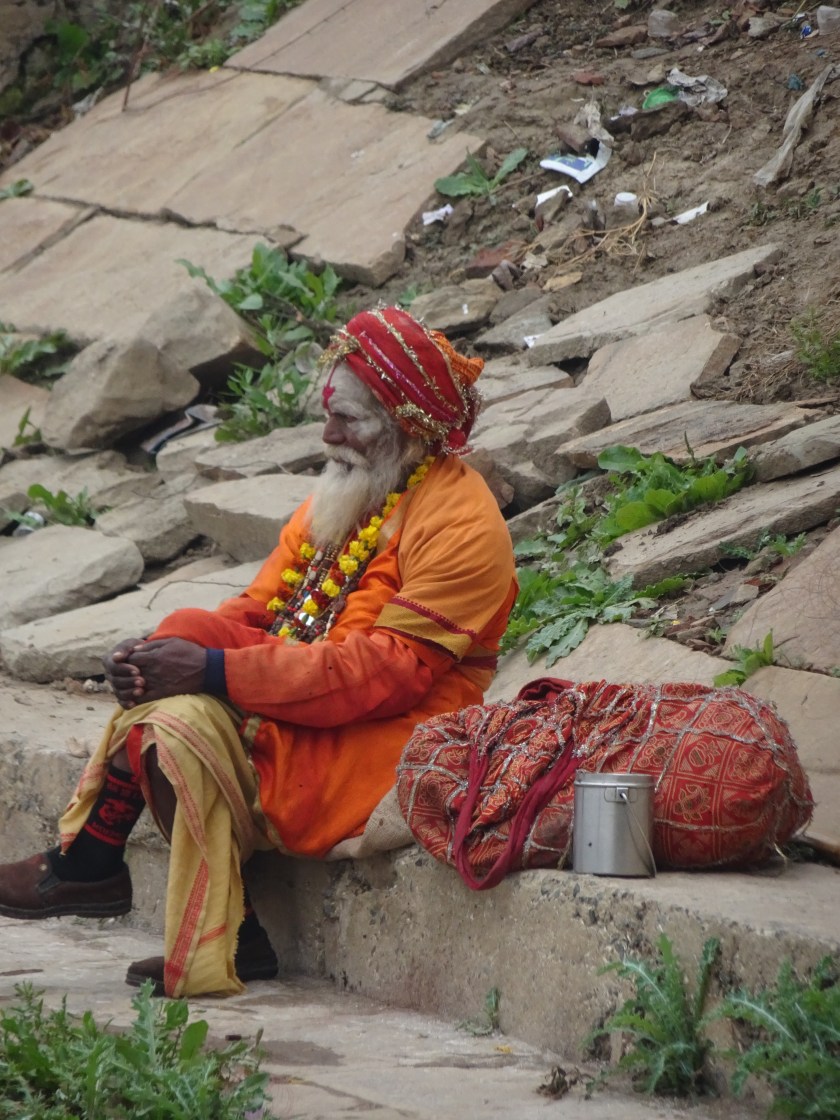
And my favorite of all, just chillaxin…
DSC00693.jpg

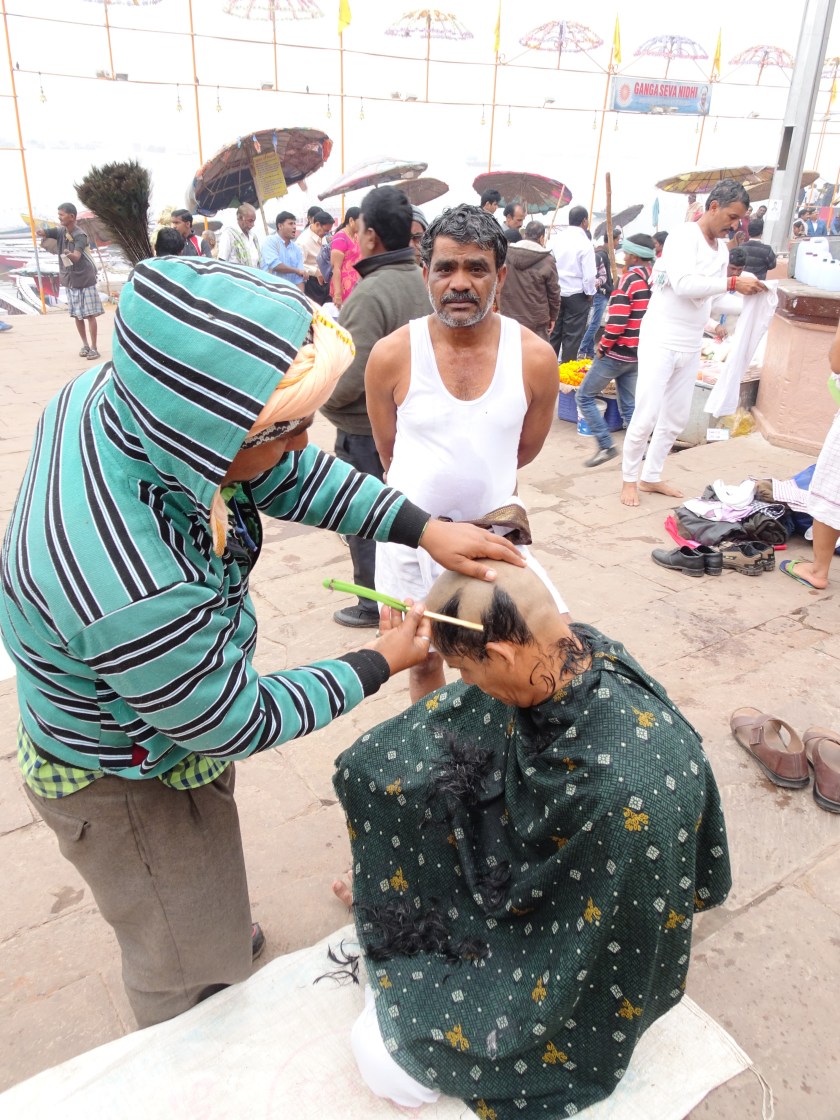
Once we approached the main Ghat, Dashashwamedh, we stood at the top of the stairs and just watched as this is the main artery to the heavily beating heart.  Some people were getting their heads shaved on a random step, some were getting their beards trimmed, some were begging for money, some were performing morning Hindu rituals, some were asking “want boat ride, very very cheap”, some were minding their own business (always love these kind of people).
DSC00605.jpg

DSC00703.jpg

DSC00639.jpg

DSC00638.jpg

We took about an hour or so walk along the Ghats and as mentioned before, there are hundreds of them, all having steps that lead down the Ganges River.  The Ghat that touched us the most was the cremation ghat, as you can imagine.  This was an extremely powerful, out of body, surreal, eerie experience.  There are only two in total, Harishchandra and Manikamika, and both operate 24 hours a day, 7 days a week, rain or shine, cold or hot.   It is a true moment of where you’re willingly face to face with death.  Piles of firewood line the shore and the fires continually burn one body at a time. The process that we witnessed is as follows:

They bring the body down on what looked like a handmade wood stretcher.  The deceased is dressed in new clothes and covered with flowers and garlands, which I’m sure have all been blessed.  While the family members start to build the pile of wood, the body lies partially in the Ganges River, waiting for their final step in reaching Moksha.  Once the pile of wood is perfectly formed, they put the body on top then add more wood, eventually covering everything except for the feet and head. The chief mourner, who is usually the oldest son (not sure what they do if there are no sons), walks five times around the body to represent the five elements of life – fire, earth, water, air and ether.  He sprinkles Ganga water across the body, puts some sandalwood on it and then lights the fire.  To burn a body, about 360 kg of wood is needed and the cremation lasts for three hours, give or take a few.  This isn’t for everyone to see as it definitely gives you the chills but we thought, when in Varanasi…

Something we noticed was that only men were down by the body during the cremation ceremony.  We later asked Mayur why this was and learned that women are too sensitive (say whatttt? that can’t be true) and when one cries, the soul of the deceased will cling on to them and it could interrupt their reincarnation process.  Wow.  Families don’t view dying as a sad thing here.  Instead they view it as a positive and hope their relatives make it to Nirvana.  I’m still trying to comprehend it all.  I have a few photos, which I later learned was not allowed, but to be respectful to the family and the deceased, I will not post.

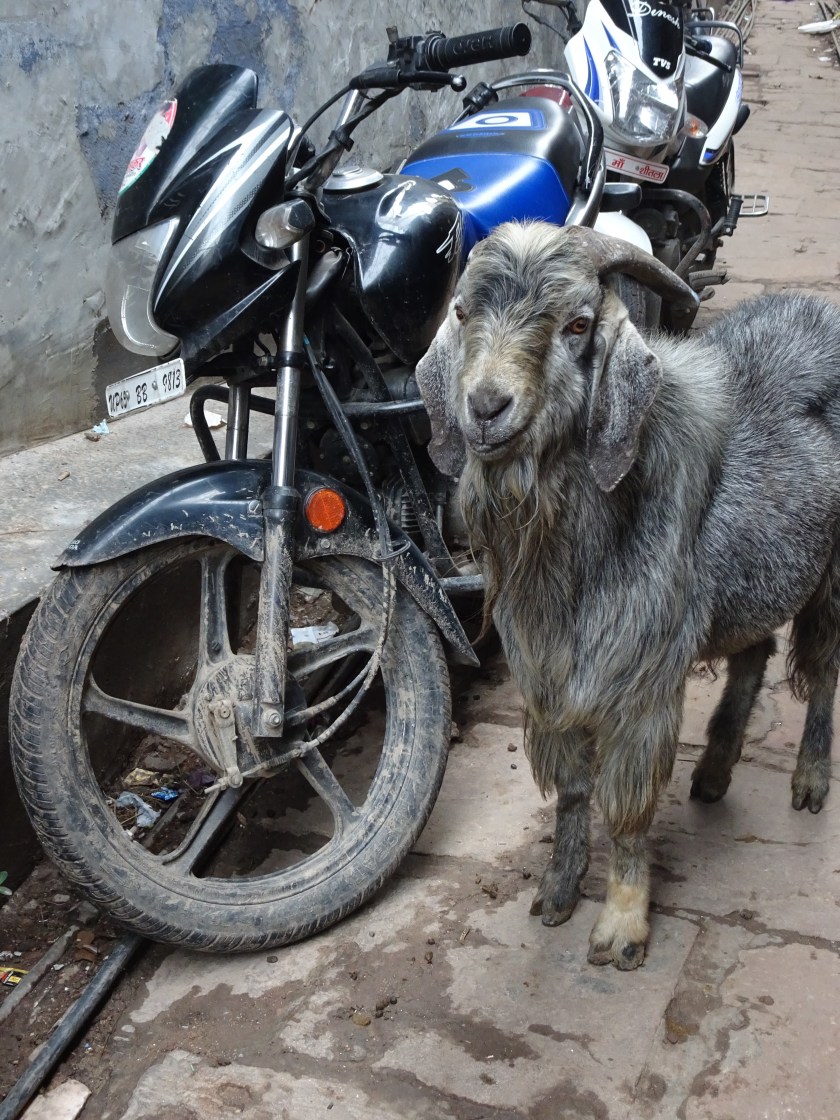
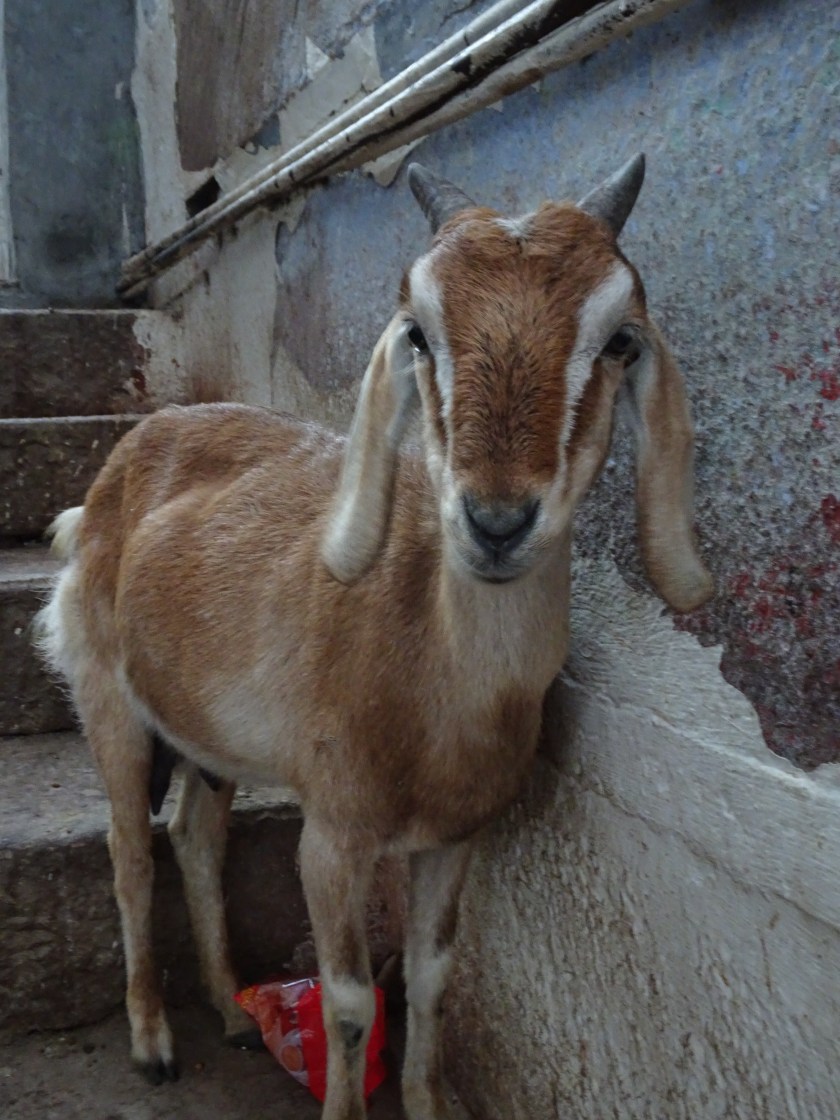
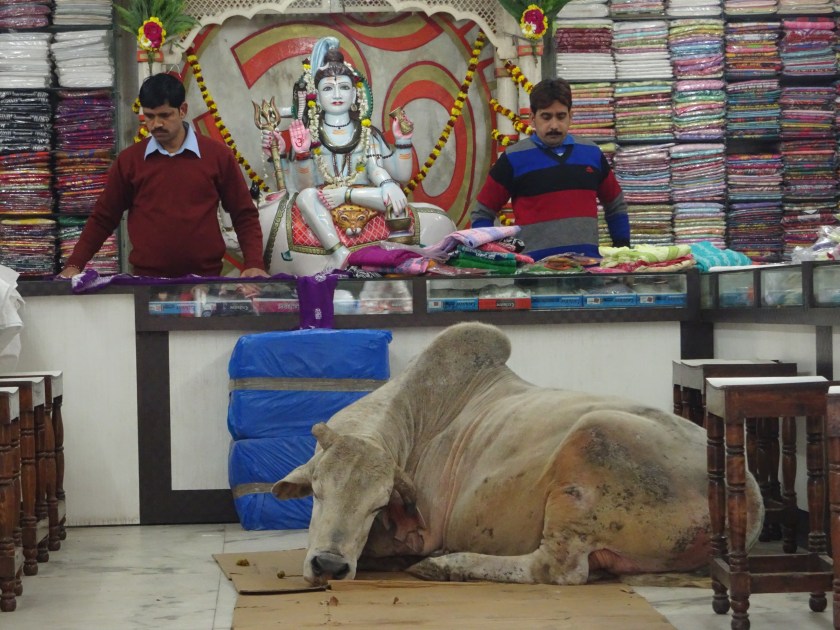
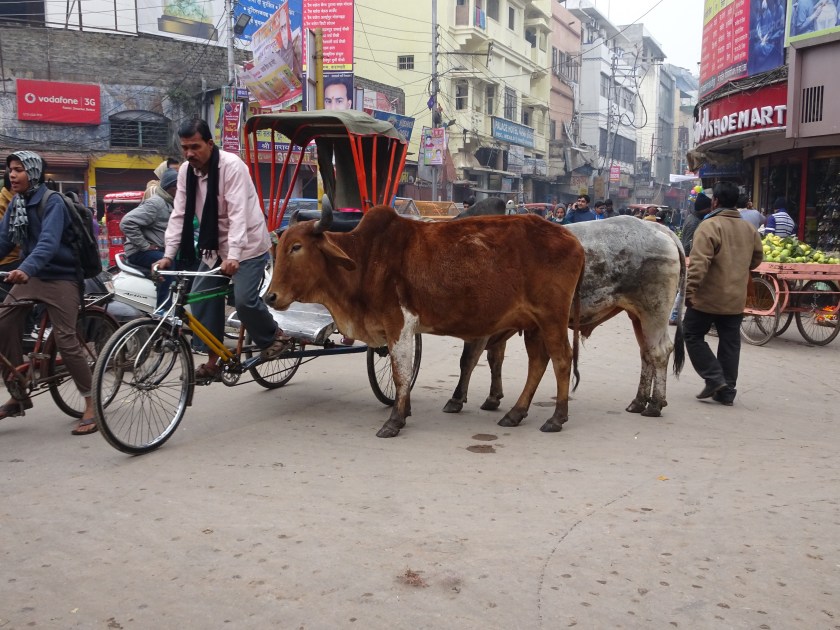
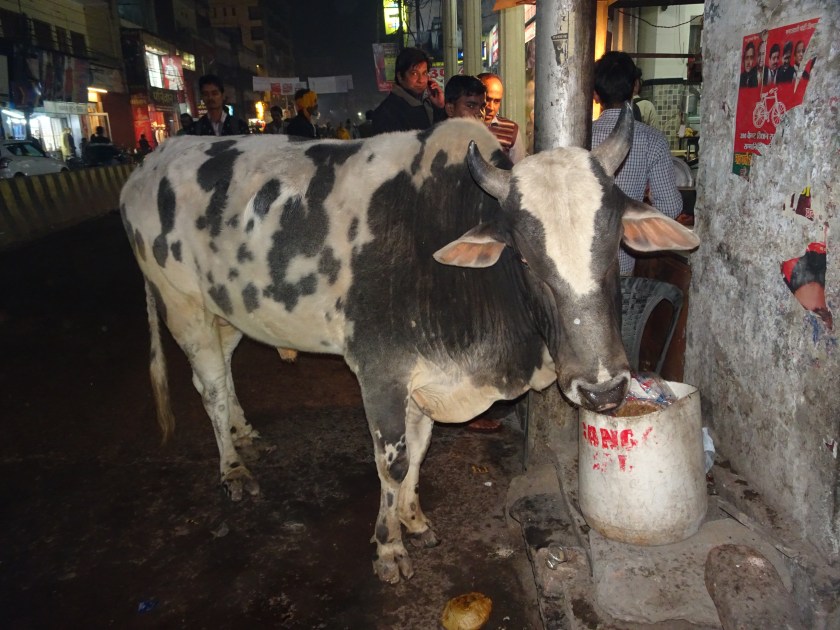
Wherever you go in Varanasi, whether it’s the main street or random back alleys or the Ghats, there are animals everywhere.  Eating, sleeping, chilling, trying to survive.  Since this is such a holy city, killing the animals for food isn’t an option so they multiple by the minute and there’s really no where for them to go.

Goats all over the place…

DSC00716.jpg

DSC00721.jpg

DSC00519.jpg

DSC00518.jpg

Cows all over the place…

DSC00612.jpg

DSC00723.jpg

DSC00684.jpg

DSC00599.jpg

And even some pigs…

DSC00769.jpg

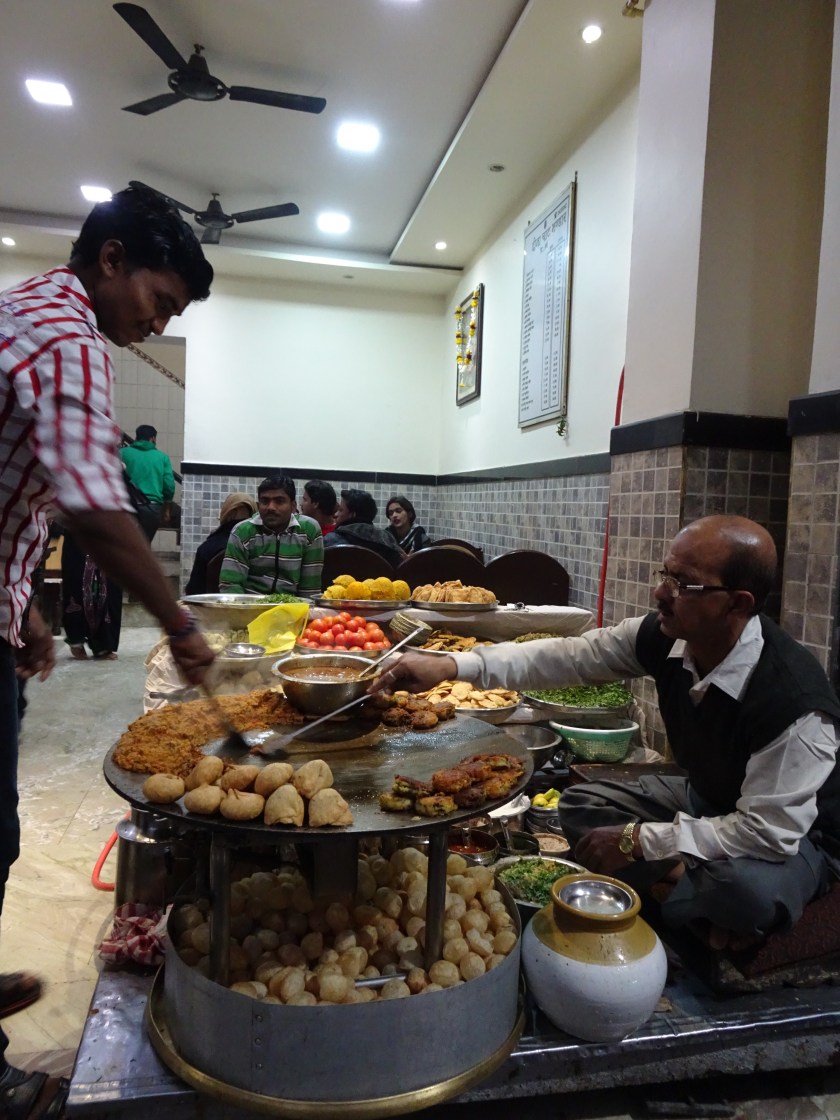
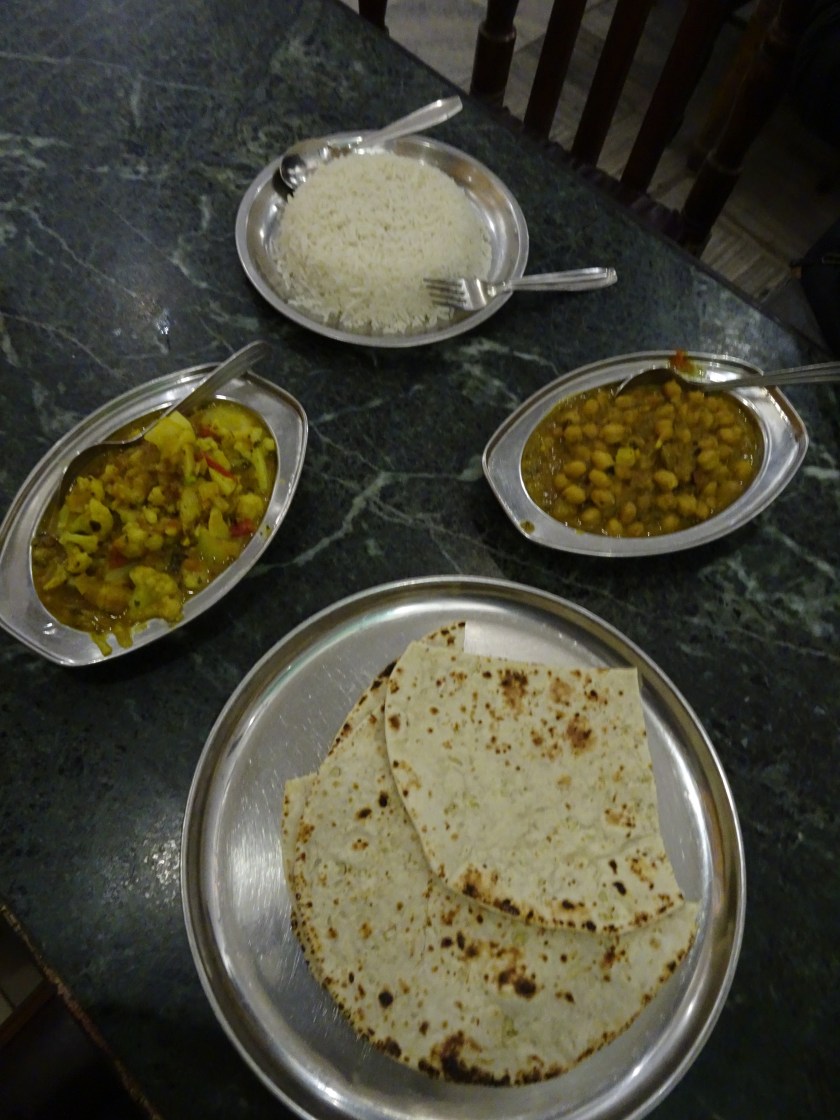
At night, we walked to a restaurant called Shree Cafe, which was back towards the main Ghat and had yummy food for only 350 rupees (a little over $5).  Can’t go wrong.  Well, I take that back.  You can go wrong since this is India and food sickness is quite common.  But I think we are good for now.
DSC00725.jpg

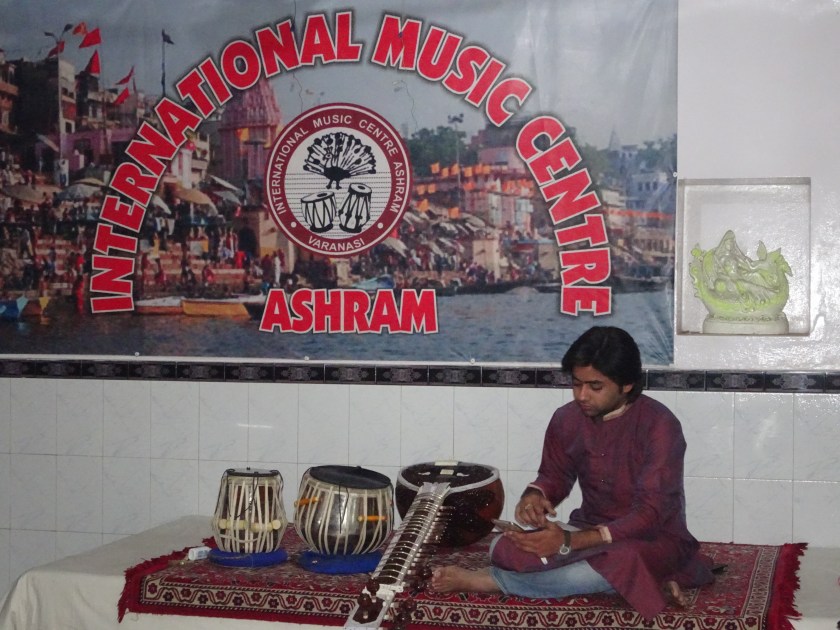
After dinner, we went to the International Music Centre Ashram and listened to live music.  This was a recommendation from Mayur, the Granny’s Inn host, and it was a great one indeed.  It was a small room, probably no more than 20 people, some sitting on a few benches and some sitting on the white blanketed floor (had to remove your shoes to sit there).  There were two men on stage, one playing the Sitar and one playing the bongos.  They performed for about an hour and a half, with a 5 minute intermission where they served the audience black lemon tea. Nice little touches to say “Namaste, we care about you”.  It sure was a peaceful break from all the noise outside to just sit down, listen to fabulous music and think about whatever you wanted, even if it was nothing at all.  This was Vinny’s jam (no pun intended, well maybe intended).  Going here really brought a smile to his face, which in turn, brought a smile to my face 🙂
DSC00732.jpg

Varanasi, Part II

Tuesday, January 19 was our first full day in Varanasi.  We woke up at 5am to take a boat ride along the Ganges River and see the Ghats at sunrise.  Unfortunately, it was raining so there was no rising of the sun but it was still fascinating.  There are hundreds of different Ghats throughout Varanasi, all serving a different purpose.  This was the first time we’ve seen them so it was great to get one perspective on the water then hopefully go back later and get a different perspective on the ground.

DSC00443.jpg

DSC00497.jpg

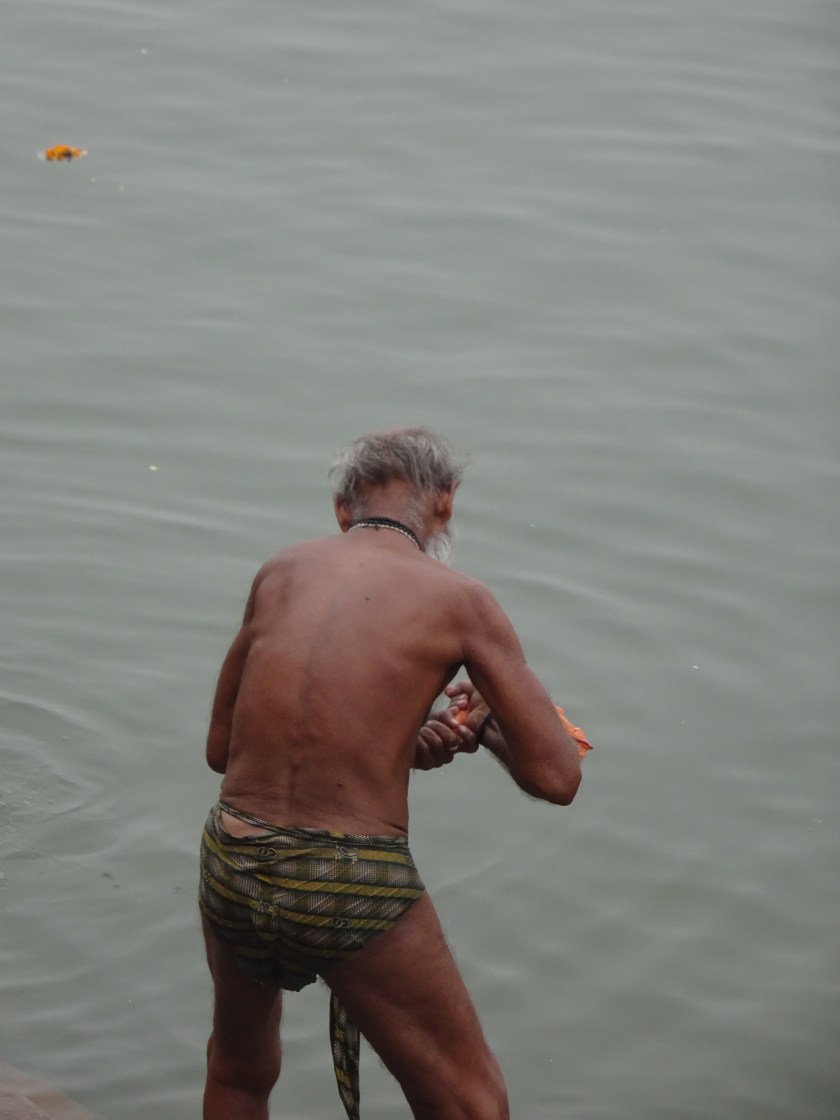
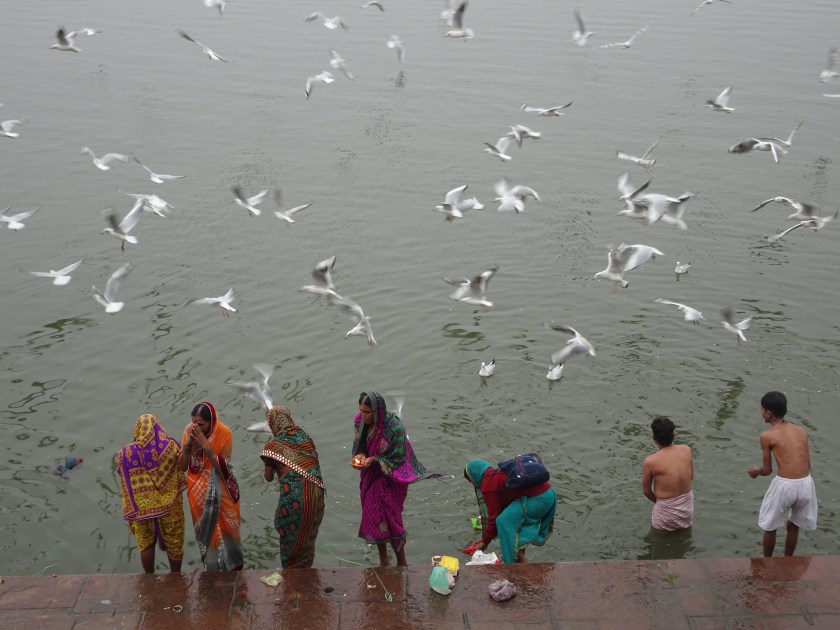
Hindus bath in the river (although it is beyond dirty from a non Hindu viewpoint) to wash away all of their sins.  Some just wash their bodies with soap and others have a spiritual ritual that they perform each and every time. I noticed a few people plug their nose and dip quickly about 3 or 4 times chanting a prayer at the same time.  Talk about multi-tasking.  Religion has always been so interesting to me even though I wasn’t raised religious.  The fact that people believe so much in something and devote their whole lives to honoring that higher power is impressive.  And no other place in the world is more holy than Varanasi for the Hindus so to see it first hand is indescribable.

DSC00507.jpg

DSC00615.jpg

DSC00609.jpg

DSC00673.jpg

Around 12pm, a man name Shukla (people call him Chocolate since most can’t pronounce his name correctly), who is the Granny’s Inn tuk-tuk driver, took us to a town about 10 kilometers from Varanasi called Sarnath.  Sarnath is where Gautama Buddha gave his first sermon after he attained enlightenment. It is where Buddhism was founded.  I mean, it doesn’t get any cooler than that. On the day before his death, Buddha included four places he thought to be sacred to his followers and three of the four are right here in India:

  1. Lumbini, Nepal – his birthplace
  2. Bodh Gaya, India – where he attained enlightenment
  3. Sarnath, India – where he delivered his first teaching
  4. Kushinagar, India – where he died

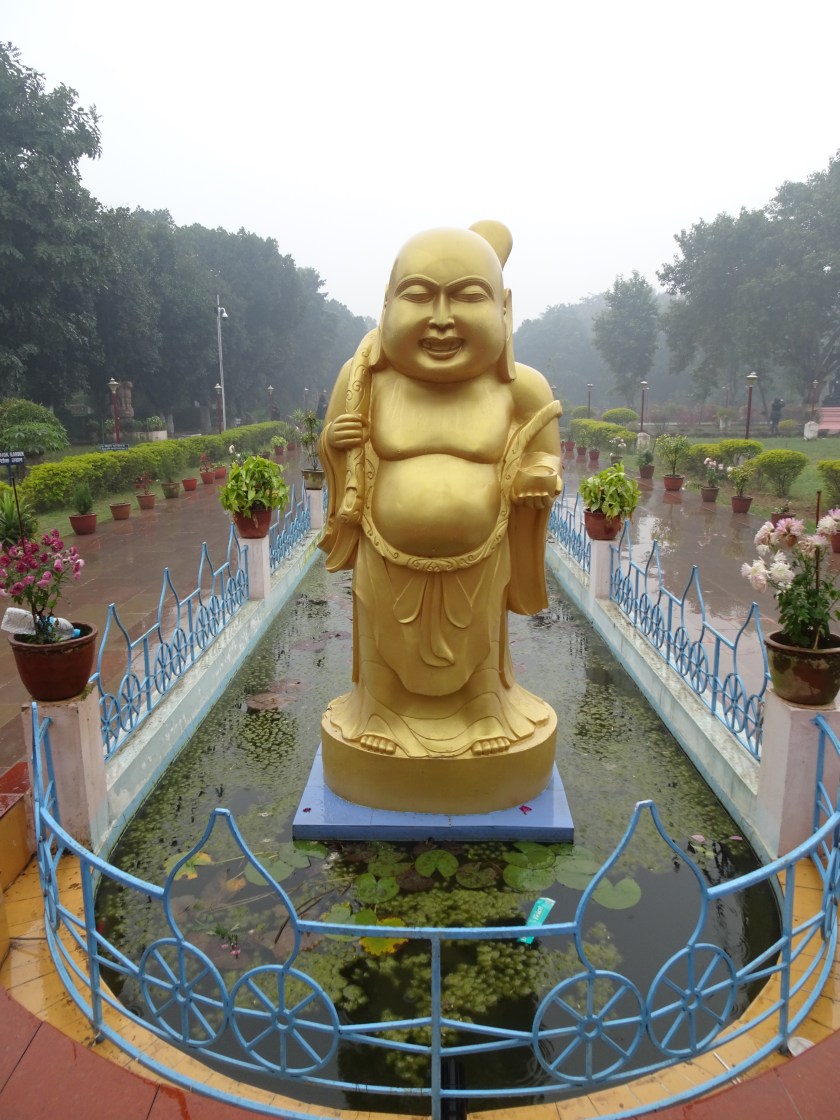
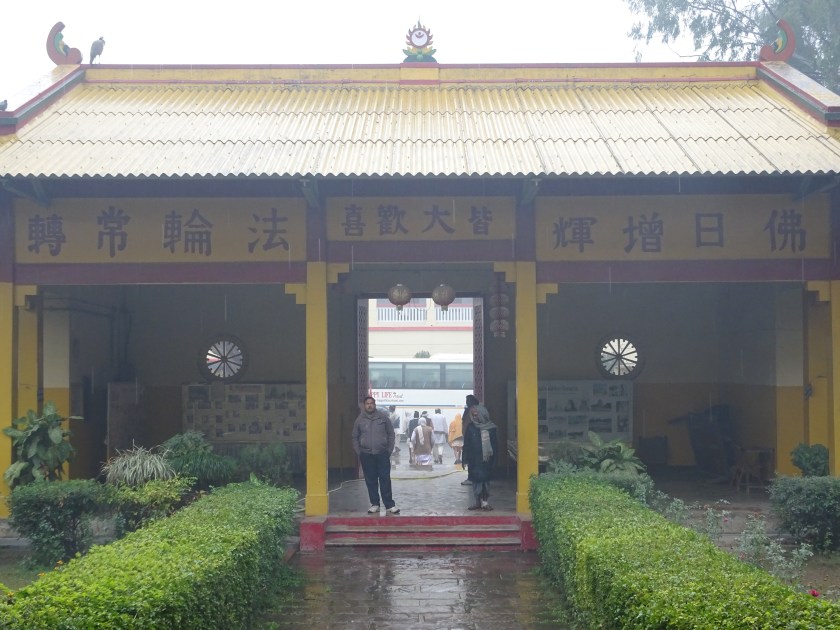
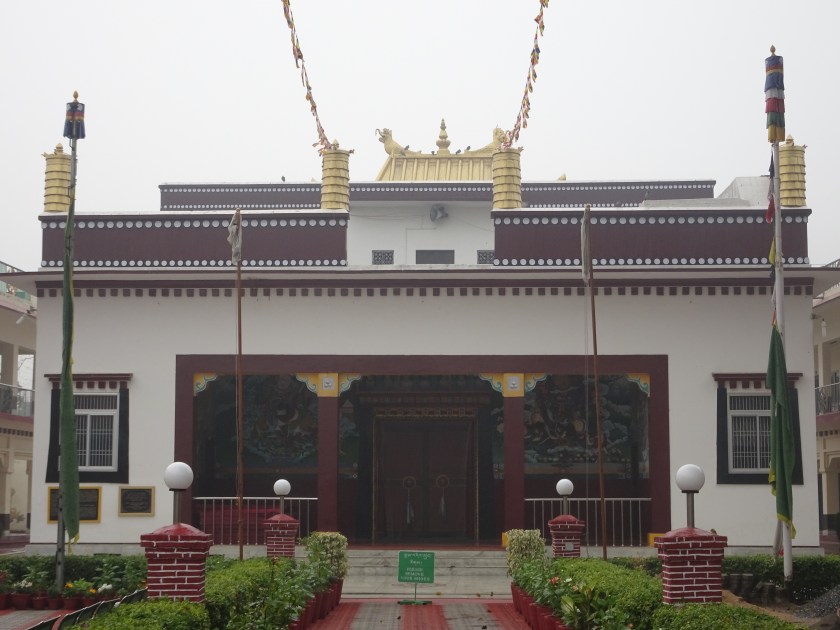
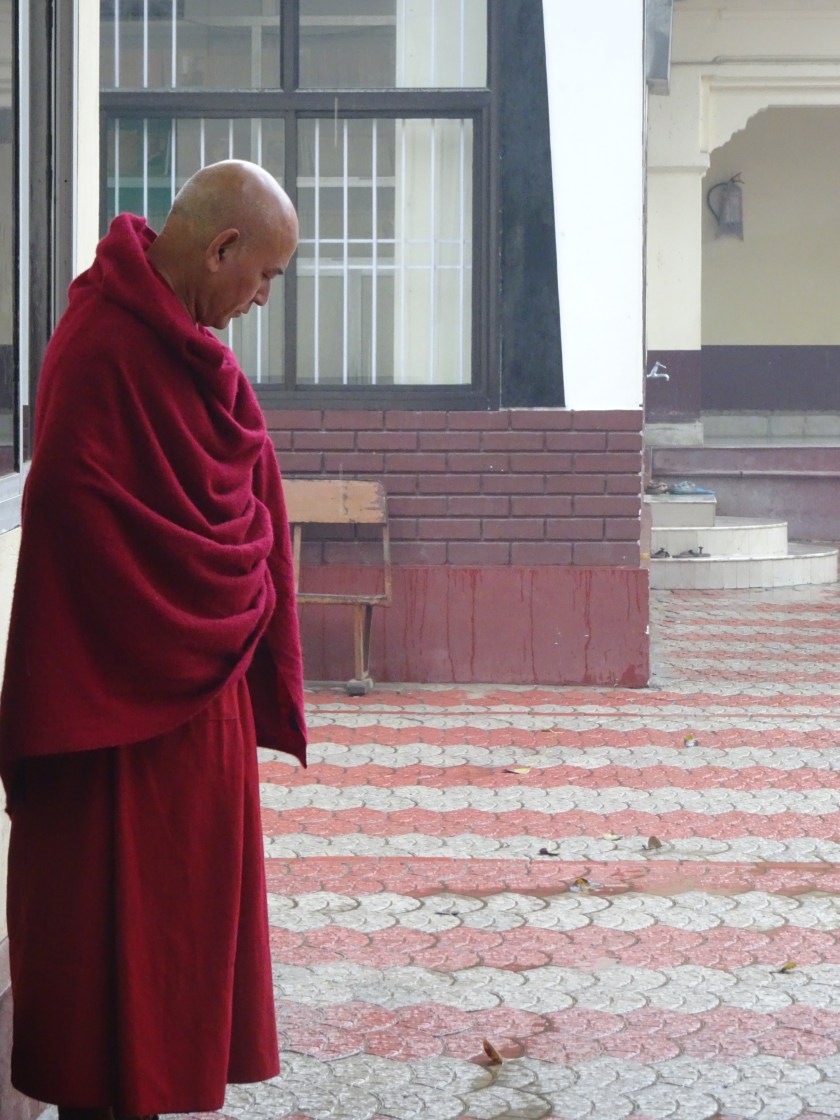
We visited a few different Buddhist Temples from around the world in Sarnath since the whole town is dedicated to Buddhism.

Thai Buddhist Temple…

DSC00542.jpg

DSC00555.jpg

Japanese Buddhist Temple…

DSC00577.jpg

Chinese Buddhist Temple…

DSC00558.jpg

DSC00556.jpg

Tibetan Buddhist Temple…

DSC00584.jpg

DSC00588.jpg

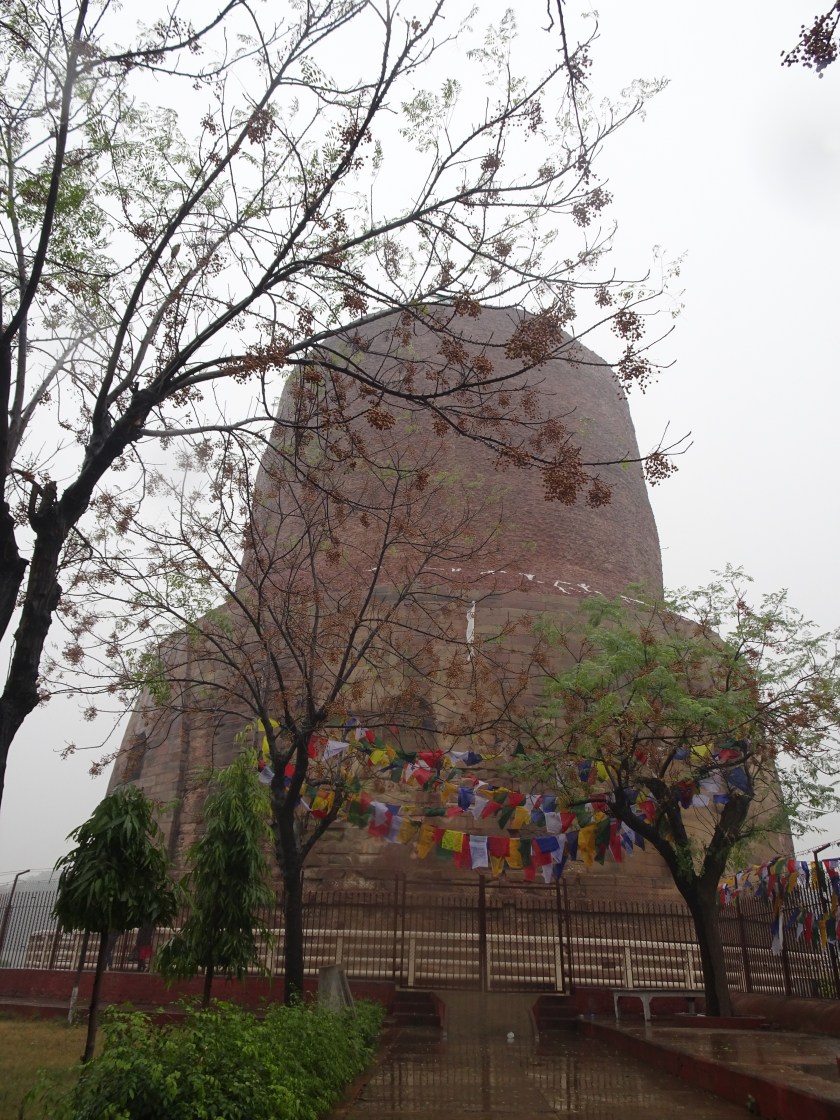
And here is the stupa that Buddha delivered his first sermon to his five disciples…

DSC00569.jpg

The rain started to come down pretty hard so we decided to call it a day and head back to Varanasi.  Our power went in and out all night long which meant no heat and no hot shower – not ideal when it’s in the low 50’s.  Burrrrrrrrrrrrr.

Fingers crossed we don’t freeze over!

Varanasi, The Holy City

Varanasi, otherwise known as Benaras or Banaras, is like no other city in the world, I’m sure of it. According to legend, it was founded by the Hindu deity Lord Shiva 5,000 years ago, though modern scholars view it to be around 3,000 years old.  Either way, it is one of the oldest cities in the world.  Situated on the west bank of the River Ganges, it is believed to have the power of washing away all of one’s sins simply because in the Hindu mythology, water is the source of life and creation.  It is the most popular pilgrimage point for the Hindus as those who die and are cremated here get an instant gateway to liberation from the cycle of births and re-births.  The city has been a symbol of spiritualism, philosophy and mysticism for thousands of years and has produced great saints and personalities including the one and only, Guatama Buddha.  Yes, Buddha. The actual person who started Buddhism.  Not like Santa Claus who doesn’t exist, Buddha did exist.

In 1896, Mark Twain put it perfectly when he said “Banaras is older than history, older than tradition, older even than legend and looks twice as old as all of them put together”.

We arrived in Varanasi on Monday, January 18 around 2:30pm from Delhi.  It was a super easy, smooth flight which was very much appreciated as I heard traveling throughout India can be a headache in itself.  Our homestay arranged for a car to pick us up at the airport which relieved any stress of finding a cab, negotiating a price, trying to communicate where we are going, etc.  It cost us around 800 rupees with tip, or about $12, for a 40 minute drive and was worth every penny.  We were staying at a place called Granny’s Inn, which is run by two Indian Granny’s.  The nightly rate was 3,000 Rupees, or around $44.

And just as an FYI, you will see a swastika like symbol in a lot of these photos (temples, buses, taxis, buildings, books, etc.) but please know it does not have the same negative meaning that we are used to.  For the Hindus and Buddhists in India and other Asian countries, it is an ancient symbol meaning good fortune, good luck and well-being, deriving from the Sanskrit word svasktika. It is disheartening that a symbol of life and eternity that was considered sacred for thousands of years in some parts of the world has become a symbol of such hatred in other parts of the world.

DSC00413.JPG

DSC00409.JPG

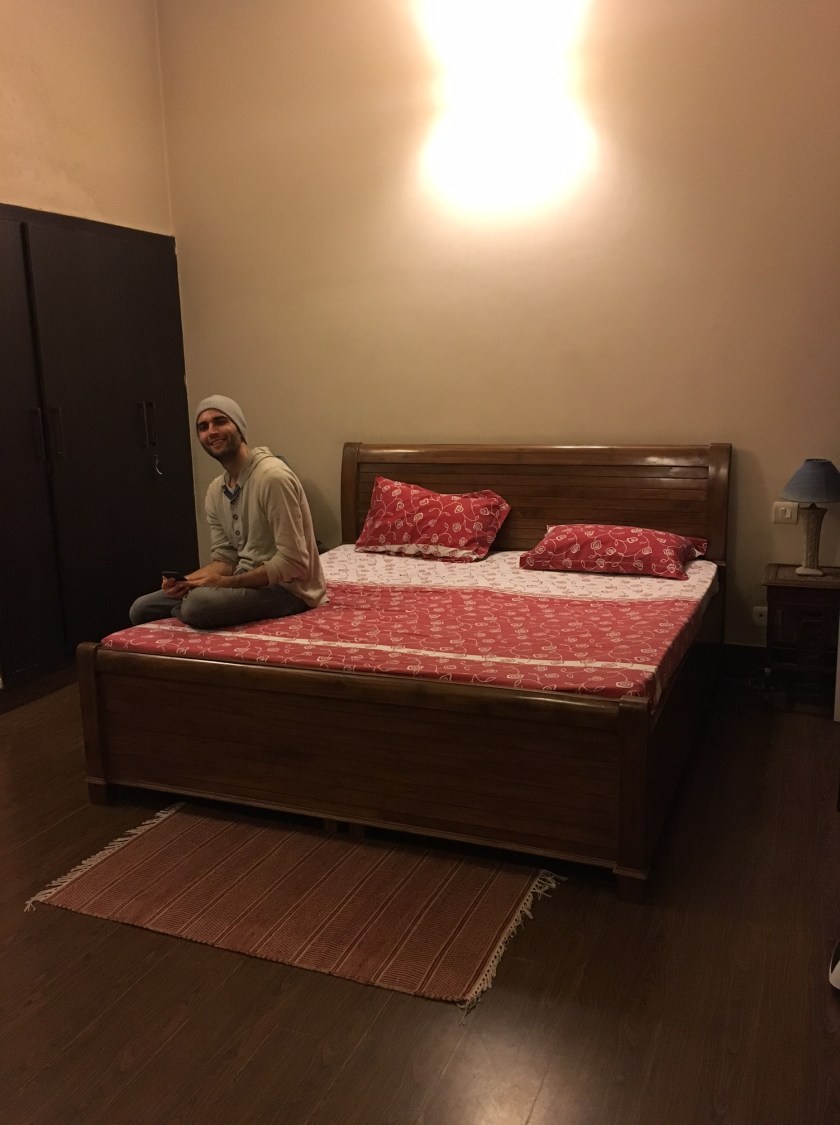
Mayur, the homestay’s host, greeted us at the door.  Such a lovely young man who speaks very good English.  He checked us in, showed us to our room, brought us Masala tea and gave us a handful of recommendations to do throughout the city.  So very helpful and insightful.

DSC00403.JPG

DSC00405.JPG

It was starting to rain a little, which was unfortunate since it’s predominately a walking city.  Oh well, sunshine and rainbows can’t follow us everywhere I guess (wahhhhhh). After about 5 minutes of settling into our new room for the next four nights, our lights went out.  We figured the bulbs needed to be changed so we asked Mayur if he had any spares.  He said the bulbs didn’t go out but when it rains, the city shuts down the power.  Want to know why?  Wait for it, wait for it.  They shut down the power so the monkeys that jump from building to building don’t get electrocuted.  Yes, you heard that right.  We are in a city that is being controlled by monkeys?  Where are we?  I asked when we could expect power again and his response was “This is Varanasi, there are no answers to anything”.  I took a deep breath and reminded myself, this is all part of the experience.  Enjoy it, laugh with it, appreciate it, reflect on it.

Later, we saw the monkeys for ourselves…

DSC00628.jpg

DSC00675.jpg

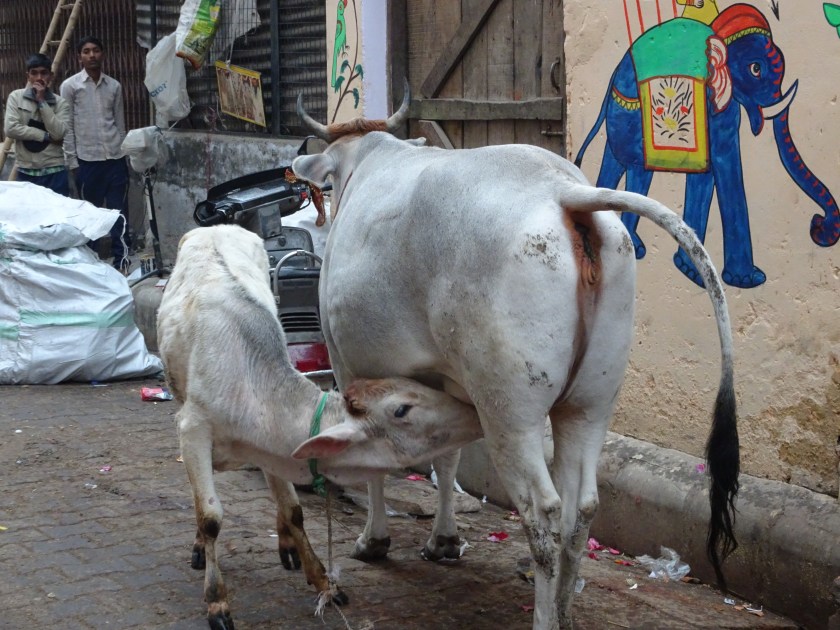
After about 20 minutes, the power went back on and we decided to take a stroll around town.  Keep in mind this isn’t like strolling the streets of Paris or Rome or even New York.  This in India, this is Varanasi.  Not peaceful, not clean, not beautiful – yet absolutely incredible in its own way.  Right when we walked outside, we saw a baby cow literally getting milk straight from its mom’s utters. Doesn’t get any fresher than that. “I’ve got nipples Focker, can you milk me?” – Meet The Parents.

DSC00415.JPG

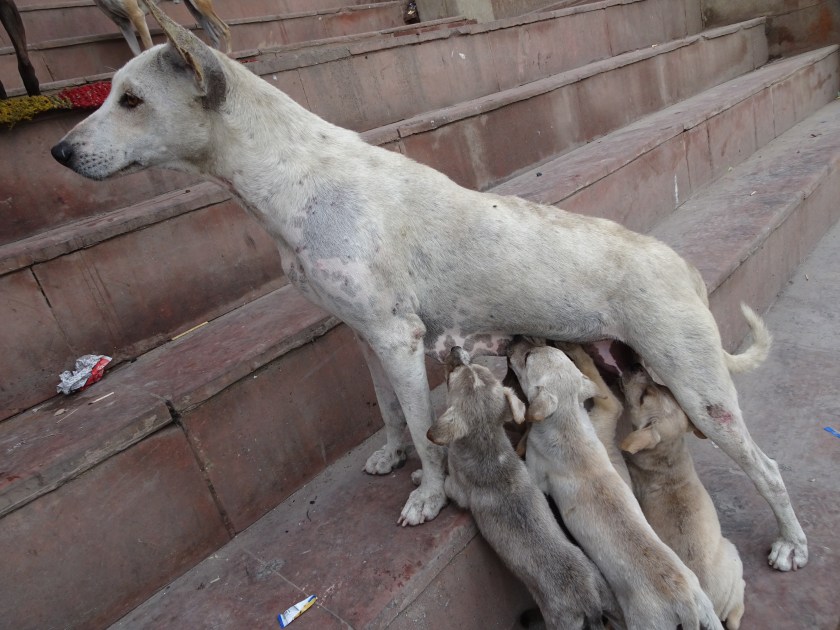
And a Mamma dog with her pups…

DSC00699.jpg

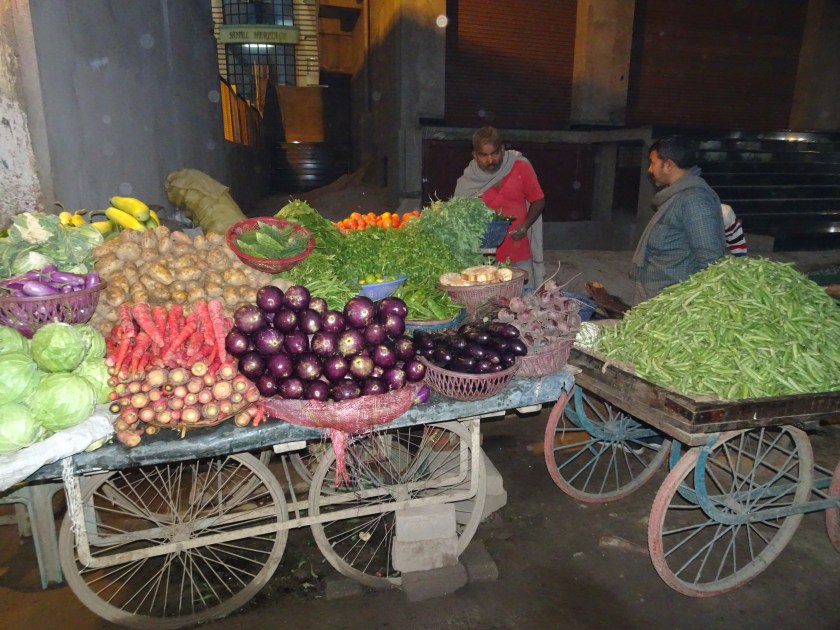
It was starting to get dark since its was close to 5pm and drizzling so we really only wanted to be out for a little.  As we continuously looked around, we couldn’t help but think we were on the backlot of Sony Pictures or Universal Studios.  Everything about this place seems fake but it’s obviously not (duh, Kim).  There are 2 lanes only and cars are having to swerve around cows that decided to take a nap in the middle of the road or trying to eat whatever vegetables might have fallen from someones cart.  It’s all just so surreal.

DSC00400.JPG

DSC00398.JPG

DSC00429.JPG

DSC00425.JPG

DSC00419.JPG

DSC00432.JPG

Our homestay offers a home cooked dinner for 200 rupees each, which equals to about $3 per person (yes please!).  We definitely took them up on that offer and the food was delicious.  Kashi is the cook and he sure knows how to add spice and flavor to every dish.  My taste buds were dancing as if it was an Indian wedding inside my mouth.  While at the dinner table, we were able to meet a wonderful young couple from Russia (Alex and Maria) and a jolly woman from Ireland (Jackie).  Both were lovely.  One of the greatest things about traveling is meeting people from all over the world.  Luckily for us, English is always the common language so communicating makes it easy.  I couldn’t imagine being from China or Germany or Argentina and not being able to understand the words around me.

It’s a bit noisy in our room (horns honking, cows mooing, people chanting, rain falling) and it’s around 11:30pm so let’s hope we can get some sleep tonight.  Good night!

Delhi, Part III

Sunday, January 17 was our last full day in Delhi so we tried to visit all the remaining “must sees” that we could.

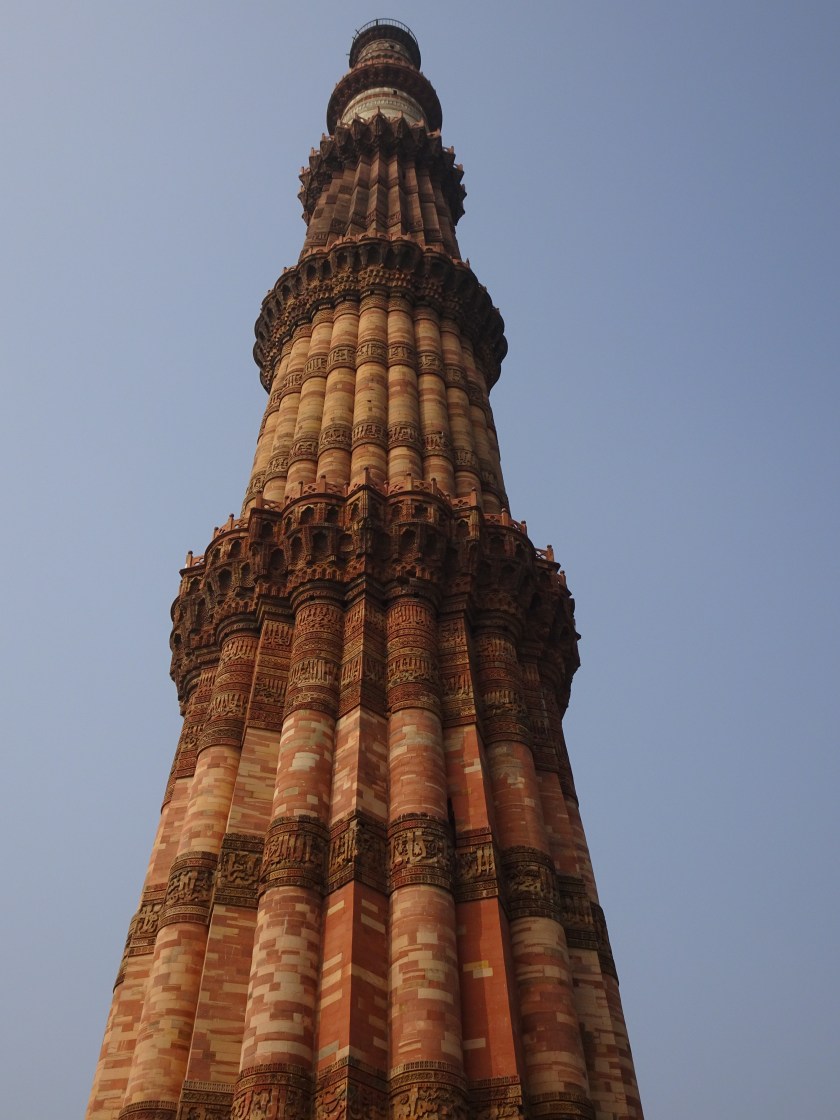
We took an Uber to Qutub Minar, which is the highest tower in India.  It was built in 1193 immediately after the defeat of Delhi’s last Hindu kingdom.  Some believe it was erected as a tower of victory to signify the beginning of the Muslim rule in India while others say it served as a minaret to the muezzins to call the faithful to prayer.

DSC00227.JPG

DSC00233.JPG

DSC00288.JPG

DSC00249.JPG

DSC00258.JPG

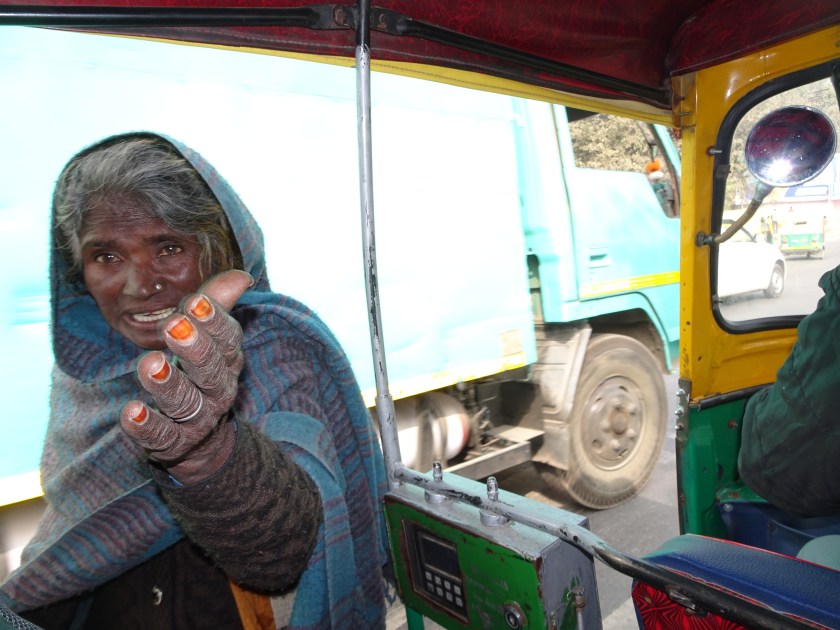
From Qutub Minar, we took a rickshaw to the Garden of Five Senses.  On our way, at a stop sign, a woman came out of nowhere and was begging for money.  You want to help them but there are just too many…

DSC00302.JPG

DSC00303.JPG

The Garden of Five Senses was a nice break in the chaos.  We called this lovers lane because there had to have been well over 20 young couples throughout the garden making out in every corner.  It was quite funny.  And we also came across an area that was being used to what looked like cooking for a big event or something.  Tons of food being prepared right there in the open outdoors.  Can’t be sanitary but maybe it adds to the flavor.

DSC00310.JPG

DSC00322.JPG

DSC00306.JPG

DSC00326.JPG

DSC00311.JPG

DSC00315.JPG

We then took the Metro (go us!) to the Lodi Gardens and had lunch at the Lodi Garden Restaurant which was definitely a tourist location because we saw more white people in one hour than we had in 72 hours previously.

Lastly, we took an Uber to the Lotus Temple which was pretty awesome.  It was built in 1986 and is a house of worship for the Baha’i faith.  The expressionist architecture was breathtaking. Styled after a lotus flower, with 27 immaculate white-marble petals.  Everyone has to take off their shoes off before entering the Temple so you can imagine the array of smells that you can’t help but breath in.

DSC00330.JPG

DSC00350.JPG

DSC00354.JPG

DSC00362.JPG

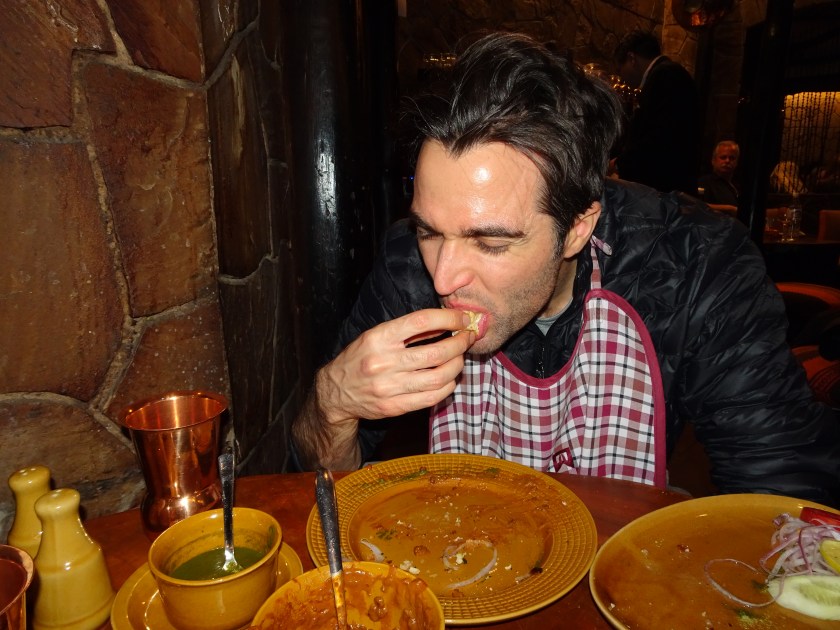
Based on the recommendation of Michele Kajiwara and Stewart Armstrong (thanks again!), we treated ourselves to a very nice dinner at Bukhara.  Bukhara has actually been rated a top restaurant in the world, not just in India.  On our drive there, one of the observations I noticed was starting about a mile or so out – there was no traffic, there was no trash, there were no homeless; instead, there were paved streets, greenery and quietness.  As we arrived in our Uber, the security measures to get in were impressive.  It’s located inside a hotel and our car had to open all four doors, the hood of the car and the trunk for the guards to search.  Plus, we had to put our bags through the x-ray machine.  It seems intense at first but definitely makes you feel real safe afterwards.  Dinner was delicious.  It’s quite a unique experience because it’s fine dining but you eat with your hands.  And the food isn’t like sushi where it’s meant for that.  We ordered a super moist (I know, everyone hates that words) chicken kabob (but not on a stick), a butter naan and an amazing lentil dish that marinates overnight for 10 hours.  They give you aprons to put on so you can get as down and dirty as you want.  Vinny reminded me of the Nutty Professor at dinner time (Hercules, Hercules).  It sure was refreshing to live like the rich and famous for a few hours.

DSC00382.JPG

DSC00384.JPG

After 3 full days in India now, there have been a couple of challenging adjustments to get used to:

Clean water.  It’s been advised over and over again not to brush our teeth with the faucet water or drink the tap water so we are constantly buying bottles of water wherever we go. Do you know how hard it is to get all the toothpaste off your toothbrush with just pouring bottle water on it?  Try it tonight and let me know how it goes. It’s a minor inconvenience but one thats worth it to hopefully save a trip to the hospital.

Hot water.  Vinny and I are used to taking long, hot, steamy showers twice a day (no, we are not the reason California is in a drought) and now we can’t even get more than 2 minutes of hot water once a day.

It’s little things like this that make you truly appreciate where you come from and what you once took for granted now seems like such a luxury.

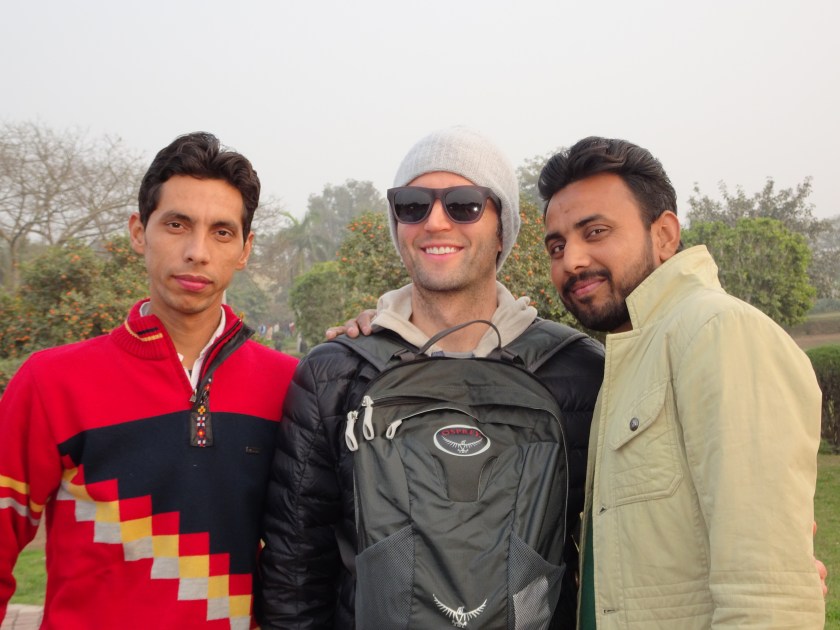
Lastly, one of the most intriguing things we’ve noticed is that locals love to take photos with us.  Although I have no makeup on, no hair dryer in sight to fluff up my hair or fashionable clothes to feel important (not that I was ever fashionable but better than I am here at least), the locals still make us feel like Brad Pitt and Angelina Jolie (sans an army of kids).

DSC00195.JPG

DSC00335.JPG

DSC00370.JPG

This wraps up our three full days in Delhi.  What a ride so far.  We are taking a flight tomorrow morning to Varanasi, which is one the oldest and holiest inhabited cities in the world.  If Delhi was such a culture shock, I can only imagine what Varanasi will be like.

Stay tuned to see 🙂

Delhi, Part II

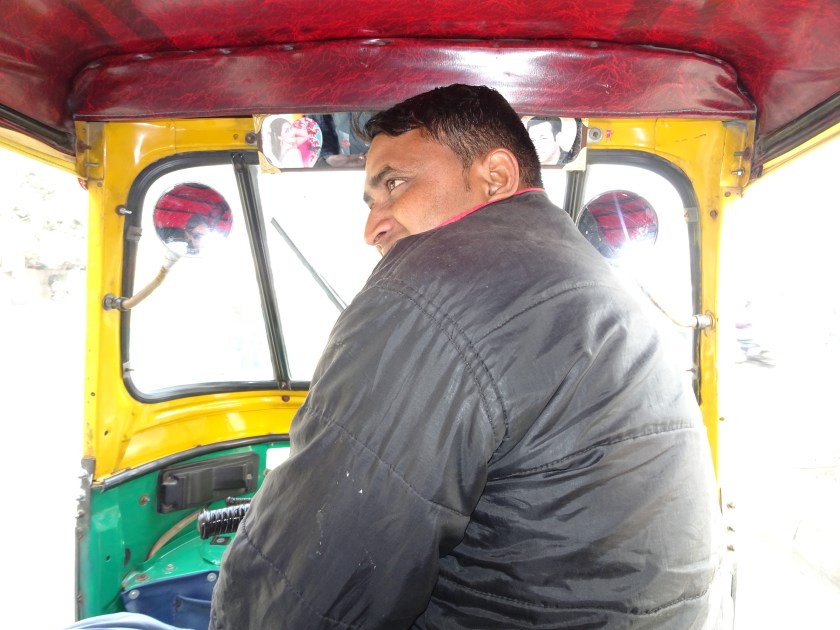
Saturday, January 16 was our second full day in Delhi.  Today we had our own private driver from 8:30am to 4:30pm. Sounds fancy, huh? We so fancy (not really though).  In India, you can’t rent a car from your local Enterprise and trust me, you don’t want to.  Instead, you hire a driver that takes you wherever you want to go.  This was around 1,500 rupees or $22 for the entire day which isn’t bad when you start to breakdown how far things are from each other and how much it would cost to take various metros, cabs, rickshaws, tuk-tuks, etc.

Our first stop of the day was the India Gate, which is a 42 meter high archway that commemorates the 70,000-90,000 (every article is different with their facts, gotta love the consistency in history) Indian soldiers who lost their lives fighting for the British Army during World War I.

DSC00015.JPG

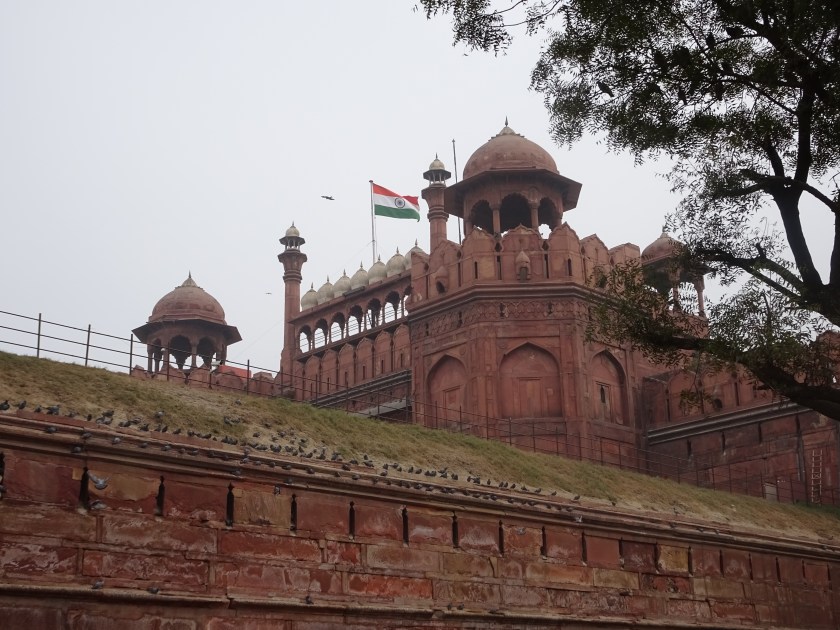
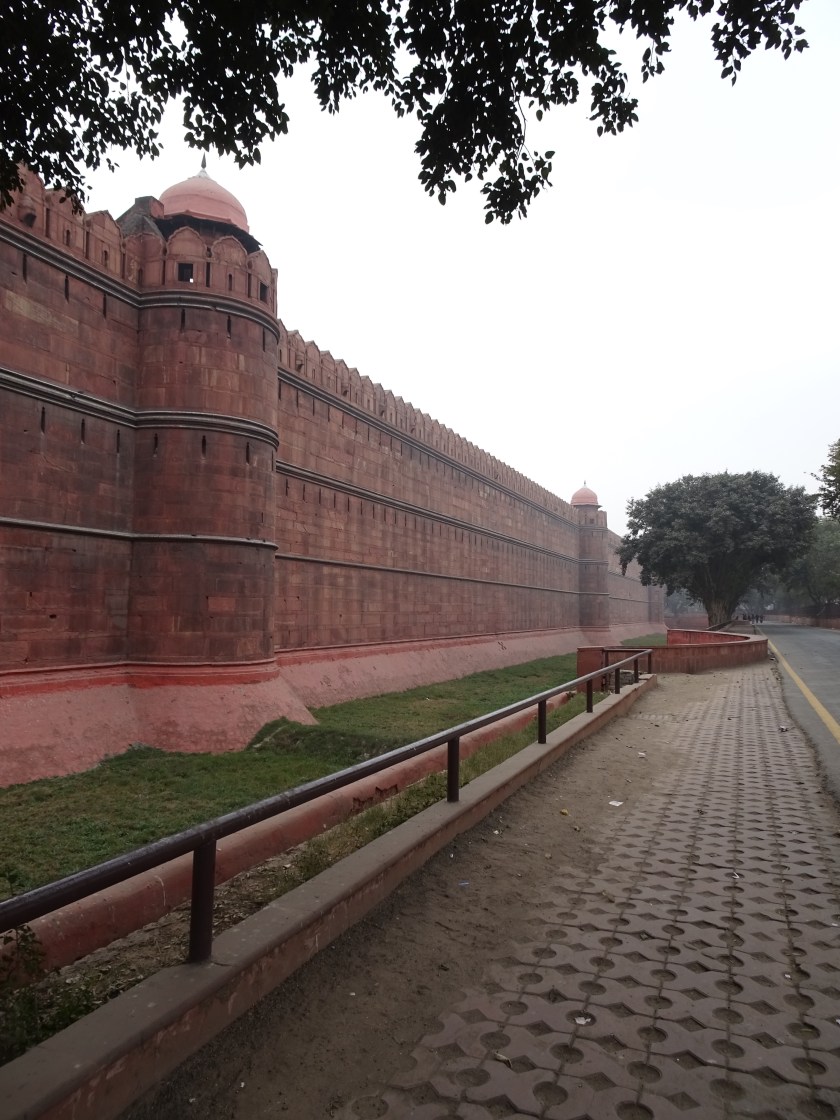
Our second stop of the day was the Red Fort, which is located in Old Delhi. It was constructed in 1648 and acted as the residence of the Mughal emperor of India for nearly 200 years.  It is named for its massive enclosing walls of red sandstone.  Being inside the Red Fort was a nice break from the craziness outside as there were multiple gardens, mosques and various grassy patches.

DSC00099.JPG

DSC00092.JPG

DSC00095.JPG

Our third stop of the day was Jama Masjid, also located in Old Delhi and across the street basically from the Red Fort.  It is the largest mosque in India.  We didn’t actually go inside because we didnt’ feel safe at all.  This was an extremely chaotic area with numerous beggars and hundreds of homeless.  We promised ourselves that once we felt uncomfortable somewhere, we wouldn’t take the risk so we saw the outside and turned around.  It was a bummer but probably the smart choice.

DSC00106.JPG

DSC00108.JPG

DSC00107.JPG

Our fourth stop of the day was Chandni Chowk, also located in Old Delhi and next to the Red Fort and Jama Masjid.  Chandni Chowk is one of the oldest and busiest markets in Old Delhi and the home to book stores, spice markets, clothing factories, textile warehouses, etc. The word busy is an understatement.  We couldn’t even walk it was so crowded so we got a rickshaw to take us around.  This was probably one of the top 3 craziest most exhilarating experiences of our lives.  Vinny got an epic video so if you are curious to see it, just text us and we’ll happily send it to you (thanks to TMobile I can – and no I’m not sponsored by them).  I promise you’ve never seen anything like this (even though the video doesn’t do it justice).

DSC00117.JPG

DSC00119.JPG

DSC00130.JPG

DSC00132.JPG

DSC00101.JPG

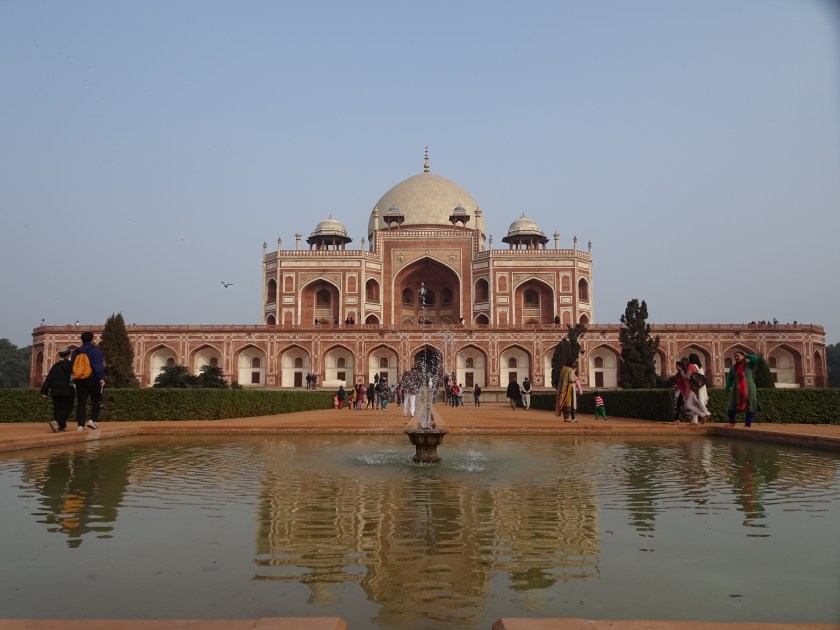
The fifth and final stop of the day was Humayun’s Tomb.  Humayun was a Mughal Emperor who died in 1556.  His widow commenced the construction of his tomb in 1569, fourteen years after his death.  How romantic.  This monument was stunning.  So much detail went into every inch of it.

DSC00176.JPG

DSC00180.JPG

DSC00185.JPG

Over the past 2 days, we’ve noticed a few specific aspects of poverty throughout Delhi:

Stray dogs.  They are everywhere and come in all different shapes, sizes and colors.  Some are extremely thin, some look like they just gave birth with nipples drooping down, some are limping and some are missing limbs.  It absolutely breaks my heart to see animals suffer like this.  Melissa and Becca, if you are reading this, you should start a doggy rehab facility here – they could use your special animal touch here in India (no pressure though).

Children working for Rupees. We have witnessed at least 10 different occasions of children, ages probably 3-13, begging for tips.  One girl was doing flips in traffic in between cars while it was a red light.  A young boy, no older than 4, was trying to sell me flowers (not because he thought I was pretty but because he needed to eat).  Another kid put a bracelet on a women in front of me without her knowing then demanded money.  She aggressively and not necessarily appropriately shook the bracelet off and walked away.  This too breaks my heart as we are used to kids at that age being in school learning or playing on a sports team or building with legos or dressing their barbies – not trying to make every Rupee they can to survive.

All of these occurrences made me realize that some things in life happen based on how you play your cards while other things in life, unfortunately, happen all because of the hand you were dealt.

Delhi, The Capital Territory of India

Friday, January 15 was our first full day in Delhi.  Since our body clocks were all off with the twenty four hour travel day and the thirteen and a half hour time difference (weird that it’s a half, never heard of that) we decided to get an early start on sightseeing.

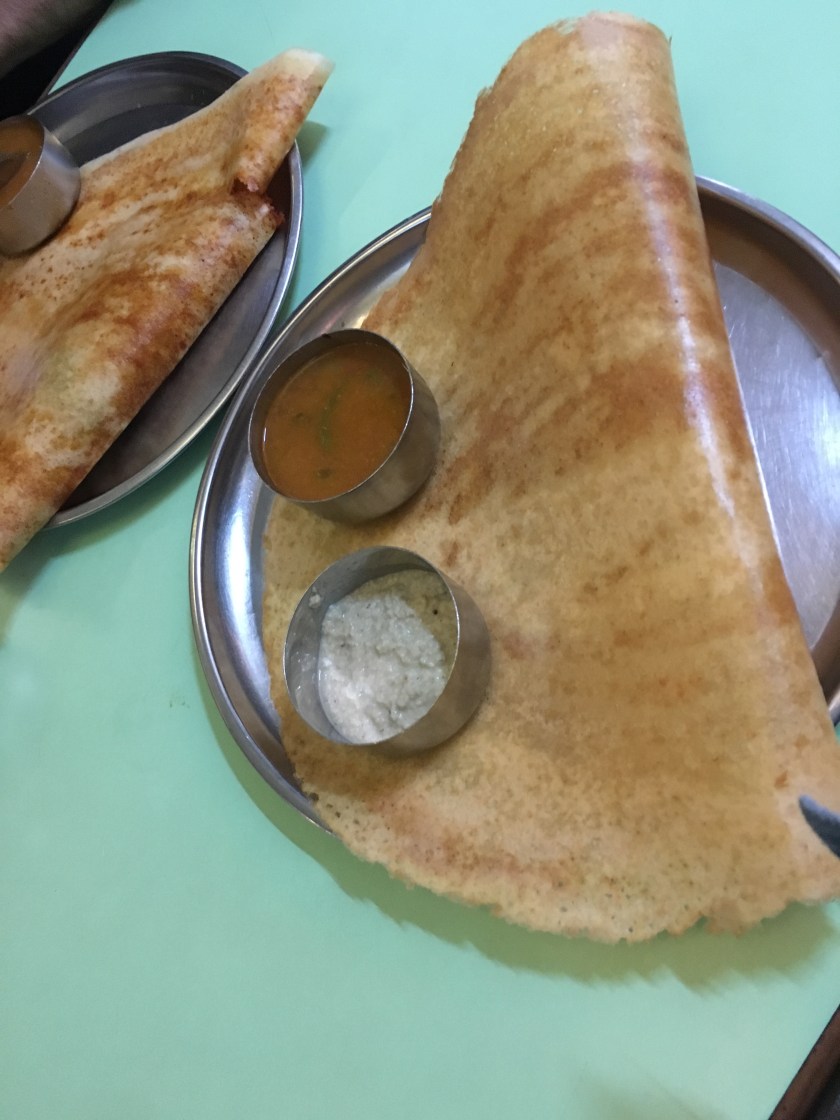
Per our AirBnB host’s recommendation, we walked about 10 minutes to the Defense Colony Market and had breakfast at Sagar’s.  Being from America, we are so used to our traditional Western breakfast whether that’s cereal, eggs, toast, fruit, waffles, etc. so I knew that coming half way across the world I would need to adapt to something new (which you all know is quite hard for me, especially when it comes to food).  We really didn’t know what 95% of the menu items were and it was too hard to ask with the language barrier, so we took a chance (not a crazy chance but a chance) and ordered one Mysore Masala Dosa, which is spicy with a red chutney as the base and stuffed with potato and onion mixture and one butter dosa, which doesn’t need much explanation (hopefully).  Both were delicious.  It also came with a tray of spicy vegetable soup (soup for breakfast?) and an array of different dipping sauces.  Everything was super duper flavorful; however, it wasn’t as cheap as we expected.  The meal came to about $16 (LA terms that’s nothing but in India we felt it was a lot) but you live and you learn.

IMG_0654.jpg

IMG_0655.jpg

From breakfast, we took a 20 minute cab to Dilli Haat, which is their version of a swap meet.  The cab we took reminded me of something that would be in Cuba, although I’ve never been to Cuba but one can only imagine.

IMG_0658.jpg

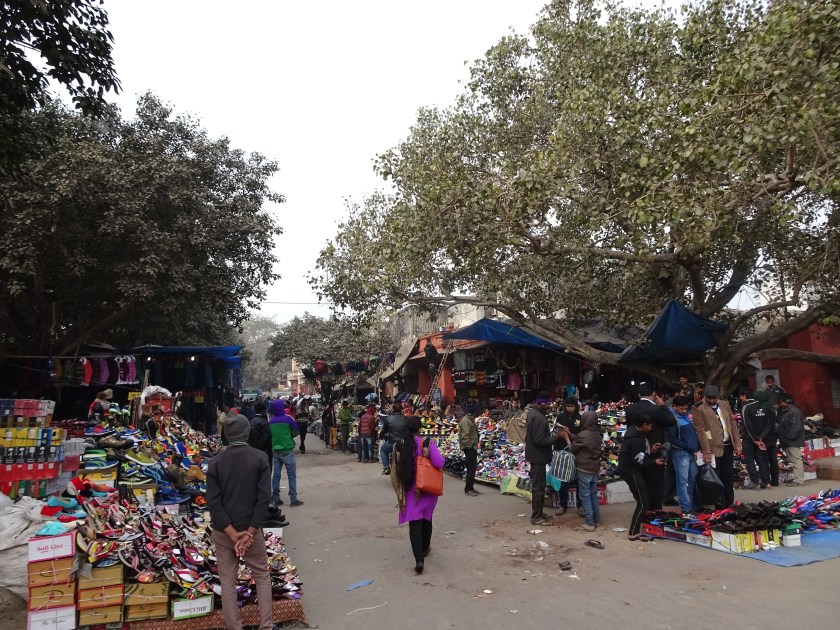
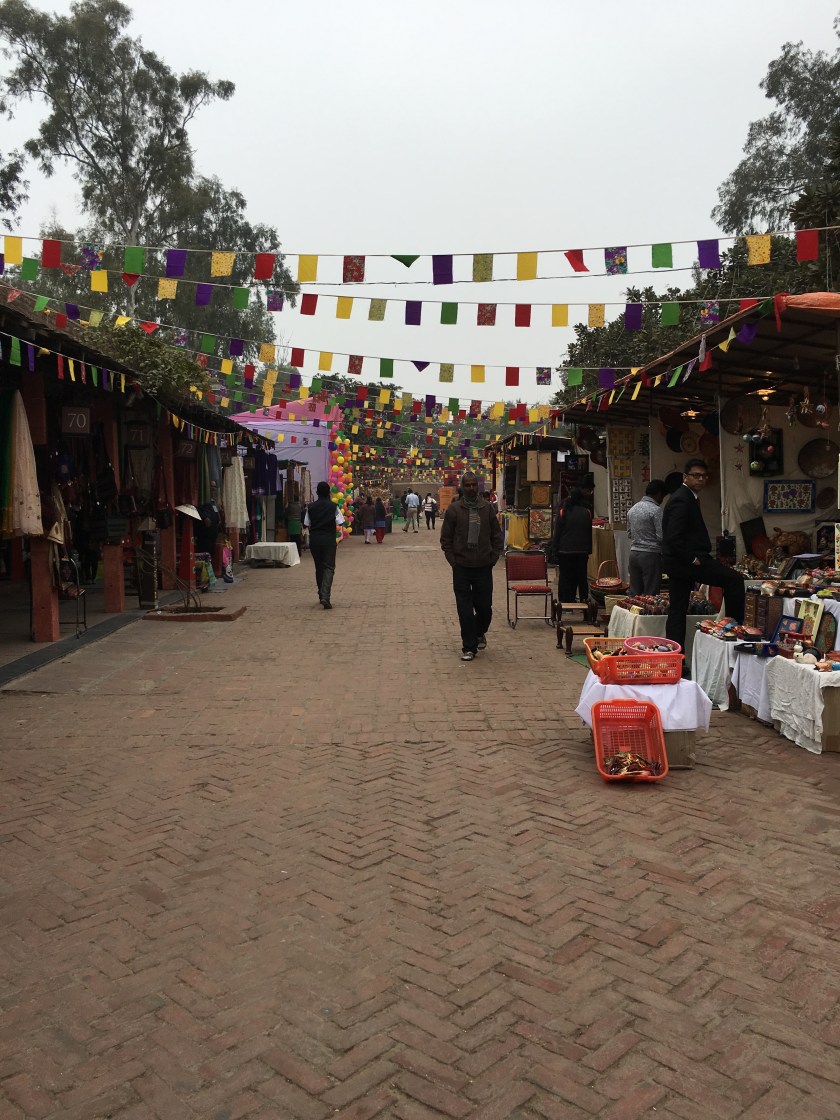
Dilli Haat is a sprawling outdoor market offering a colorful array of handmade goods and regional food specialities.  There were clothes, pottery, shoes, artifacts and much more being sold by local vendors.  It’s a good thing we are on such a tight budget and only have one backpack because I could have spent an entire paycheck (which doesn’t even exist anymore) in that one hour we were there.

IMG_0667.jpg

IMG_0670.jpg

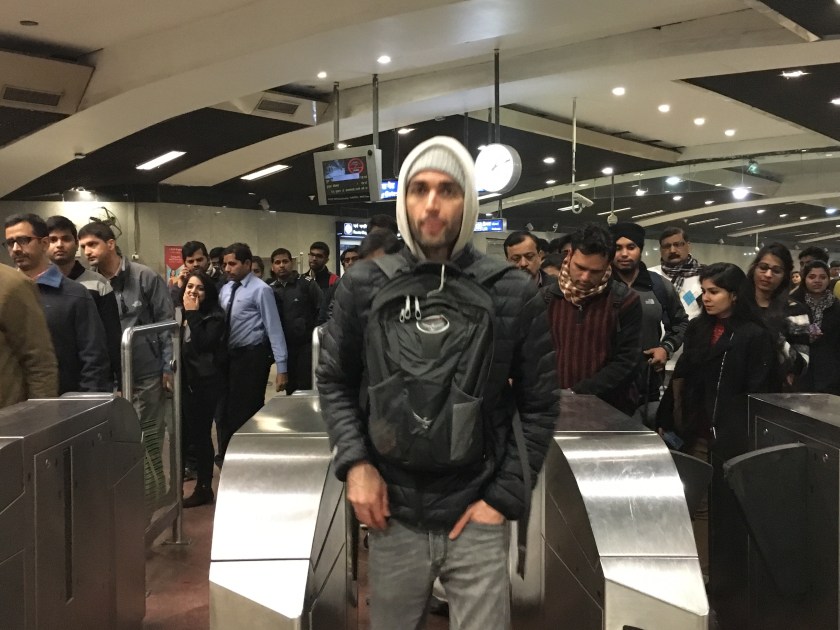
Following Dilli Haat, we decided to put our brave, adventurous hats on and take the Metro to the Hauz Khas Village.  Yes, the Metro.  Otherwise known as public transportation.  Something we don’t even do in LA, let alone in one of the most populated countries in the world.  We figured we would try it once, and if it fails, so be it. If it is a success, we can save a lot of money and time.  Knowing us, which do you think it was?  I’m assuming you guessed a failure? I’m sorry to break it to you gently but you’re wrong.  It was a success.  Tokens one way per person range from $0.15 to $0.30.  Plus, it’s a break on the eardrums from all the honking that goes on throughout the streets.  We felt safe too because we had to go through metal detectors before going down.  And there were different lines for men and women, which was a little scary to separate, but it all worked out.  Find what doesn’t belong in the image below…

IMG_0679.jpg

P.S. We have been wearing our bags in front because it makes us feel safer.  This way we can see it versus being in the back and risking the chance that someone might open it without us even realizing it.  Overly cautious maybe, but it puts us at ease.

Once we got out of the station, it was about a 20 minute walk to the Hauz Khas Village.  Walking in India, quite like doing anything in India, is never a dull moment.  Pedestrians definitely do not have the right away so every move you make, you better make it wisely.  It’s almost as though you are playing a video game, like duck hunt (for those born after 1990 you probably don’t know what that is) and you are the duck.  Your destiny is in your hands.  And, as I’ve mentioned previously, driving in India is the most surreal concept since there is absolutely no flow to it.  Cars, bikes, rickshaws, cows, goats, mopeds, tuk-tuks, people, stray dogs, etc. are all on the same road, which usually has no lanes so everyone is on top of everyone trying to get through as quickly as possible.  But all of this mayhem is such a thrill to witness.  It just blows my mind how something so far from what we know is the only thing they really know.

As we soaked in all the smells, sights and sounds around us, I felt as though I was constantly saying “Vinny, oh my god, look over there or “Vinny, wow, can you believe that”.  It was like I was a baby fresh out of the womb seeing life for the first time.  It’s just all so incredible to me.  For example, instead of men shaving in the shower (since most don’t even have showers here) or going to your local barber shop (which usually consists of four walls, a door and a roof), locals set up a nonchalant station on the street and groom each other, the old school way…

IMG_0685.jpg

Or they iron their clothes, the old school way…

DSC00204.JPG

Or they make cotton candy, the old school way…

DSC00327.JPG

Maybe it’s old school to us but maybe it’s keeping it simple to them.  It’s all relative I guess.

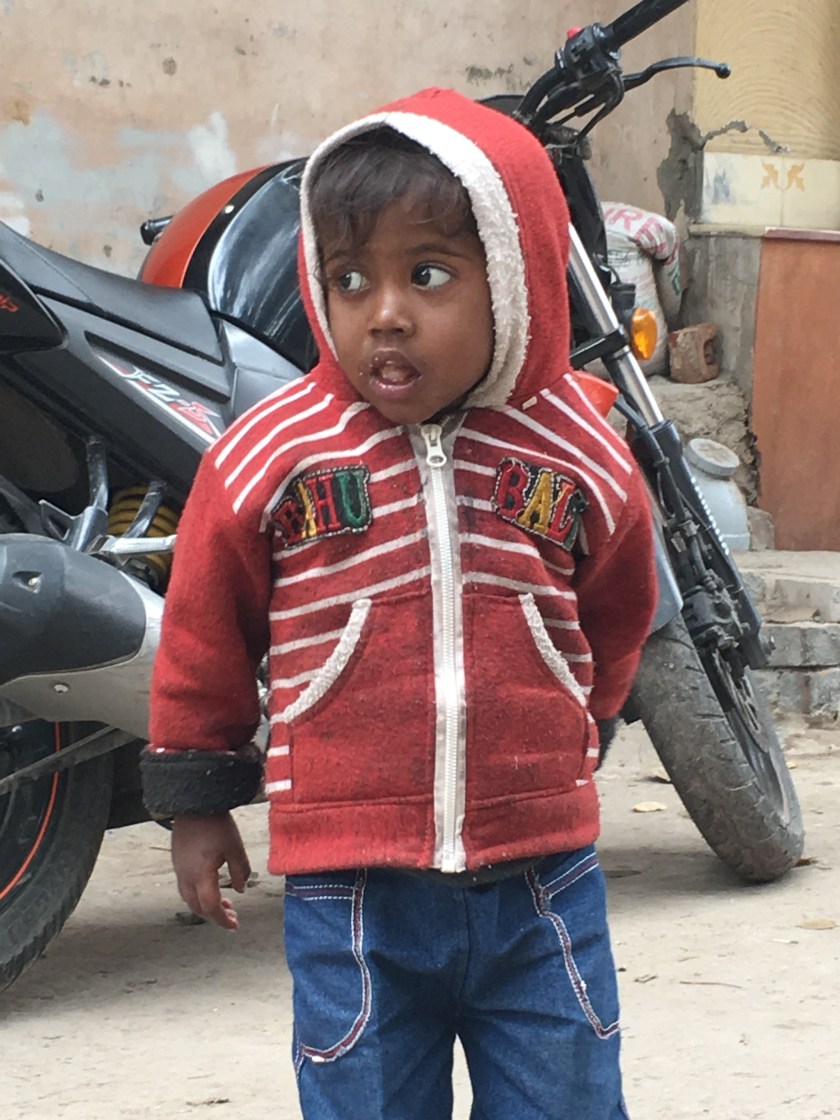
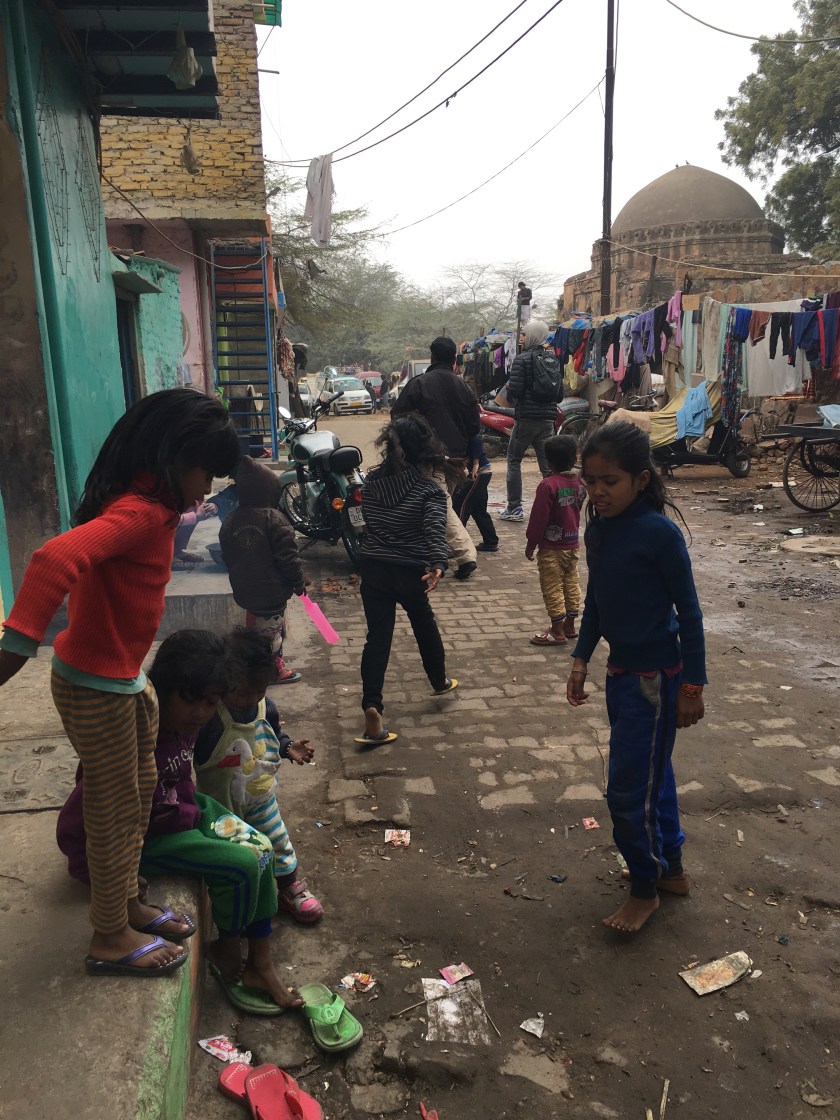
When we finally made it to Hauz Khas, we aimlessly strolled the Village, soaking it all in.  There were shops, restaurants and street food vendors as well as a mosque and a tomb, all built around an urbanized village with medieval history traced to the 13th century.  Oh and  of course, a Starbucks.  As we got lost (in a good way), we came across a back alley that was the most poverty stricken we have seen yet – kids running around with no shoes or even some without pants, trash in the streets, bodies full of dirt – but they were laughing, playing, and entertaining themselves.  It was quite refreshing as we are so used to seeing kids with iPhones, iPads, iPods, i this and i that.  One of the comments I read over and over again in various blogs is not to feel sorry or sad for the natives because they are so poor – they are happy with what they have as they don’t really know any different.  I hope this is true.

IMG_0704.jpg

IMG_0701.jpg

It was time for lunch so we made our way back to the main area and dared ourselves to eat street food.  We have been told to avoid meat if possible so we did just that.  We shared a veggie wrap, which was $1.30 (now that’s more like it), and so yummy.  My mouth was watering from the different flavors in each bite.

IMG_0727.jpg

After the Hauz Khas Village, we took the Metro again, yes again, to the Khan Market.  More shops, more restaurants, more people watching.  Nothing too exciting but always nice to check out new sites.  We had dinner and decided it was time to go home since we had a full day out and about and were quite tired.  Instead of hailing down a cab or taking the Metro, we attempted to use Uber.  Yep, Uber is in India.  Crazy I know but genius.  First attempt failed, second attempt failed, third attempt failed – strike three you’re out.  Better luck next time, I hope.

That’s it for today, see you tomorrow!

First Impression

Wow.  That is the only word that came to mind when we officially landed in India.  As the airport doors opened and we walked outside around 10pm local time, it felt as though we were willingly feeding ourselves to an ocean full of hungry sharks.  It was colder than we expected, extremely foggy and of course we were super disoriented from traveling for almost 24 hours. Not to mention, we stuck out like a sore thumb screaming TOURIST.  From every which direction, there was someone offering their transportation services.  Our AirBnB host recommended we get a pre-paid taxi, which should cost around 500 Rupees.  Knowing this, you could imagine my face when a man told us it would be 1500 Rupees.  He obviously didn’t think I did my homework way in advance.  Once we finally got in our cab, it hit us – we don’t speak the same language.  He spoke Hindi, we spoke English so as we slowly left the airport, our fear of not making it to our AirBnB safely began to increase.  Not only were our spoken words different but our written alphabet is also different which adds a whole new level of confusion.  We are staying in an area called Defense Colony which is known to be a nice, safe neighborhood but quite difficult to find as there are many different lanes, numbers, complexes, etc.  We have no idea where we are going, he has no idea where he is going so all we could do is rub our lucky crystals (thanks, Carole!) and have faith it would all work out.

In the short yet long 30 minute ride, I noticed the streets of India put New York, San Francisco, Beijing, Rome, LA and any other city in the world to shame.  There is no organization to the way they drive.  Plus, they honk nonstop.  Not in an aggressive fashion but in a “hey, i’m here, don’t hit me” kind of way.  It’s almost as though honking is it’s own language here.  As we are in the midst of chaos, I tried to take a breath and look around to see what my surroundings were.  In that very moment, I noticed cows on the sides of the road just chilling, locals having bonfires in the street to stay warm, infants being held by their mothers on the back of a moped with no support but the strength of her arms and street food being cooked on every corner which I’m pretty sure wouldn’t pass the health code in the US.  It was mind blowing.  We felt as though we were on a movie set and were waiting for the Director to yell “cut”.  Welcome to India we thought.

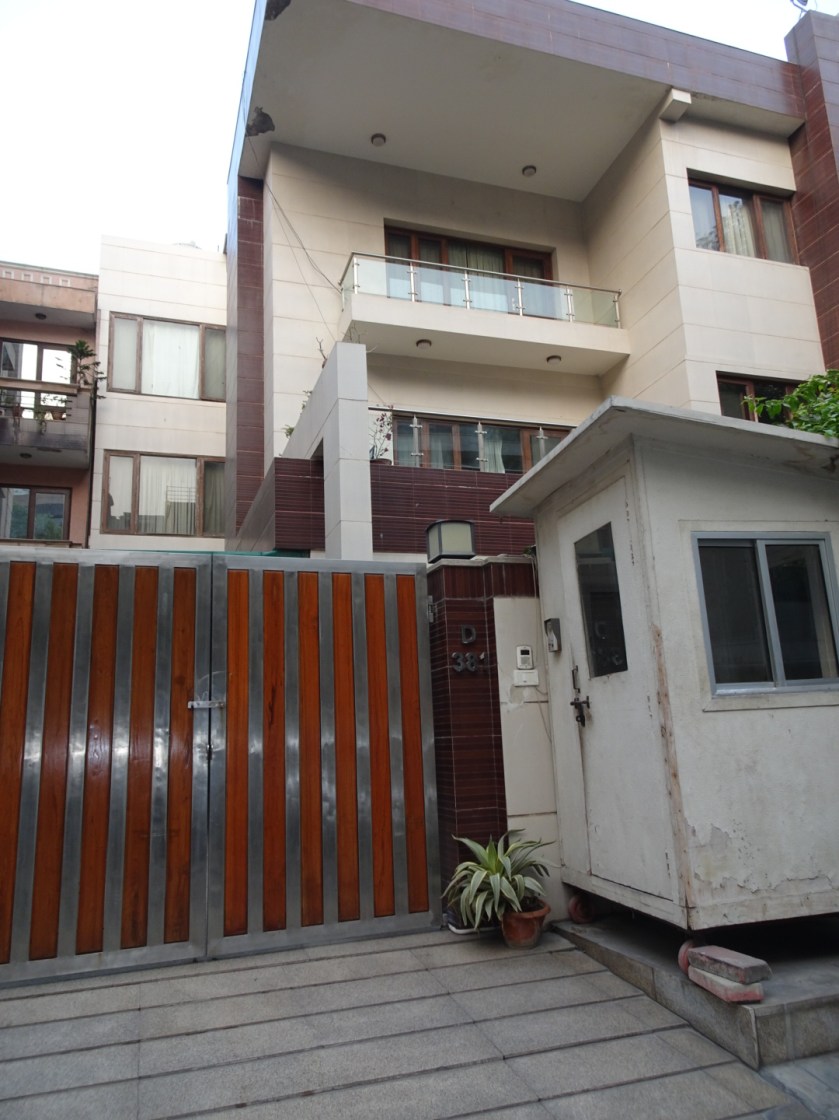
Our cab driver asked about 6 people along the way how to get to our AirBnB.  Everyone was actually super helpful and willing to point him in the right direction.  We could tell he was getting frustrated since our ride lasted longer than any of us expected so we decided to just get out and walk.  This might not have been the smartest idea at first, but eventually, we made it to our home for the next 4 nights,  in one piece.  And it sure was a breath of fresh air to be greeted by our warm and fuzzy hosts in front of their beautiful, what they call, Tranquil place.

IMG_0751

IMG_0752

IMG_0650


Getting ready

It’s one thing to dream of a 6 month trip, it’s another thing to decide you are going to take a 6 month trip and it’s whole other thing to start planning for a 6 month trip.  No matter how much time you have to prepare, it always falls down to that last week before your plane takes off.  And we are no exception.  Although we both had over 2 months from when our last day at work was to when our adventure began, there still didn’t seem to be enough time.  However, fast forward to January 13, 2016, and I can proudly say we successfully checked everything off of our to do list (phew) including the following:

  1. Figuring out which countries to go to, how long to go for, what we need to get in safely and securely, when the best time of year to visit is, etc.
  2. Receiving over $2,000 worth of vaccines – Hep A, Hep B, Typhoid, Rabies, Japanese Encephalitis, Polio boost, MMR boost, Tetanus Boost, etc.
  3. Obtaining a 10 year visa to India (had to send in our passport so that’s always scary)
  4. Organizing a 7 week trip to India and pinpointing the best modes of transportation to get from point A to point B throughout 15 cities (by far the hardest country I’ve had to plan for)
  5. Spending as much time as possible with friends and family
  6. Determining how to keep in touch from across the world and TMobile was the answer (so feel free to text, email, etc. as the word roaming doesn’t exist now)
  7. Enjoying time with each other knowing that we are currently living the dream and want to soak in every minute we possibly can
  8. Moving out of our home and basically putting our entire lives into a single POD
  9. Getting out of my car lease at the very last second I could, literally (so now I’m homeless, jobless and carless – boy does that feel good!)
  10. Packing for a “we don’t know how long” kind of trip with one backpack each, that we can carry on (mind you, Vinny didn’t officially start packing until 12am on January 13th, finished around 3am and we had to wake up at 4am to make my Dad’s roll call for the airport at 5:30am – talk about cutting it close)

IMG_0641

All that was left to do was board a plane (hoping our backpacks passed all the TSA tests for carry on) and enjoy some down time for 22+ hours until we officially landed in India on January 14, 2016 around 9pm local time.  And this is where our story really begins…