
Day 4 – May 4
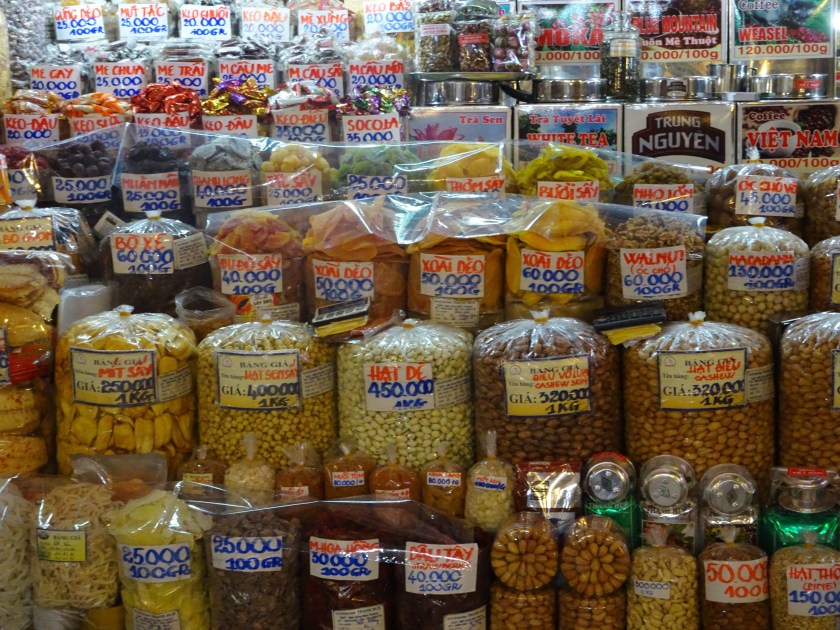
Despite the heat, we decided to go on a self guided walking tour of Ho Chi Minh City today. Our morning started off with a traditional iced coffee which uses condensed milk (regular milk, half and half, non-fat milk, almond milk, soy milk, etc. is nearly impossible to find) at Highlands Coffee, a large local chain comparable to Starbucks. Then we headed to Ben Thanh Market, a buzzing space in the daytime and a social center after sunset. Built in 1870 by the French, the market was initially called Les Halles Centrales before being renamed Ben Thanh in 1912. It is now the oldest surviving market and a great place to buy local handicrafts, branded goods, Vietnamese art, fruits, snacks and other souvenirs. You’ll also find eating stalls inside where you can get a taste of hawker-style Vietnamese cuisine or simply cool off with a cold drink. Which is what we did. We got two fresh blended mango smoothies from a tiny little stall that recruited us hardcore.


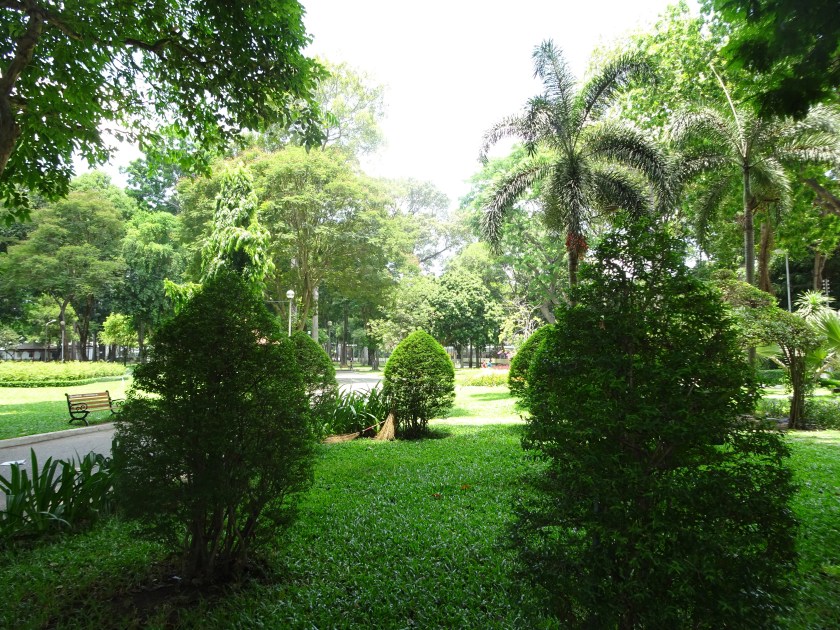
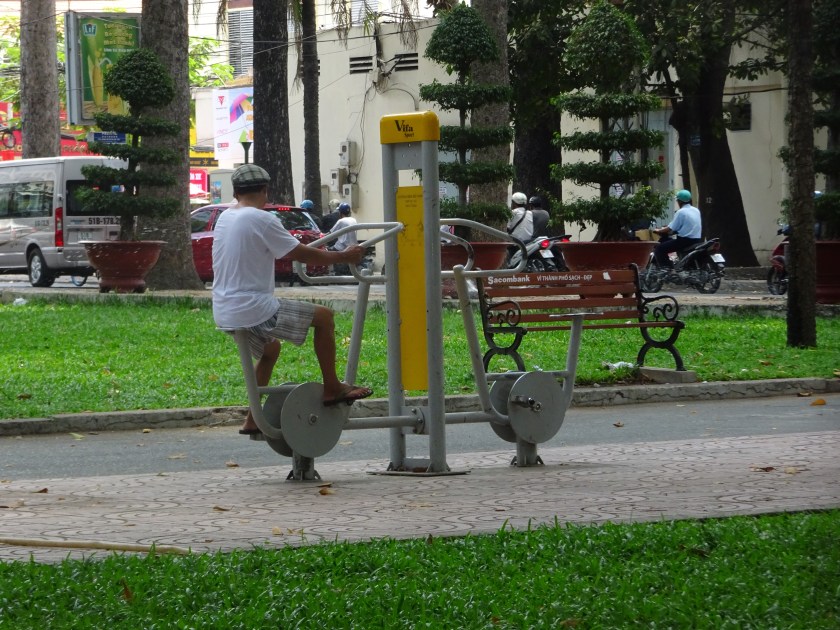
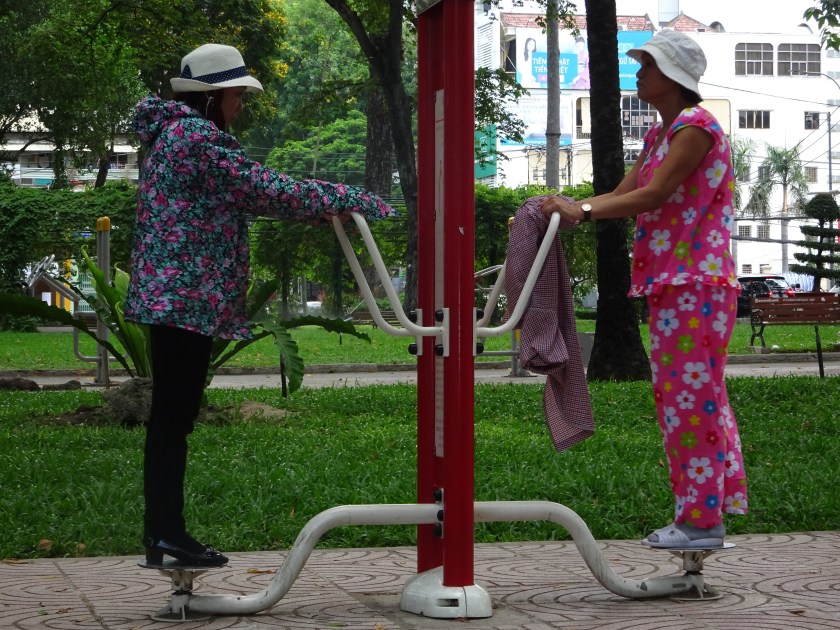
Then we walked over to Tao Dan Park, which was an ideal urban green space covering nearly 25 acres of Saigon and is home to over 1,000 big trees. It amazes me that in such a large, concrete, bustling city there lies this simple escape, a quick fix of a retreat. Early in the morning the Tao Dan Park is filled with people exercising, walking, and practicing tai chi. Despite the chaotic intersections surrounding Tao Dan, the minute you bask under the shady trees, you instantly feel a sense of calmness radiate throughout your heated body and a sense of relief flow through your scattered mind. There are a variety of work out machines free to the public which makes this a popular hangout for people of all ages. It sure was a pleasant surprise to see so many staying active. Hmmm, I should take notes.


After chilling in the park and people watching, we walked about 15 minutes for lunch at Hum Vegetarian Cafe & Restaurant. This was comforting for me because not many local dishes are vegetarian friendly. They usually have pork or beef or fish. Even the chicken is a little iffy for my liking being mainly on the bone, dark meat with skin (and truthfully not knowing what part of the chicken it came from – mysterious meat at its best). I’m so boring and usually (okay always) prefer boneless, skinless, white meat chicken breast. So lame but hey, stop judging. Even if you’re not a vegetarian, this restaurant is still worth trying out. Just like they do in India, they make non-meat dishes so flavorful, delightful and satisfying that you don’t even realize there is no cow or pig or sea life to compliment it. Plus, the charming atmosphere is very peaceful and serene. Ironically, we ran into Lucy and Jalen here, the Australian couple we did the Cu Chi tunnels tour with yesterday. Great minds think alike.


Next up, we visited the War Remnants Museum, which was basically right next door to Hum Vegetarian Restaurant & Cafe (Coincidence? Maybe? Maybe not?). This wasn’t a feel good kind of place as it conveys the brutality of the war. Although Vietnam technically won, the tone isn’t that of victory, but more that of victim. While some (if not most) displays are very one-sided, many of the disturbing photographs illustrating US atrocities are supposedly from US sources, including those of the infamous My Lai Massacre. Since I didn’t know what this was, I’m going to just assume neither do you (but don’t assume, it just makes an ass out of u and me – get it, ass-u-me). The My Lai Massacre, which took place on March 16, 1968, is probably one of the most infamous events of the Vietnam/American War and one of the most horrific incidents of violence against civilians. A company of American soldiers brutally killed the majority of the population of the South Vietnamese hamlet of My Lai. Though exact numbers remain unconfirmed, it is believed that as many as 500 people including women, children and the elderly lost their lives on that day. I’m sure someone had a good reason for this to happen but in my opinion, there’s absolutely no reason that would be good enough. How gut-wrenching. I’m a lover for life (except for cats, I don’t love cats), not a fighter so this did not settle well with me.
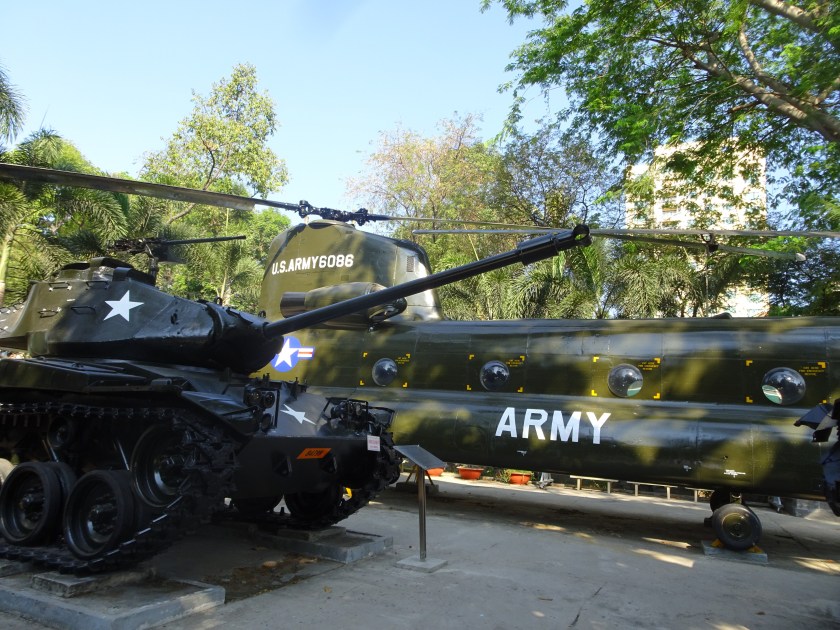
Outside the museum is a range of American military hardware that had been captured or abandoned, much of it handed over to the South Vietnamese regime. There’s a F-111 fighter-bomber jet, Chinook helicopters, battle tanks, more planes, and a display of unexploded ordnance.



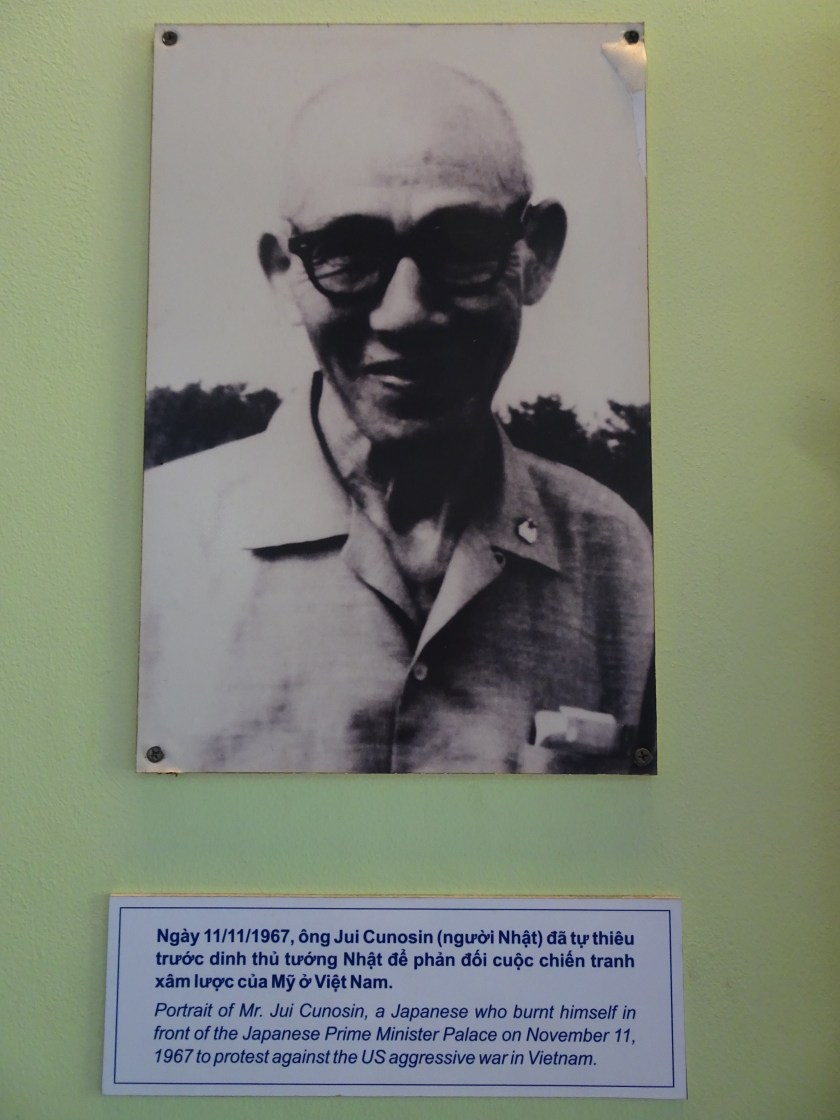
The ground floor of the museum is devoted to a collection of posters and photographs showing support for the antiwar movement internationally. Although this was more uplifting than the horror stories told in the other sections, it was still tragic to see how many people willingly gave up their lives to protest against the war, including but not limited to this young American and somewhat older Japanese man.

Here is a statistics board basically putting the US in the spotlight for the various casualties, costs, military personnel, weapons, etc. associated with World War II, The Korean War and The Vietnam War.

According to the Vietnamese, a total of 3 million locals were killed, 2 million were injured and 300,000 went missing during the war. In addition, over 600,000 tons of bombs were left behind after the war ended which resulted in over 42,000 people being killed and over 62,000 being wounded during 1975-2002 by explosives. To read these facts was beyond disheartening. I know for my parents and their generation, you guys lived through this. I couldn’t even imagine what that was like. But for me, someone who is embarrassed to admit they never cared or paid attention in school, it was all new information. The section that affected me the most was what is referred to as Agent Orange, which was a powerful mixture of chemical defoliants used by U.S. military forces to eliminate forest cover for North Vietnamese and Viet Cong troops, as well as crops that might be used to feed them. More than 19 million gallons of herbicides were sprayed over 4.5 million acres of land in Vietnam from 1961 to 1972. Agent Orange, which contained the chemical dioxin, was the most commonly used of the herbicide mixtures, and the most effective. It was later revealed to cause serious health issues including tumors, birth defects, rashes, psychological symptoms and cancer among returning U.S. servicemen and their families as well as among the Vietnamese population. Even to this day, people are still affected by it. The photos were gruesome and left your stomach in all kinds of knots. I chose not to include any here because some people can’t handle it, I’m sure of it. If you are interested, I highly suggest you Google Agent Orange victims and click on the images tab. Tragic doesn’t even describe what this chemical did to this country.
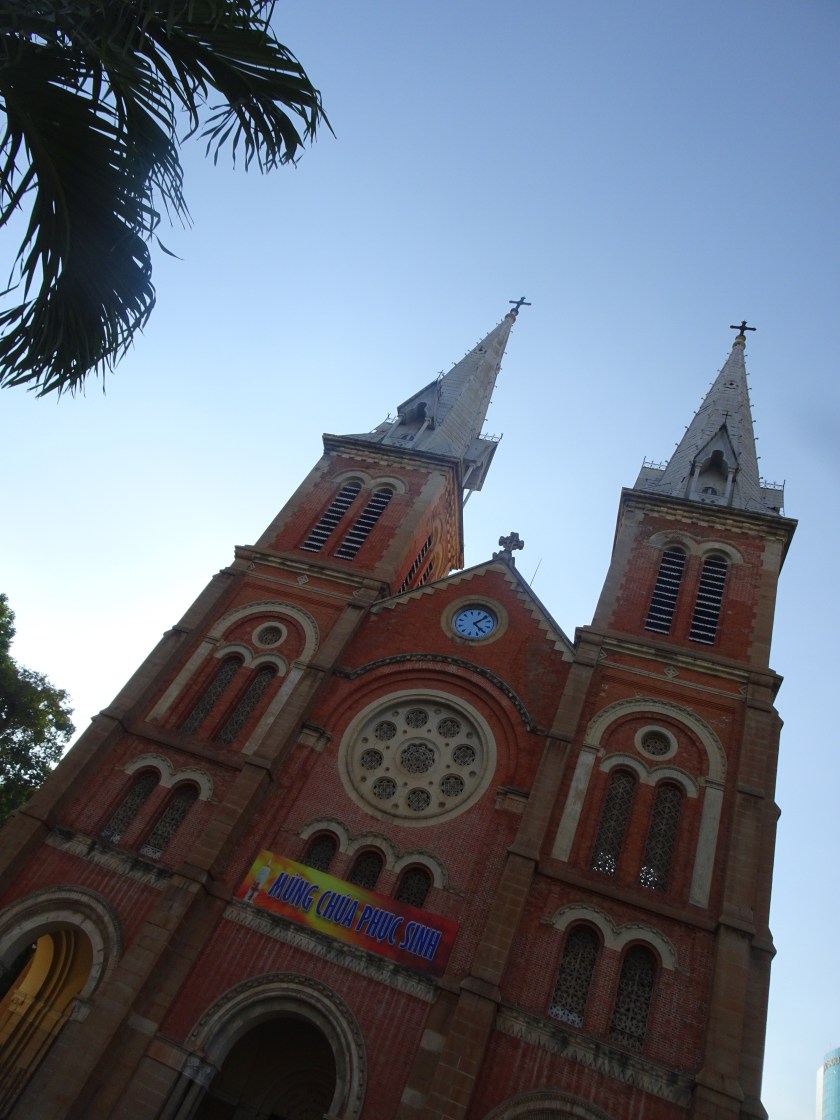
Okay, now that we visited the Cu Chi tunnels yesterday and saw enough devastating photos and propaganda to last us a lifetime at the War Remnants Museum today, it was time to turn the thunderstorm of emotions into a colorful rainbow of smiles. Next up on our walking tour was the Saigon Notre Dame Cathedral. Built between 1863 and 1880 by French colonists, it is one of HCMC’s architectural marvels. It’s hard to miss the church’s twin towers projecting into the sky for some 60 meters.
Right next door was the Saigon Central Post Office, which was built between 1886 and 1891 and designed by renowned architect Gustave Eiffel (can you guess what else he might be famous for?). Walking inside you immediately enter the building’s expansive hall, where you are greeted by an extra-large picture of Ho Chi Minh himself (the man that this city is named after). We kind of felt as if we were in an older train station rather than a post office, as the high arched ceiling and wooden counters make it seem like you should be lining up to buy a ticket. The main attractions inside are two large eighteenth century maps which sit opposite each other on either side of the hall. Besides being a fine example of colonial architecture, the Post Office is still completely functional. You can send and receive mail, buy stamps and postcards, or use the phone bank to make international calls.


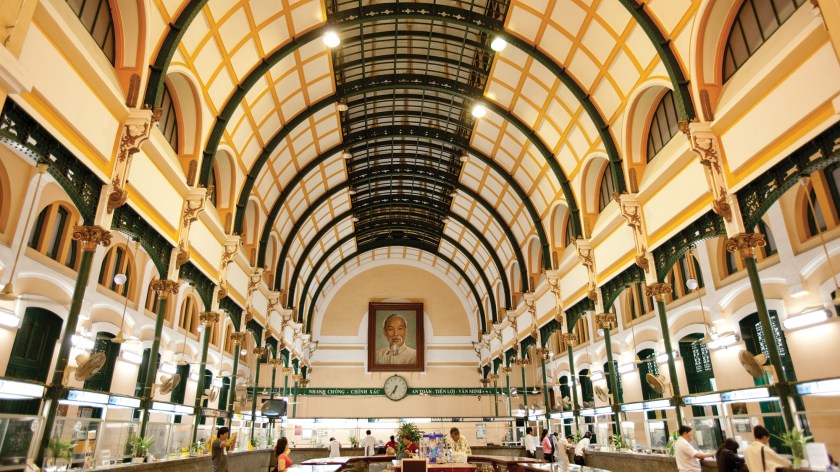

Another yet wonderful day of exploring this stimulating city. We definitely got our steps in by walking nearly 6 miles and burned enough calories to later enjoy a carb filled dinner at Pizza 4P’s. A trendy, semi-upscale, Westernized, delicious place with homemade pasta.
Day 5 – May 5
Today we went on a full day tour with Urban Adventures down to the Mekong Delta, otherwise known locally as the Nine Dragons River, the Rice Bowl of Vietnam or the Agricultural Heartland of Vietnam. The Mekong Delta is the largest rice growing region in Vietnam, producing almost 2/3 of the rice throughout the country and also has the largest number of rice exporting companies in the country. The Mekong River, which flows through China, Laos, Cambodia, Thailand, Vietnam and Myanmar, is said be the 12th largest in the world – it all flows down to the Mekong Delta. We met at the Saigon Opera House in the heart of HCMC and then drove about 2 hours down to My Tho, a bustling port city. From there, we took a boat ride across the Mekong Delta to Unicorn Island. Yes, that it is what it is called. Unicorn Island. How magical is that? It is 12 kilometers long and only 1 kilometer wide with a small population of just 6,000 people. We tasted local fruit, listened to local musicians and got pressure to buy local products, although it didn’t work on us.

Next up, we visited an organic bee farm that produces all sorts of honey, including some that you eat, some that you drink and even some that you put on your skin to help with aging. There were so many bee’s all around it was a bit uncomfortable but at least it made for a good photo. And the tea sure was mighty bee-licious.
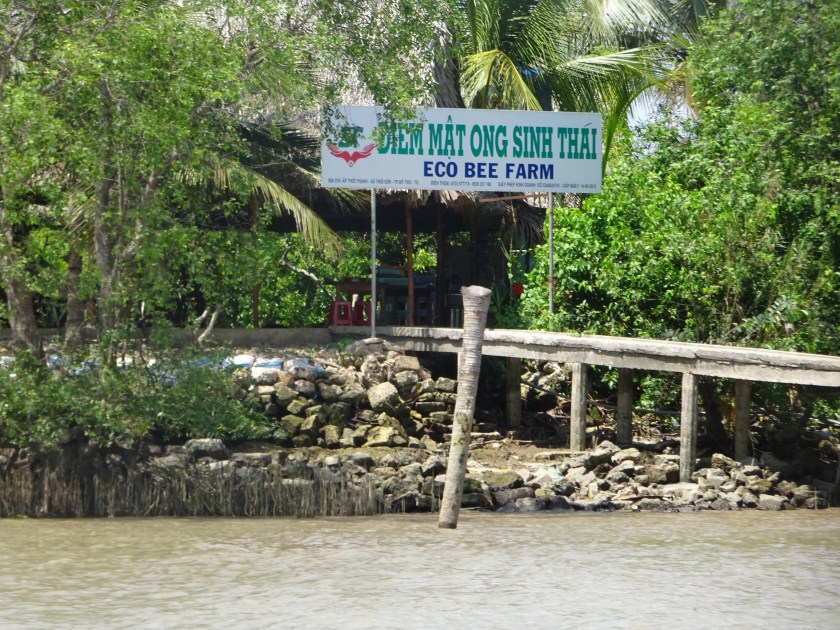


One random story because you know, I like to tell random stories. Our guide, Hong or Linda (two very different names for the same person but hey, options are always good), told us that if we needed to use the Happy Room to use it here. The Happy Room? We were all a bit confused what that meant. Well, it is another reference for bathroom, toilet, water closet, restroom, loo, powder room, lavatory, etc. The reason for this is because you leave feeling happier than when you came. HA! I kind of dig that.
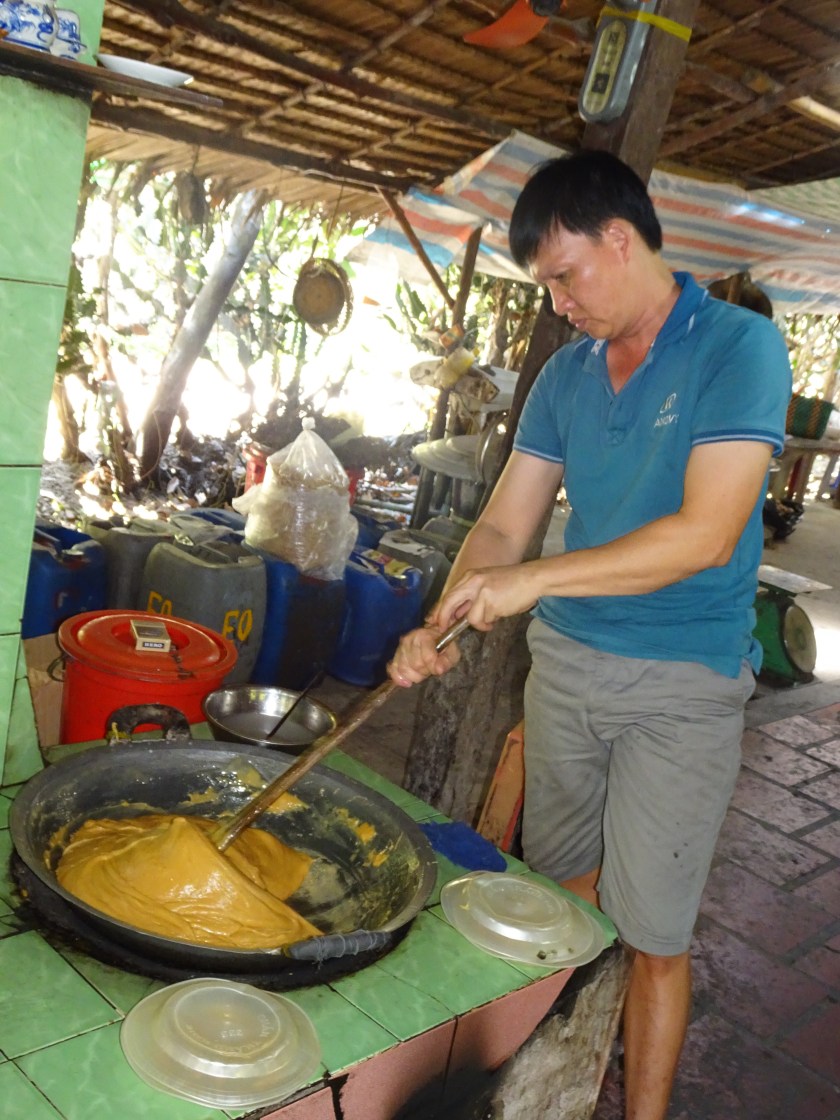
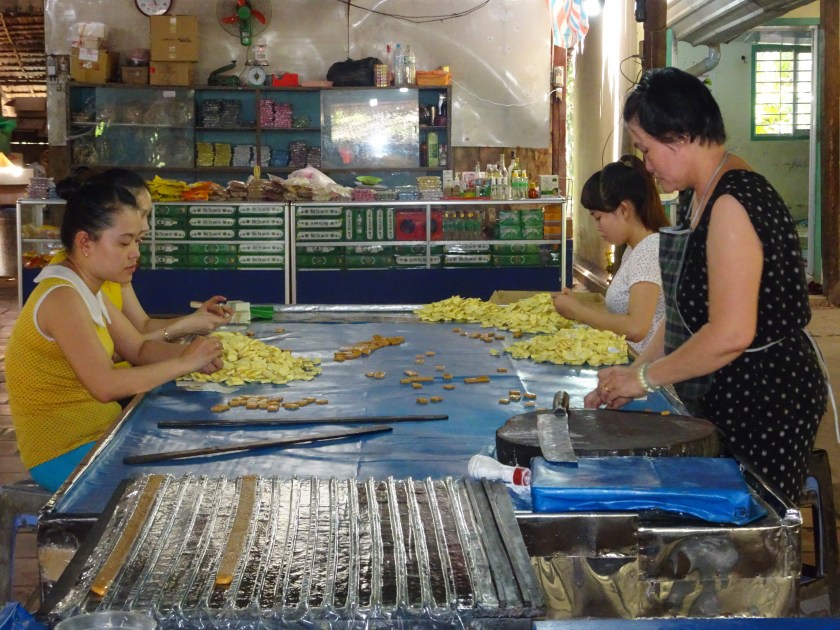
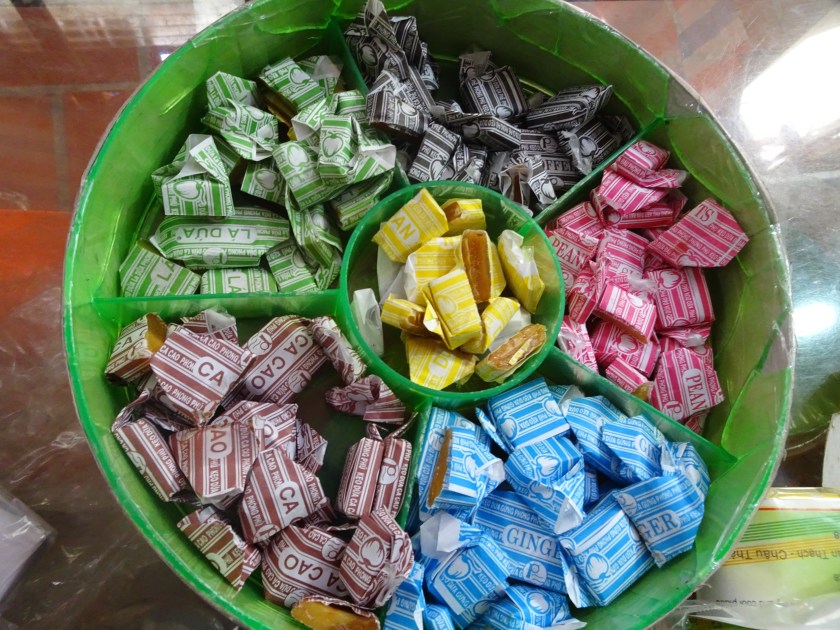
Then, we got back on the boat (happier than before, of course) and headed to a Coconut Candy Village where we got to see the process of how they make this delicious sweetness from start to finish. No factory machines, no child labor – just a few strong hands and the determination not to eat it all at once. I could never survive. They had a handful of different flavors but we ended up buying a bag of the coffee flavor and with ever chew offered a sensational new taste. This message was not approved by my dentist.


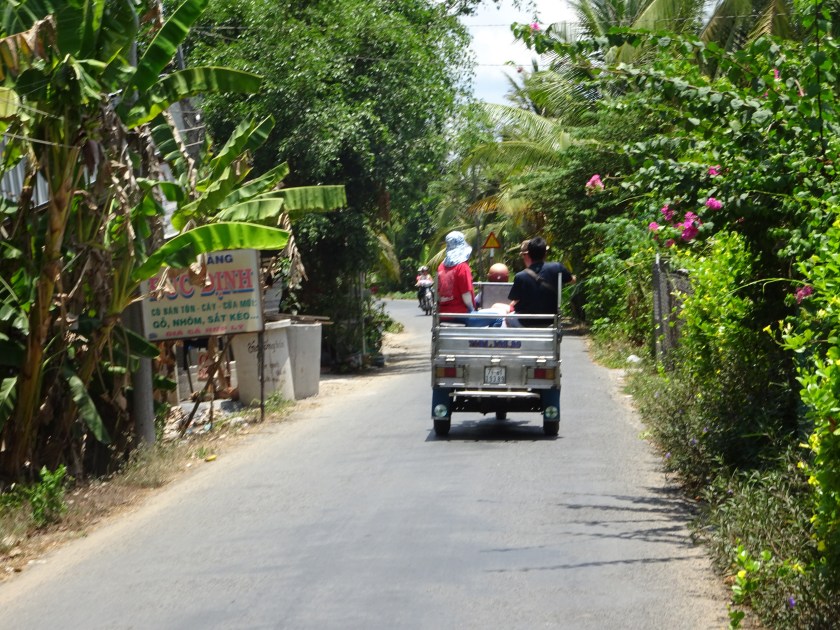
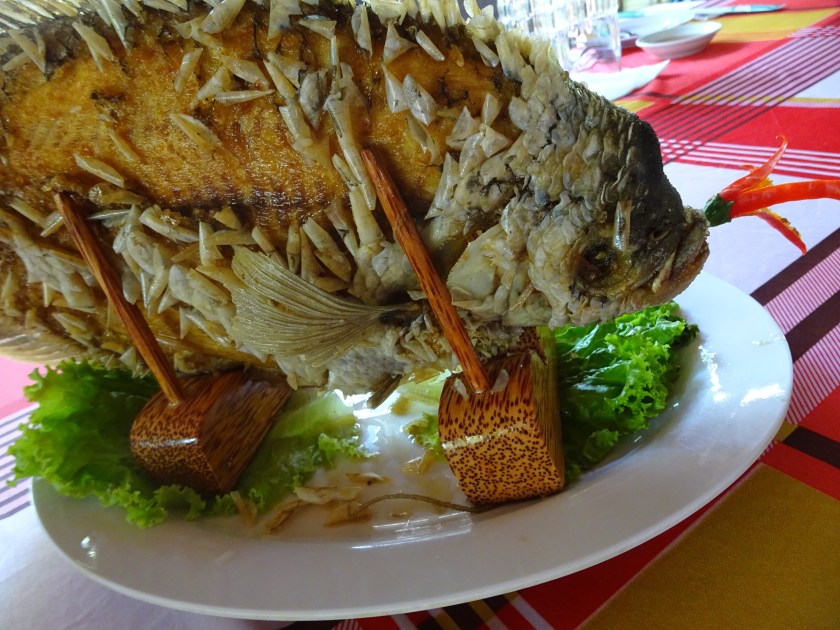
From water to land, we hopped into a new kind of Tuk Tuk and headed to a local village for some lunch. In our group was a lovely couple from Ohio, 2 young cousins from Australia and a single man from Japan. The lunch was a whole fish. With the eyes still intact. I couldn’t tell if he/she was smiling or frowning. What do you think?
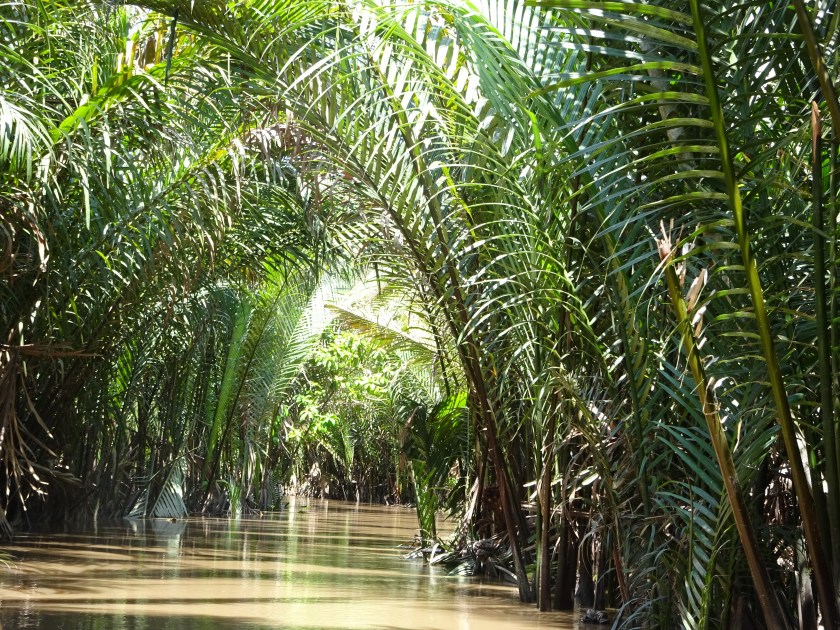
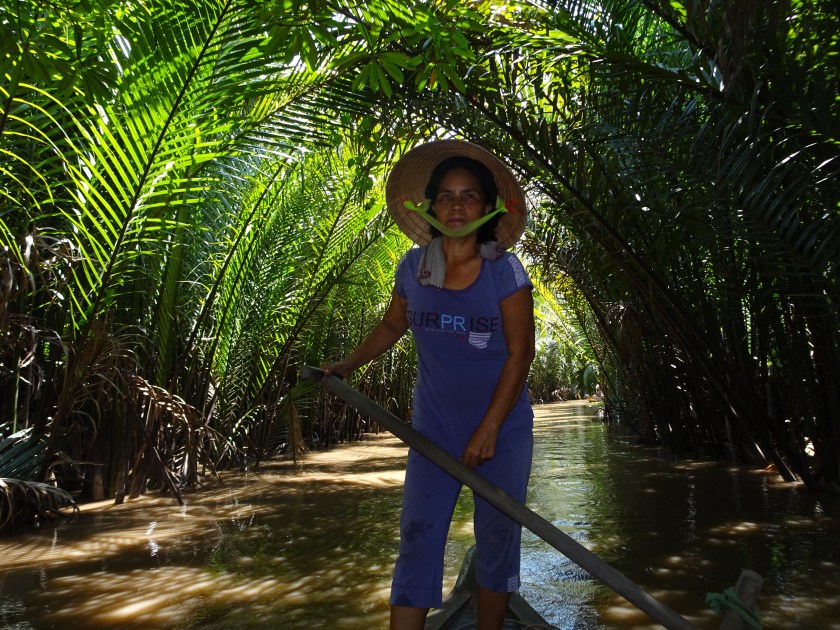
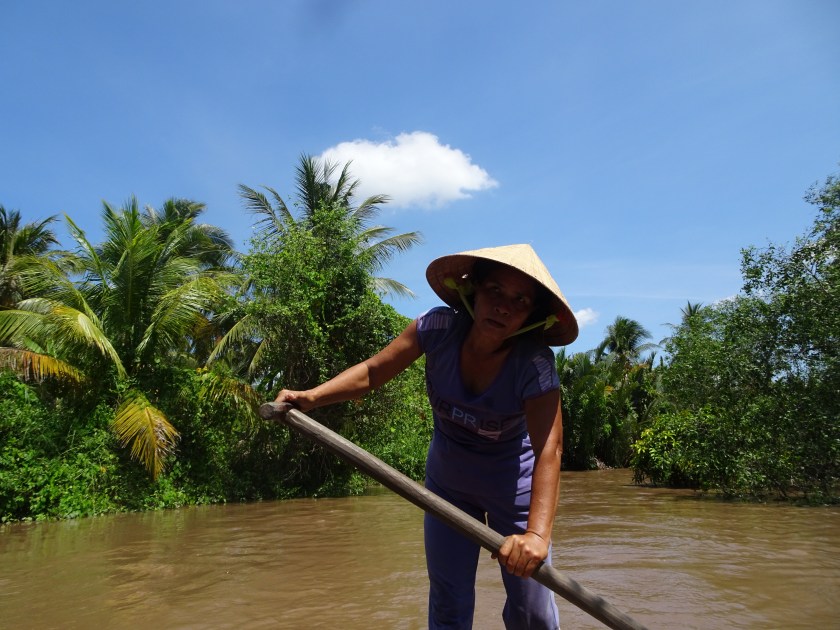
Lastly, we went for a leisurely paddle along the Mekong Delta. Just like the fish at lunch, I couldn’t tell if our rower was smiling or frowning. Or maybe it’s a neutral expression?


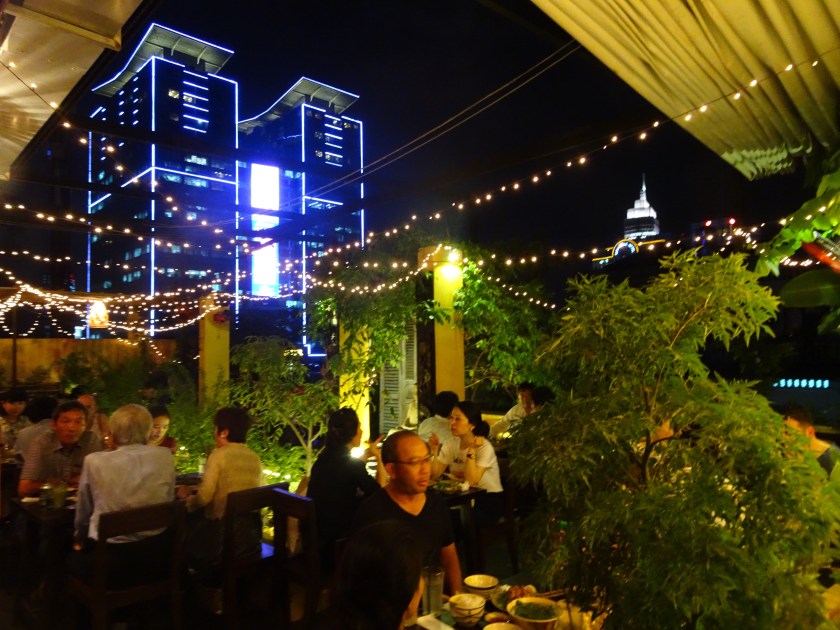
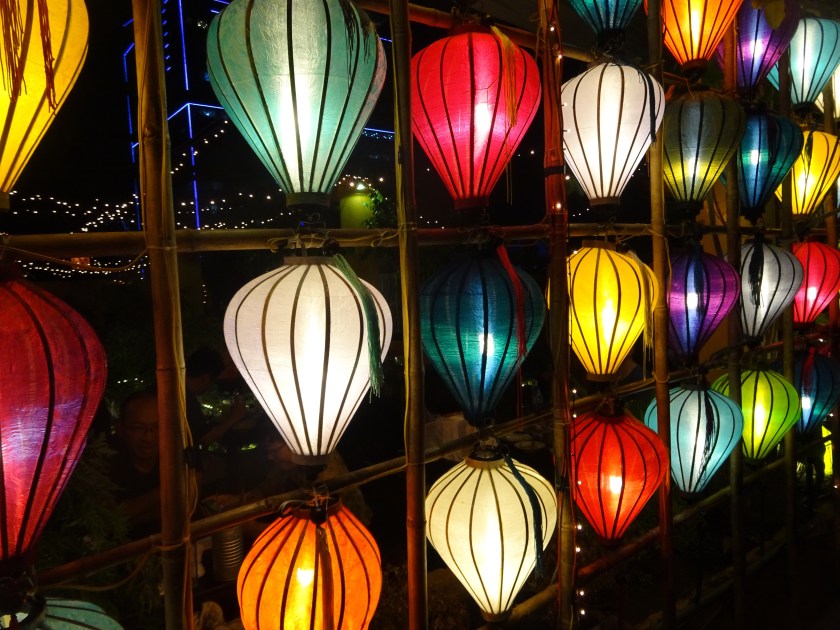
That night, we had a lovely romantic dinner at Secret Garden, which was a super duper cute rooftop restaurant with awesome views of the city. There were lights hanging from every which direction and they had a wall made up of colorful lanterns. Very modern place with incredible local cuisine. Nancy, Carrie and Jennifer – if you are reading this, just know that anything titled Secret Garden will forever remind of you ladies. Love you always.
After dinner, we wandered around, crossing various streets, strolling down random alleys, soaking in our last night here and eventually stumbling upon a lively area of town. At this moment, it verified my feelings for this city, I’m in love. It has culture, it has history, it has great food, it has modern buildings with a Vietnamese twist, it has trees and flowers and gardens and parks and the people – well the people are just lovely. Everyone smiles, everyone says hello, everyone seems happy. Kids are playing, adults are laughing. It’s relatively clean for an urban city. Without a doubt, we thoroughly enjoyed our time here.
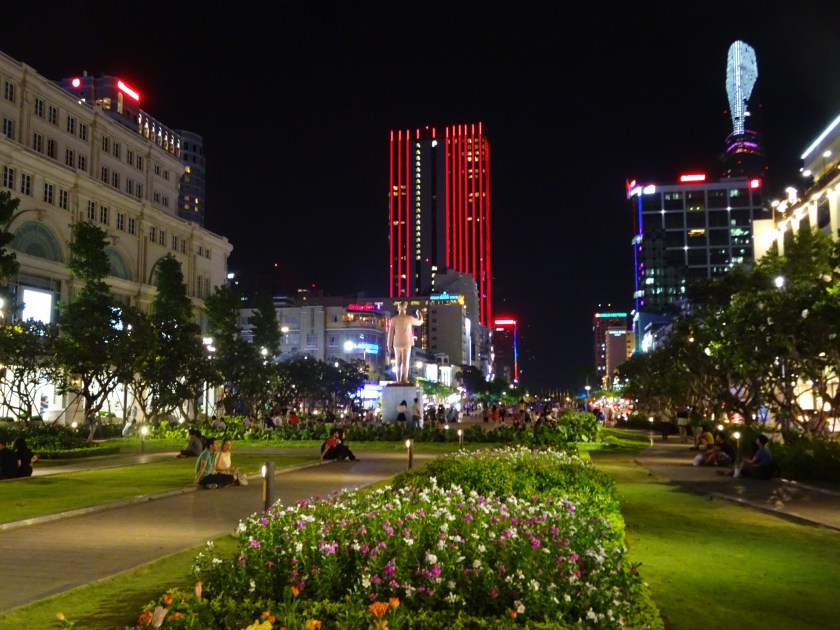
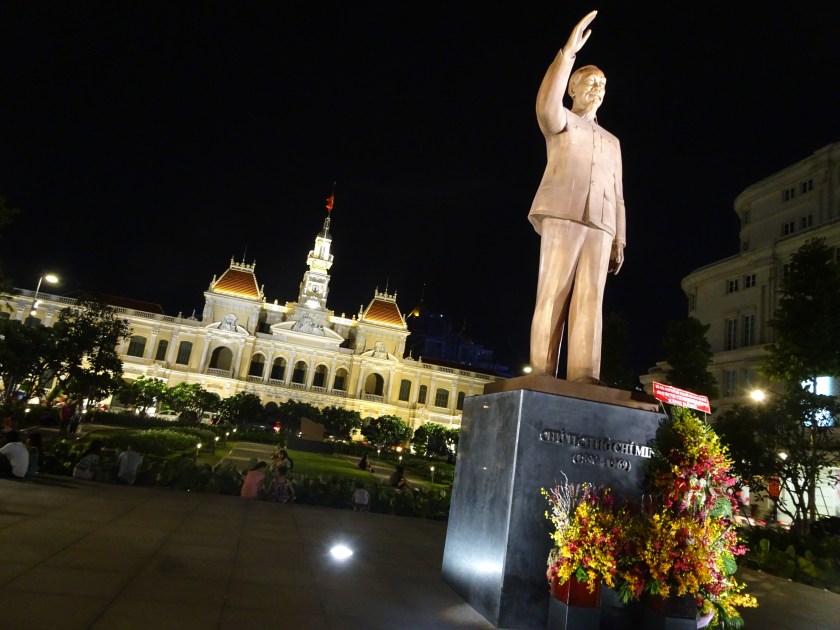
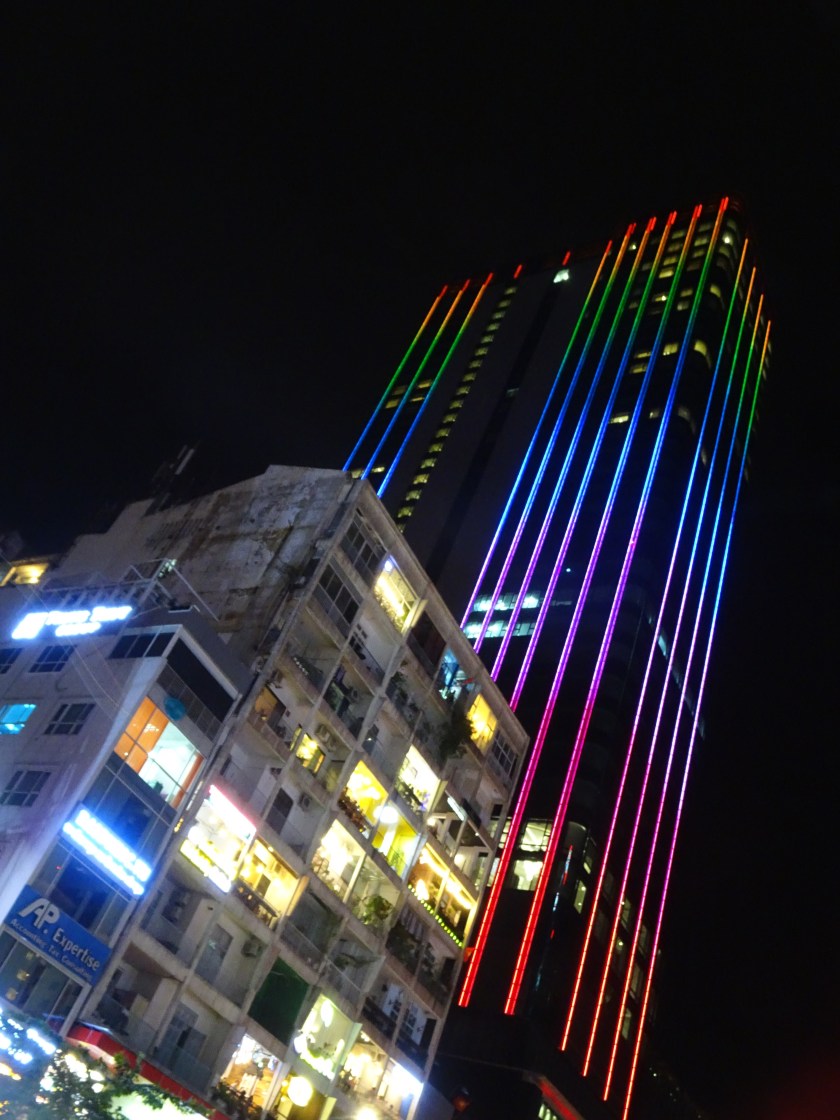

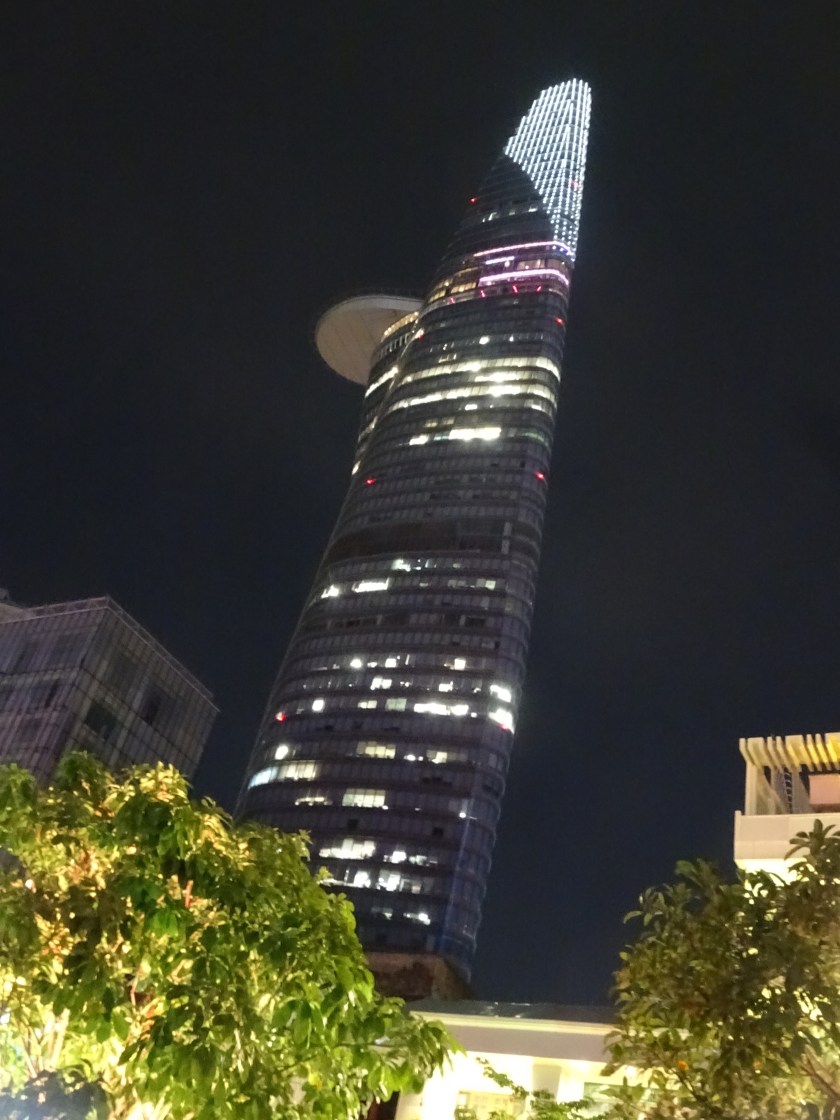
We ended our evening with a drink at EON 51 Heli Bar on the 51st floor, inside of Bitexco Financial Tower, which is the tallest building in Vietnam, standing at 262 meters high. Designed by renowned American Architect Carlos Zapata, this 68-storey tower houses offices, shops, restaurants, a movie theater (the minute you walk in you can’t help but smell the buttered popcorn being popped 3 stories up) and a helipad. CNNGo recently ranked it fifth in their listing of the world’s 20 most iconic skyscrapers. From the bar, it offers 360 degrees of unparalleled, million dollar views of the entire city, shining brightly at night warmly greeting you from below.


That wraps up our five nights in Ho Chi Minh City or for the OG’s, Saigon. We absolutely loved everything about this place from our AirBnB to our tours to our random adventures throughout the city to the millions of motorbikes completely taking over the roads and your eardrums, to everything we ate. You go, HCMC! Thanks for impressing us and setting high standards for the rest of your country.
And thanks to you for coming along. It was an emotional learning period as history’s painful facts definitely hit us hard. However, I feel more like a human being now that I can have an educated conversation about a war that turned both American and Vietnam upside down but unfortunately never right side up.
Tomorrow we fly to Hue, another pivotal city in the war. See you there!
 Follow Our Soles
What a great 5 days! Photos were gorgeous, displaying those skyscrapers at night… I sure wouldn’t mind going to a Post Office like theirs instead of our Livermore one. Wondering how the bee tea tasted Vinny? Your hat looked perfect on you Kim as you traveled down the river…
LikeLiked by 1 person
I loved reading about your visit to the museum. Three people from my high school class died in the Vietnam war. So sad.
That fried fish looked a little scary.
LikeLiked by 1 person