Pokhara, The Lake City

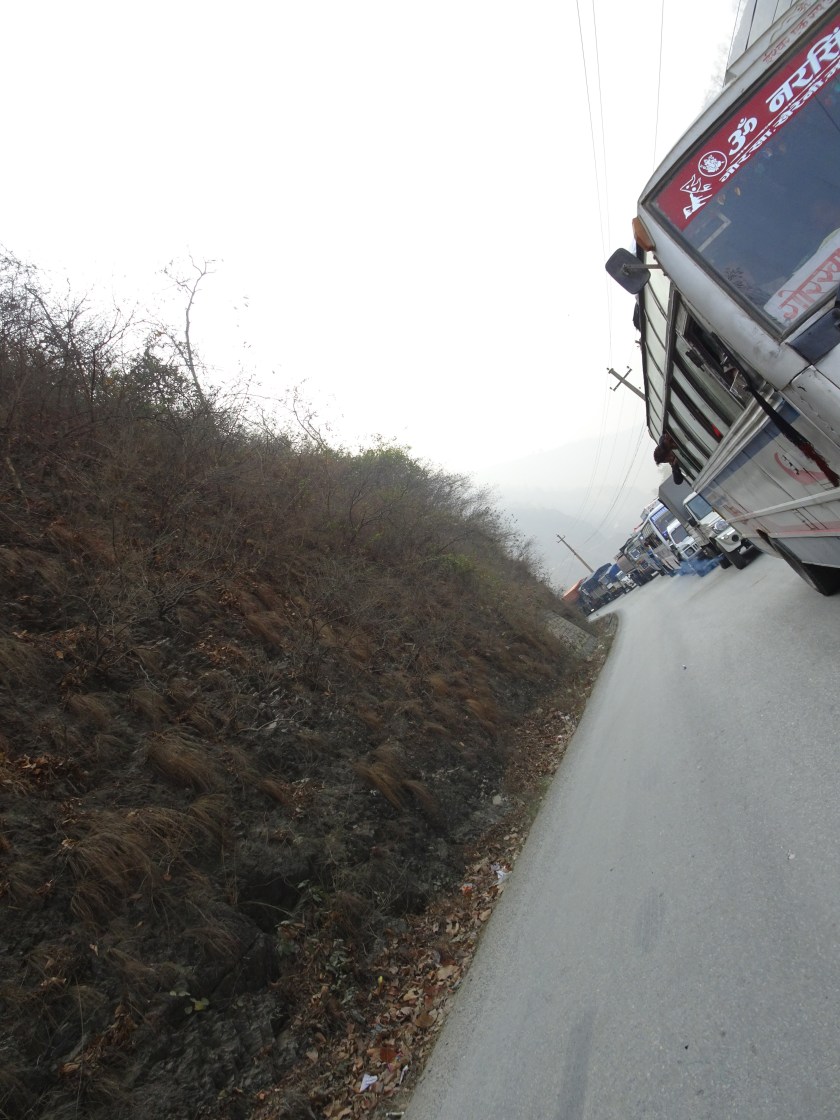
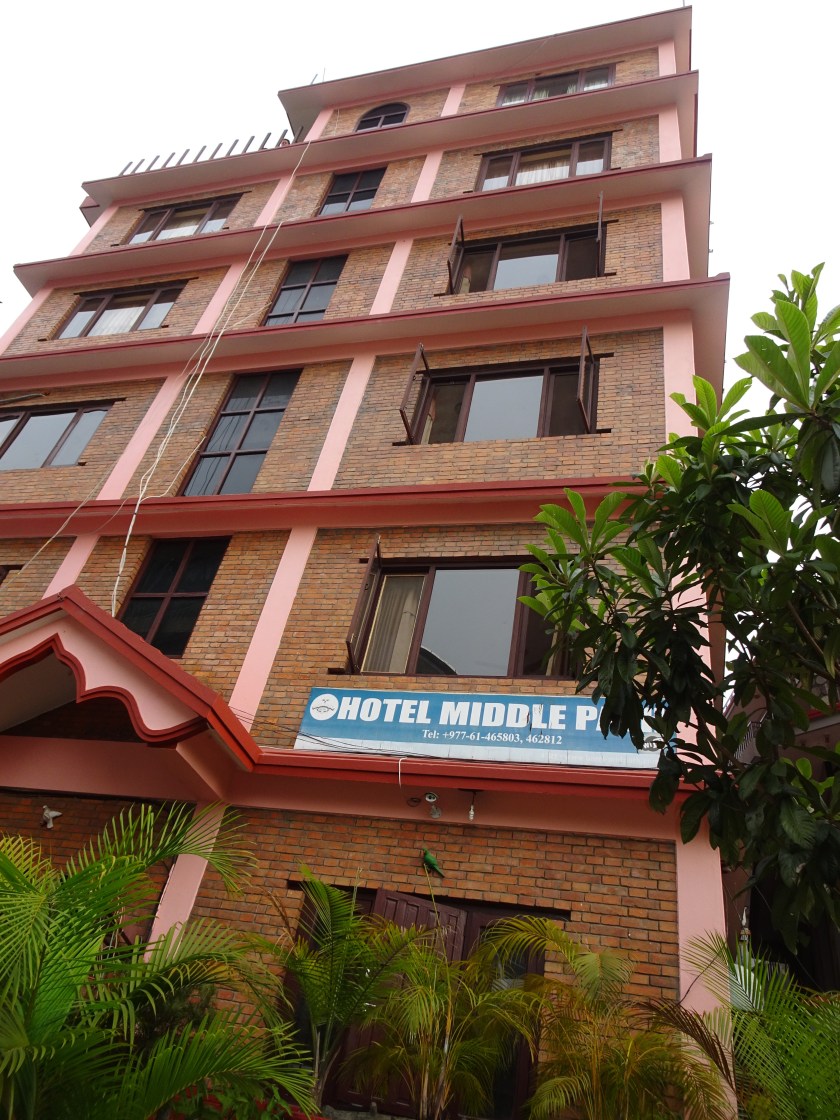
On Thursday, March 10, we arrived in Pokhara around 12:30pm after another long, stressful, anxiety filled, four and a half hour drive.  The road from Chitwan to Pokhara was the same road we took from Kathmandu to Chitwan.  And it wasn’t any less intense this time around.  But we did make it safely and that’s all that matters.  Phewwwww.  Our lodging for the next four nights was called Hotel Middle Path, which was ranked number two on TripAdvisor out of eighty two options (now its number one).  For $38 a night, we didn’t really have too high of expectations, especially knowing Pokhara is a backpackers town.  However, the first room we got was miserable.  It smelled like the dirtiest Goodwill Store mixed with a retirement hotel, the carpet was stained, the bed sheets were dirty and it gave off this indescribable creepy vibe for some reason.  So I kindly batted my eyelashes and politely asked for another room.  They happily, with no hesitation, moved us to the fourth floor from the second floor.  Much better.  No mothball smells, no cigarette burns on the carpet and bed sheets looked like they were recently washed.  When I apologized for being so high mantainence, the guy replied with “treat this like it’s your home, whatever you need, just ask”.  I mean, these people are just the best.
DSC05785

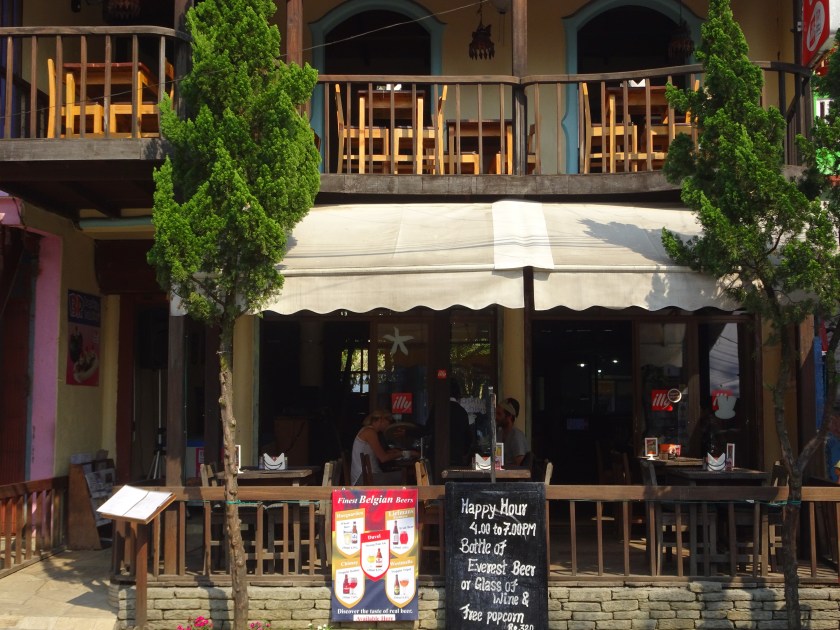
After we all settled in, we went for a stroll around town and had lunch on the patio of The Olive Cafe, located on the main strip.  It was lovely to sit outside, people watch, familiarize ourselves with our bearings, chat it up and brainstorm what we will do for the next three plus days.
DSC05571

DSC05576

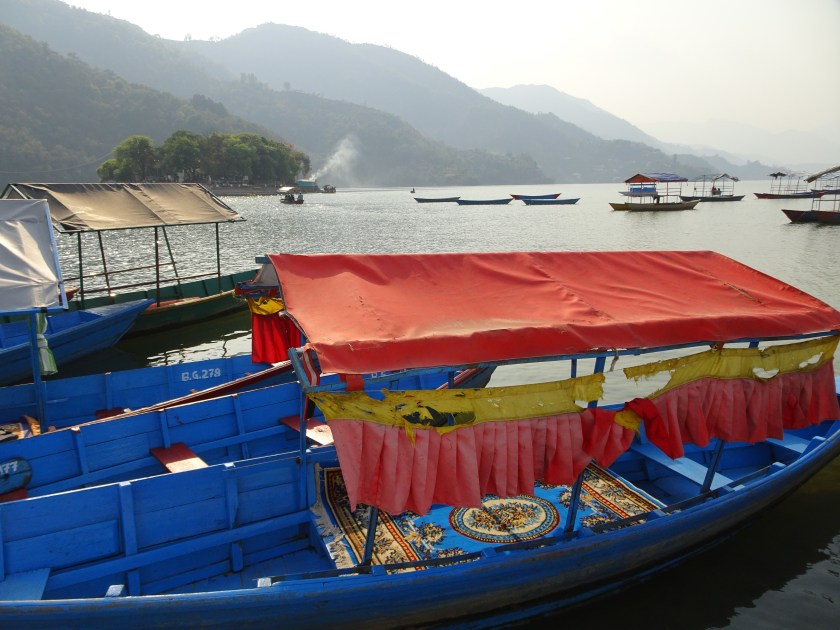
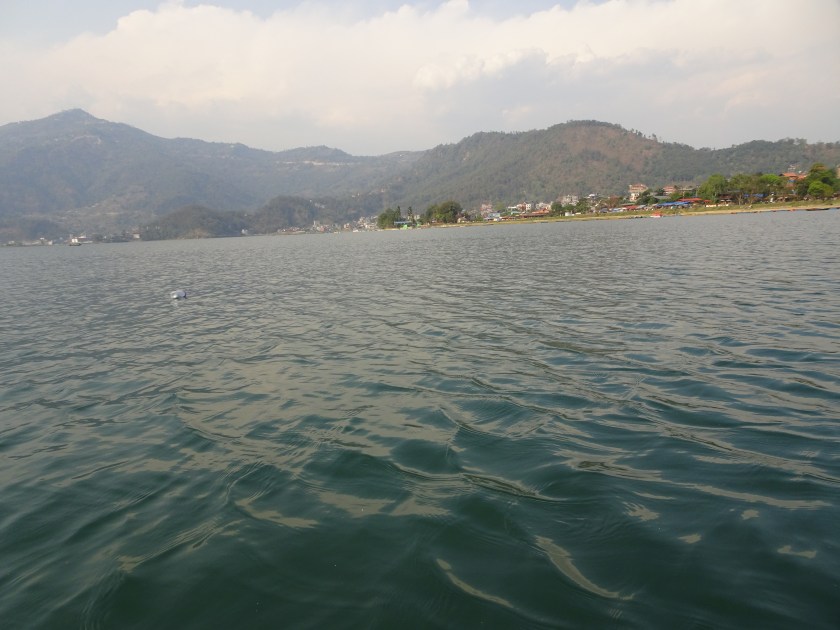
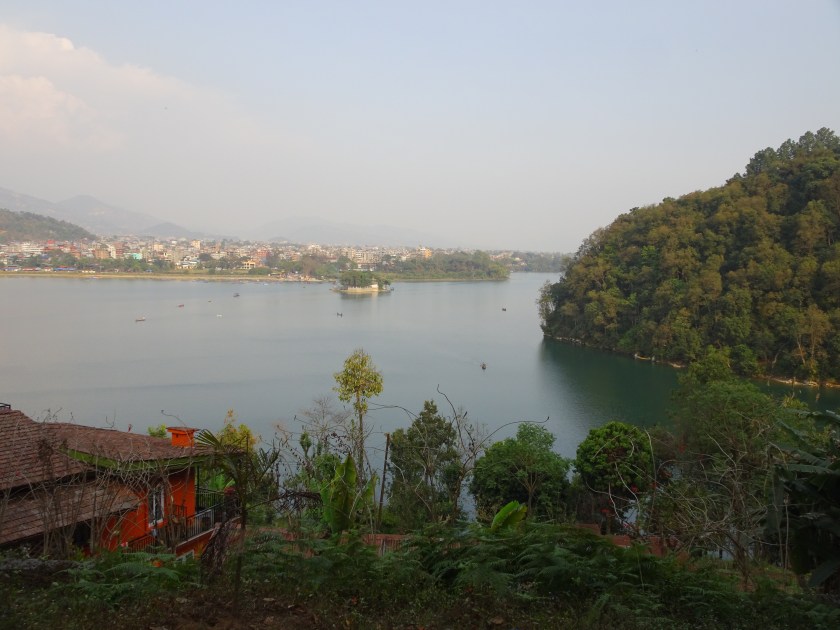
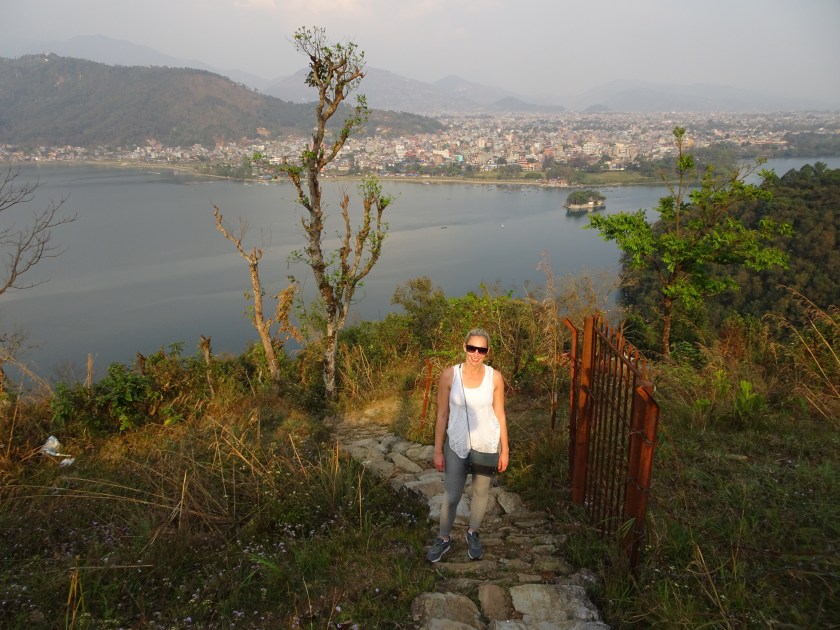
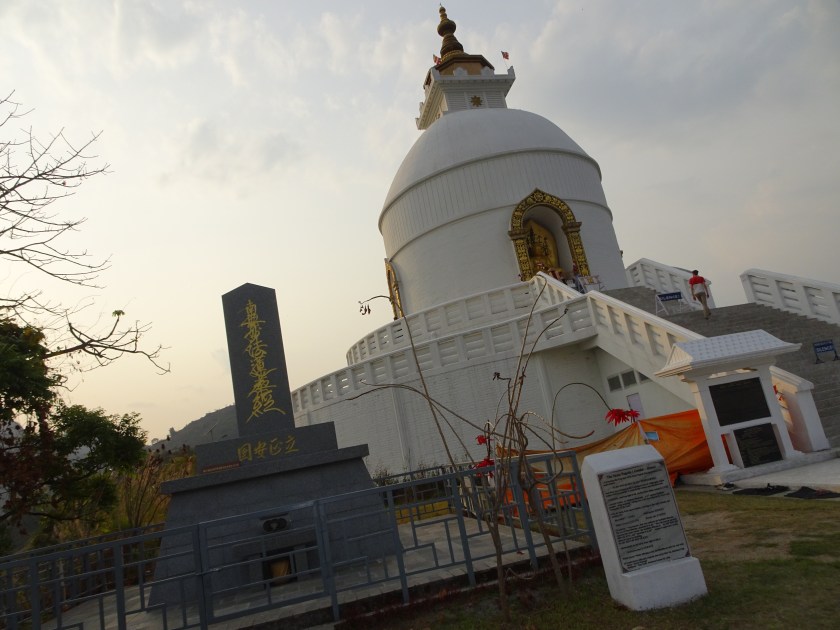
We ate, had cappuccino’s, headed back to the hotel to change and then set out to visit the World Peace Pagoda, which is a Buddhist monument on a hilltop in Pumdi Bhumdi. It is situated at a height of around 3600 feet and was built by Morioka Sonin, a Nipponzan-Myohoji monk, with local supporters under the guidance of Nichidatsu Fujii, a Buddhist monk and the founder of Nipponzan-Myohoji. The shrine was created as a symbol of peace, and offers panoramic views of the Annapurna range, the city of Pokhara and Phewa Lake.  This ended up being over a three hour adventure.  But we certainly enjoyed it every step of the way (literally, every single step).  How could you not?  It started with a ten minute walk through town to the main dock on Phewa Lake.  We then took a twenty minute boat ride from one side of the water to the other side.


DSC05663

DSC05584

DSC05580

DSC05587


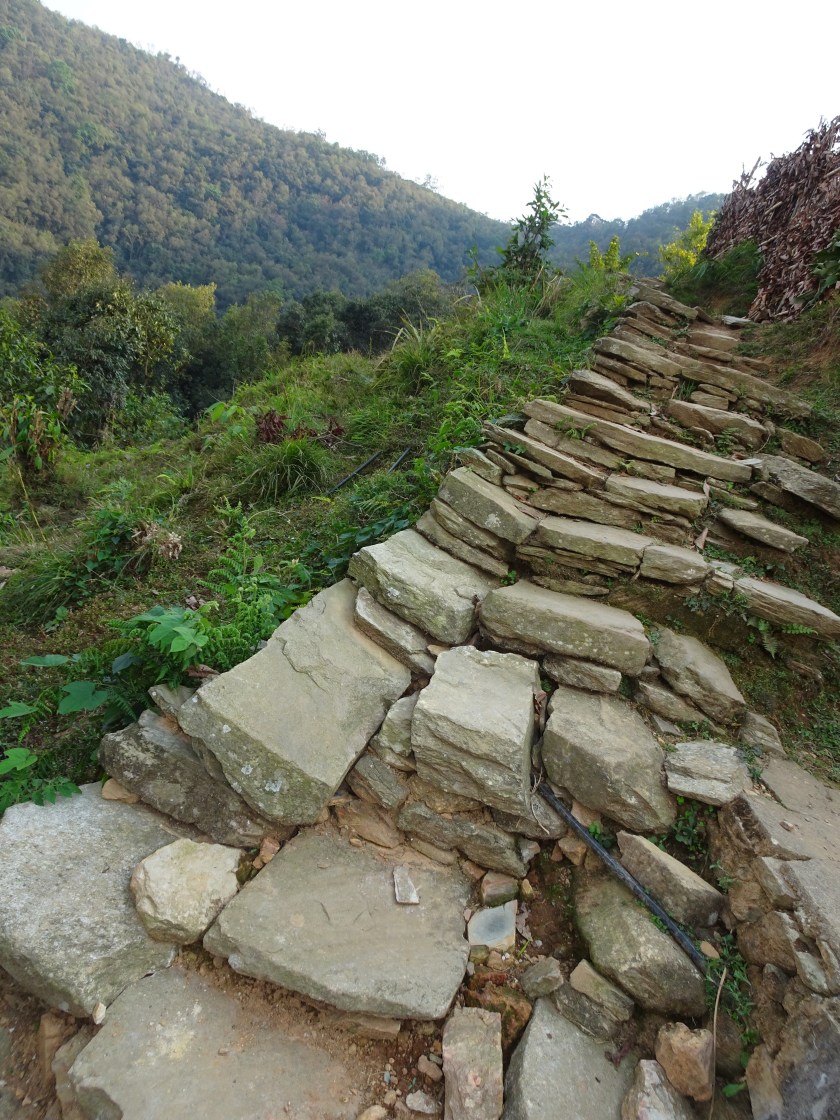
Then we walked up hundreds, most likely thousands of stone like stairs, for about an hour.  Every next level you got to offered fantastic views.  And the scenery surrounding the trail was very inviting as well.  It was lush greenery that if it could talk would say “hold my hand and walk beside me”.  When you are sweating up a storm from a work out, it helps to have visuals to appreciate along the way.  It’s mental motivation.  At least it is for me.

DSC05597

DSC05598

DSC05611

DSC05605

About half way up, we passed by a small village of homes…

DSC05607

Once we got to the top, there was a nice breeze that was much needed to cool us down.  I was huffing and puffing so much I felt like the Big Bad Wolf from The Three Little Pigs.  The World Peace Pagoda was lucky I didn’t blow it down with my heavy breathing.  I think the altitude mixed with the heat mixed with being slightly out of shape didn’t help either (excuses, excuses).  As I slowly caught my breath, I could feel my body, mind and soul transition into perfect harmony.  It was so calming being up here.  There was no noise and no commotion.  Just peaceful vibes.

DSC05621

DSC05625

DSC05637

DSC05651.jpg

DSC05653.jpg

And unfortunately, based on this sign, you had to keep your clothes on.  What a huge disappointment that was.

DSC05623

The Peace Pagoda has four main Buddha statues, reflecting four prominent stages of Buddha’s life – where he was born in Lumbini, Nepal where he became enlightened in Bothgaya, India, where he taught most of his life time in Sarnath, India and where he reached nirvana at Kushi Nagar, India.

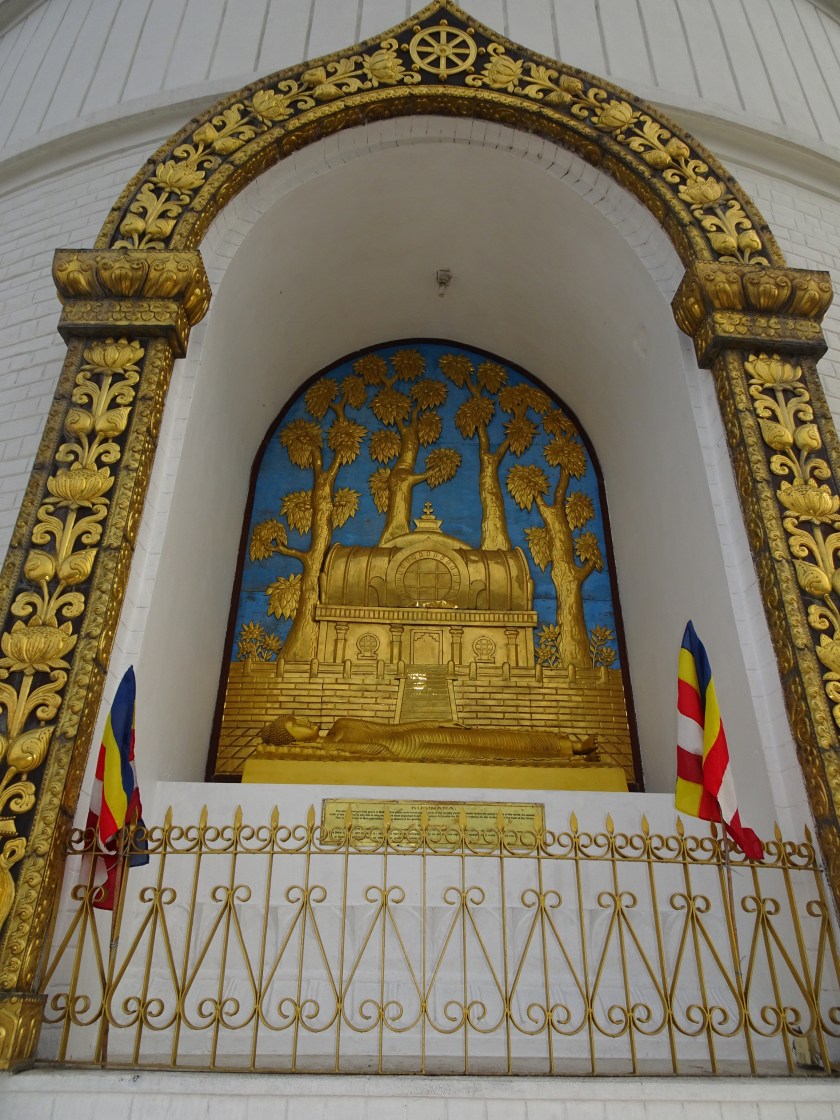
DSC05643.jpg

DSC05630.jpg

DSC05644.jpg

DSC05636.jpg


As we were walking down the same path we walked up, we noticed young kids and parents, with paddles as well as women carrying up loads of what looked like grass on their back.  I think this is their everyday commute.  They paddle across the lake to the main city for school or work then hike up this steep mountain to get home.  Wowzers,  Their endurance level must be extremely high to do this every single day.  Good for them.  It’s better than sitting in a car, smoking a cigarette, listening to trashy music, on a polluted freeway for hours at a time.

DSC05662

Oh, and I forgot to mention there is a typical restaurant at the bottom of the hike for anyone who wants to grab a quick bite or a refreshing drink before or after the climb.  What’s a typical restaurant you ask?  Well, ask the owners who came up with the name…

DSC05595

That night, we walked to Cafe Concerto, a yummy restaurant owned and operated by Italians.  It was rated number one on TripAdivosr so we obviously weren’t the only tourists looking for an authentic pizza and pasta dinner.   The place had a very charming ambience, great service and pretty delicious food.  Six thumbs up from us.  Our waiter was the most adorable, peppy guy I’ve ever met.  I wanted to put him in my pocket for a rainy day.
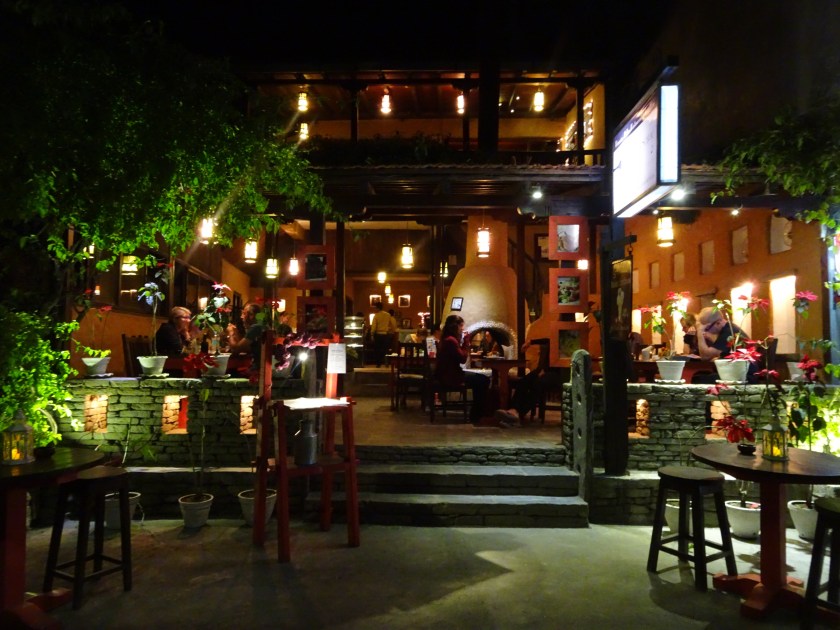
DSC05666

The next morning, Jennifer and Vinny wanted some chill time, and since I’m not that great at chilling, I walked around town by myself.  Pokhara, although still smaller than your average metropolitan area, is the second largest city in Nepal.   The main street is quite long but after ten minutes of window shopping, you realize it’s all the same.  There are restaurants, bars, paragliding companies, souvenir stores and for the first time in eight weeks, I saw tons of coffee shops that offered “coffee to go” as an option.  Unless you randomly found a Starbucks in India, “coffee to go” wasn’t ever possible.  After doing research on this new found discovery, I quickly learned that coffee farms are everywhere throughout Pokhara so having locally grown organic coffee isn’t a luxury, it’s the norm.  As I continued down the street for a little while longer, I started hearing music.  American music.  Blasting.  About five hundred feet more, I noticed a radio station booth on the corner that was rocking out to Michael Jackson’s Beat It.  Oh man, I love that song.  Everyone passing by was singing along, out loud, so of course, I joined in.  Luckily I wasn’t discovered by a recording company.  And I saw a colorful local bus that caught my eye.

DSC05673

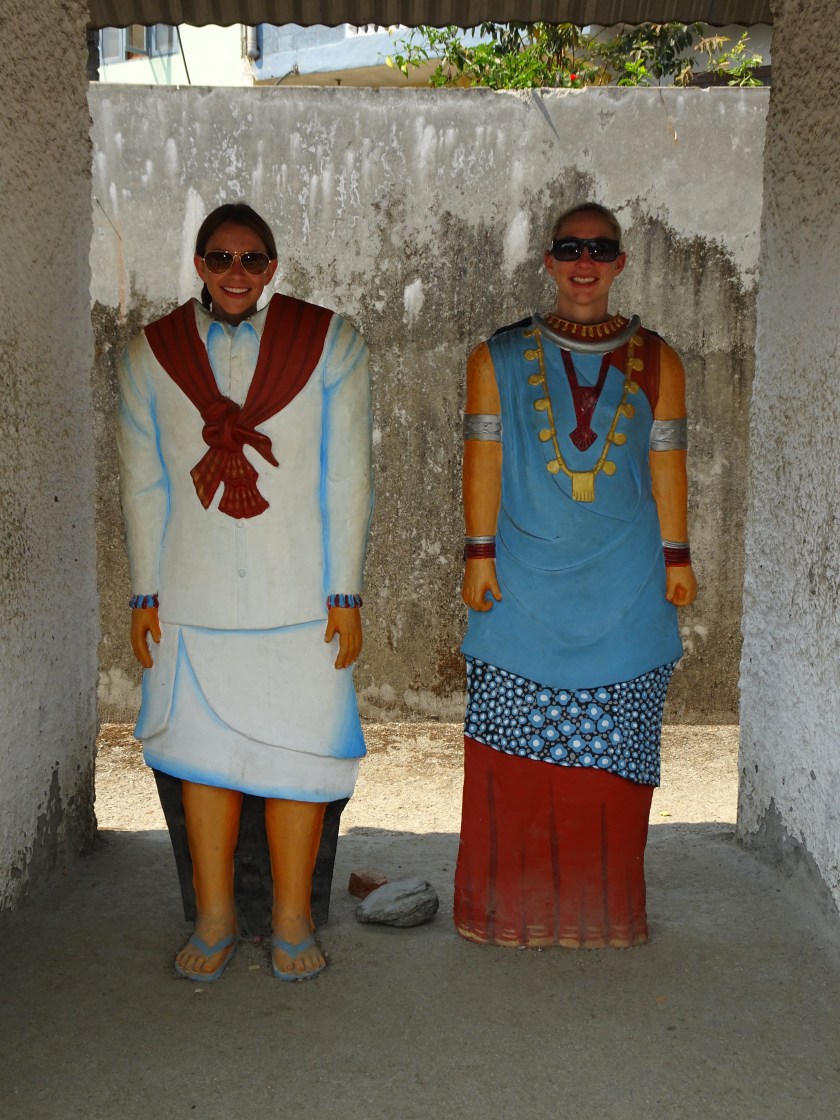
For the remainder of the day, we took in some of the local sights.  First up was Devi’s Falls,  which was described to us as a cascading waterfall that flows through a tunnel from a lake and into a cave.  Well, it wasn’t exactly like that when we saw it.  I believe it’s because the summer months bring the most rain which in turn, intensifies the waterfall pressure so in March, there wasn’t much rain yet.  Regardless, it was still pretty.  Just nothing to write home about.  Plus, there were a few very random 3D clay displays of people without heads so we had a quick laugh and inserted our perfect faces into their perfect bodies.
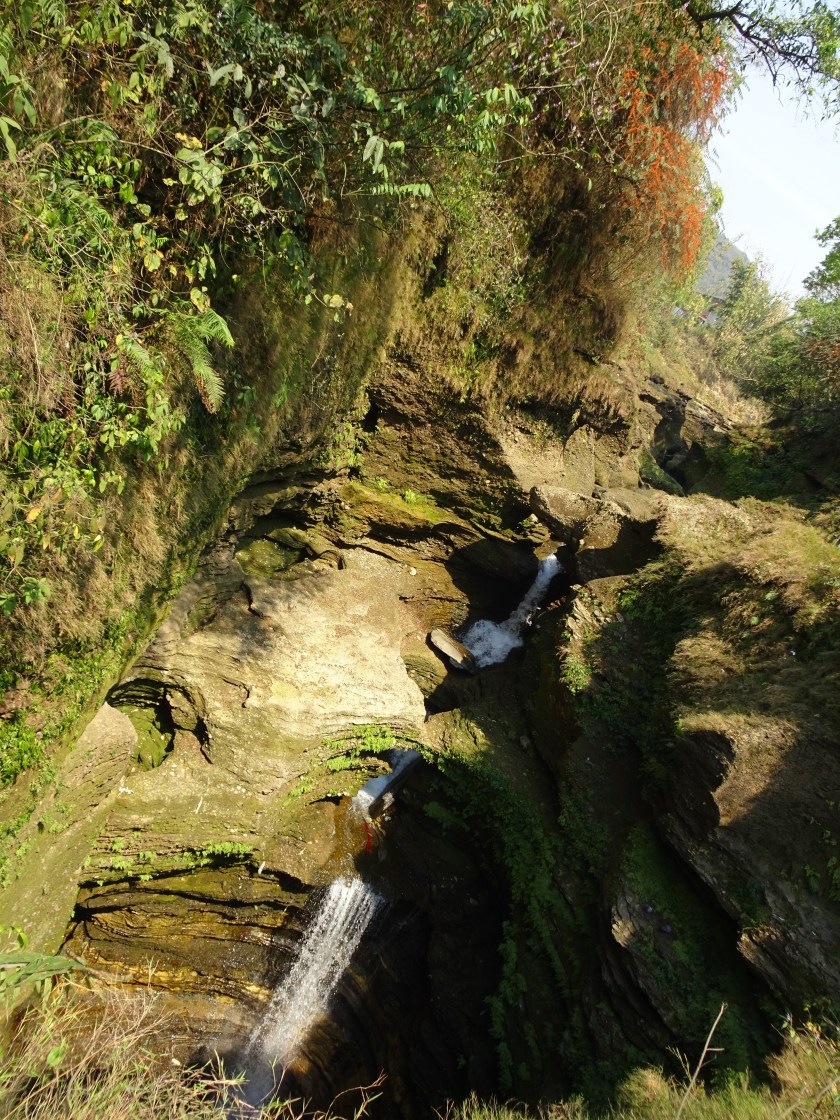
DSC05687

DSC05691

DSC05695

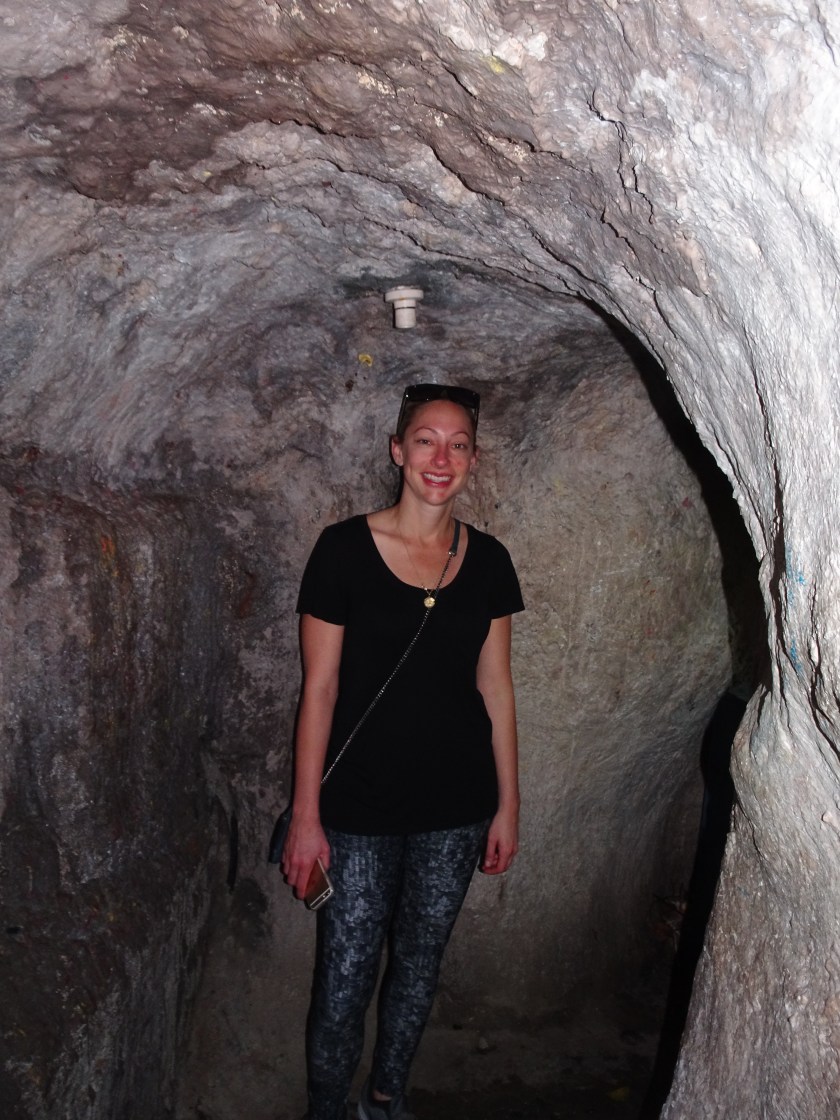
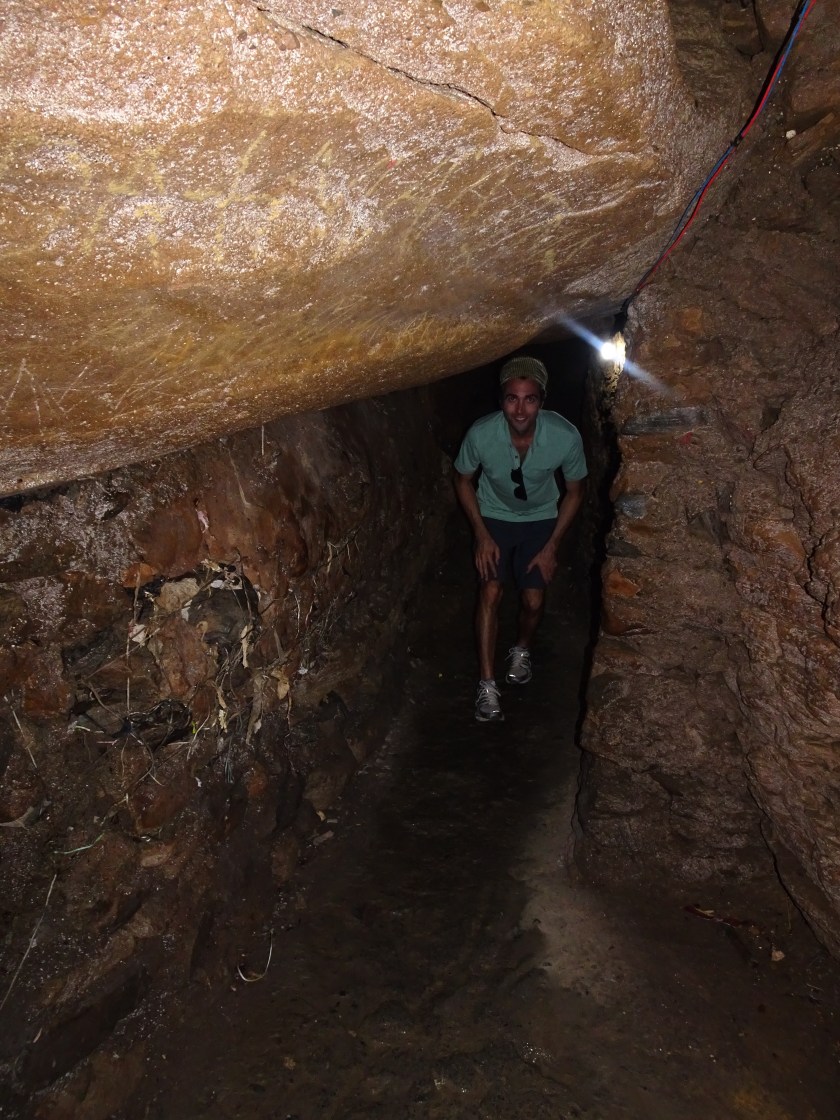
Next up was the Gupteshwar Mahadev Cave, which was supposedly formed from Devi’s Falls.  After you pass by thirty or so shops, you are welcomed at the top by a beautiful spiral staircase that takes you down to the entrance of the cave.  Although dark and dingy, the caves are beautiful from inside. It is a very sacred place for the Hindus because a phallic symbol of Lord Shiva is preserved here, apparently in the condition it was originally discovered.  Due to the lack of light, it was nearly impossible to capture it in a photo but I certainly tried.  A for effort, right?

DSC05700

DSC05704

DSC05722

DSC05720

Third on our Pokhara scavenger hunt was Tashi Ling, the smaller of two Tibetan Refugee Camps in the area.  There was a tiny museum that provided some history on how these Tibetan refugees arrived in Nepal and “how they struggled yet grew over the last 50 years”.  After the formation of communist regime in China, it immediately started taking interest to occupy the neighboring country, Tibet and eventually invaded the Eastern part in 1949, making the lives of innocent locals highly unbearable.  So on March 10, 1959, when the Chinese people deliberately crushed their peaceful demonstrators in Lhasa, His Holiness the 14th Dalai Lama and 80,000 Tibetans took refuge in India, Nepal and Bhutan.  They traveled days and nights risking their lives while crossing the high Himalayan Ranges, mostly covered in snow, causing frostbite, injuries and untimely deaths.   When the survivors settled in Pokhara, they had to quickly adapt to new food habits, new cultures, new languages and new climates.  This lead to even more deaths.  However, they remained optimistic that a better future was ahead and sustained livelihood with the help of NGO and INGO’s in building small agribusiness and poultry.  Some even worked as daily wage earners in the constructions of what now is known as the Siddharth Highway, which connects Pokhara to the Indian Border.  Today, there are about 550 settlers of this camp, who have been there for over 50 ears as refugees, only with the hope of one day returning to their country, Tibet.

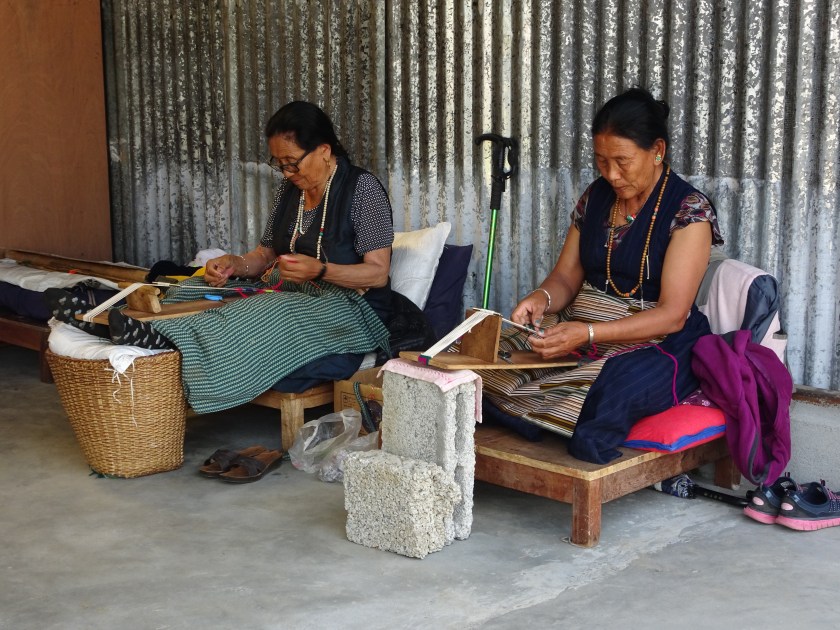
On a more uplifting level, we were able to watch as women wove carpets and blankets, all by hand, with no big fancy machines or factories.  Their intricate, stunning final products were then sold in a showroom nearby.  Very impressive.
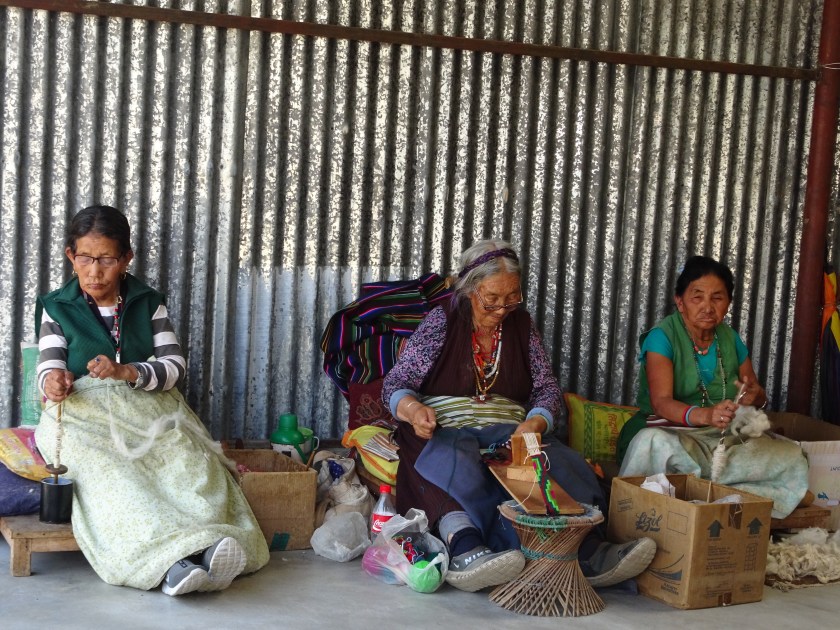
DSC05729

DSC05726

DSC05728

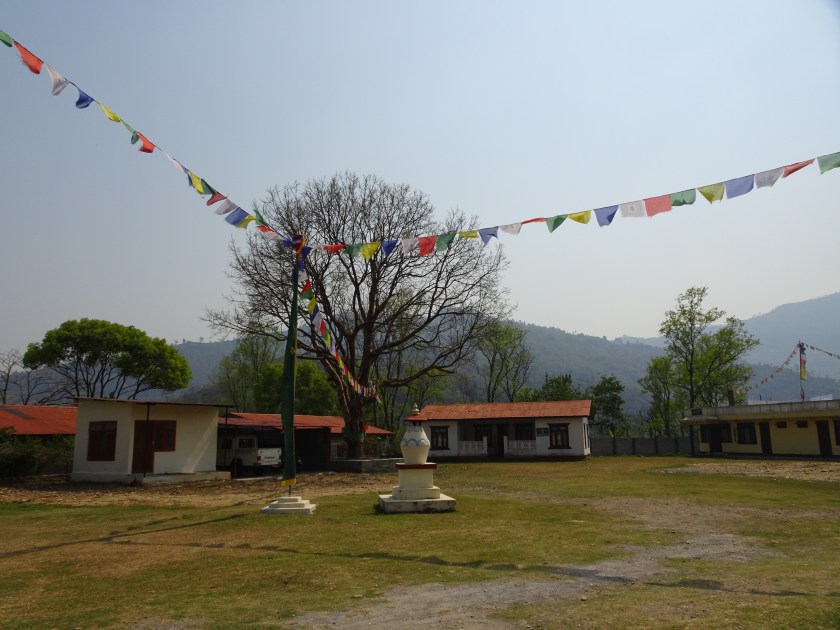
Last on our self-made makeshift city tour, we visited Tashi Palkhel, which is the larger of the two Tibetan Refugee Settlements in the Pokhara area. As we entered the grounds, we were immediately welcomed by prayer flags flapping in the gentle breeze and the colorful Jangchub Choeling Gompa in the middle of the village, which is home to nearly 200 monks.  The atmosphere made you feel as though you were actually in Tibet (well, what I think Tibet would be like.  I’ve never been so just using my imagination here.  Work with me).  We purposely saved this for last because from 3:30pm-5pm, the monks all gather for a prayer session that consists of rumbling, chanting, hmmmmming, singing, horn blowing, drum hitting, instrument clapping and then followed by silent meditation.  We sat indian style, against the back wall and just observed for over an hour.  It was so relaxing, so calming, so tranquil.  We all were trying not to fall asleep.  There were monks as old as what looked like seventy years old to as young as almost seven years old.  They all had their heads shaved and were wearing the traditional “saffron robes”.

DSC05735

DSC05737

That night, we walked to dinner at Moondance, which just like Cafe Concerto, had great food, great service and a great ambiance.  Fun times all around.

DSC05747

DSC05748

Our first two days in Pokhara were pretty pretty pretty awesome.  Can’t wait for the next two days.  In the famous words of The Truman Show, “Good morning, and in case I don’t see ya, good afternoon, good evening, and good night!”.
Chitwan National Park

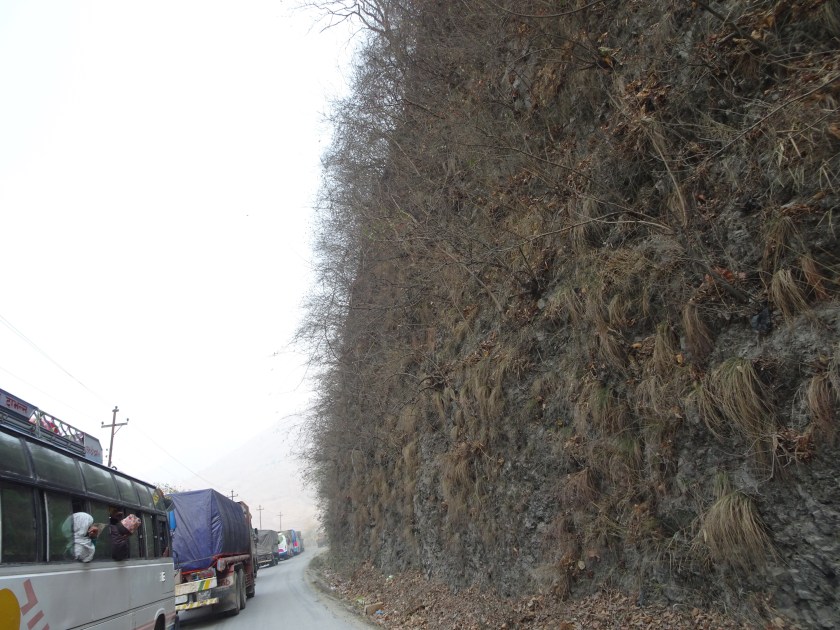
On Tuesday, March 8, we left Patan at 6:30am and headed to Chitwan National Park, which was about a five hour drive.  Laxman, the cooler than cool captain we’ve had for the past two days, was our main man on this journey as well.  Let’s talk about our experience for a second though (okay, maybe a few minutes).  This wasn’t your typical well kept up, wide, multi lane highway.  This was a one lane, unpaved, overcrowded, cliff hanging (literally) kind of road.  If I didn’t have grey hairs before, I sure have them now.  I mean wow.  Every turn was a gamble.  You honk to give warning but that doesn’t mean the other car speeding around the corner will slow down for you.  Jennifer was so frightened in the front that she had to start knitting herself a scarf to keep her eyes and mind off what was happening.  There was a ton of construction going on as well.  And trust me, there really wasn’t enough room for everything to be happening at once.  Good thing the construction workers were all in shorts, tank tops and sandals.  Happy to know they are protected should a massive landslide come falling down yet again (which is what they are working on to begin with).  The drive was so bumpy at certain points I felt like one of those hula dancers you put on your dashboard that moves her hips like Shakira.  To top it off, there was so much traffic.  Huge buses were trying to squeeze through the tiniest openings.  It reminded me in a not so comparable way of Tommy Boy – “fat guy in a little coat”.  You think it should fit, you want it to fit but it most likely won’t fit.  However, as always, I like to focus more on the positive so let’s transition to the cup being half full.  The scenery was beautiful.  There were roaring rapids in the water below us, gigantic mountains that surrounded us everywhere we turned and tiny, underdeveloped villages that lined the cliff side.  Seeing life outside the city, in a more rural aspect, is how you truly understand a culture at its best.

DSC05566

DSC05181.jpg

DSC05567

After an exhilarating, nerve wrecking, heart racing, want to pull your hair out of your head, hope to not bite every nail off kind of ride, we finally arrived safely, in one piece at Chitwan National Park, thanks to our Formula 1 driver, Laxman.

DSC05183.jpg

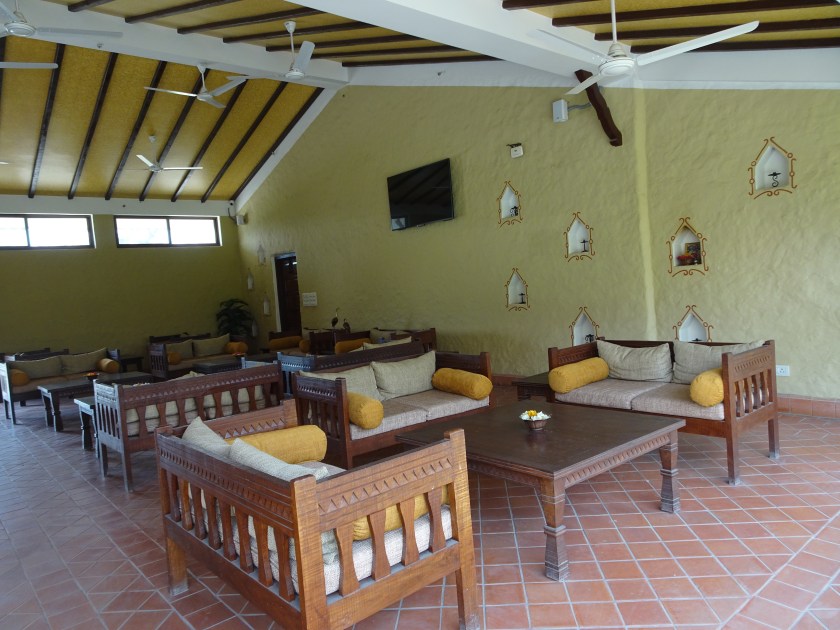
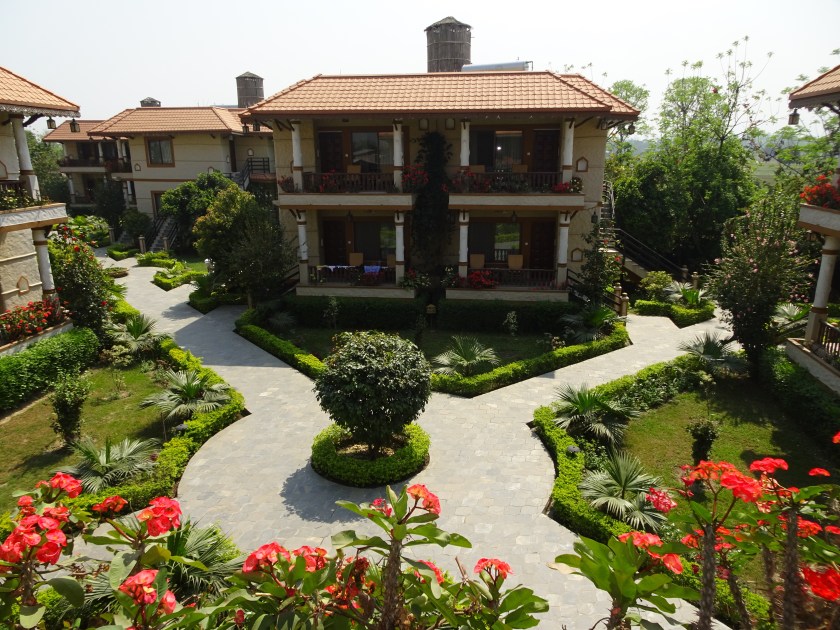
Green Park, where we will be staying for the next two nights, has a motto of “Where Culture Meets Class”.  Within five minutes, we could tell this was the perfect escape.  The grass was definitely greener on this side, the flowers were more colorful, the air was fresher and we were welcomed with a cold wash cloth and some fresh mango juice (which I am beyond obsessed with now).  Oh and there was no electricity from 8am-6pm.  We quickly learned it wasn’t just a city thing, it truly was a country wide shortage.  So crazy.

DSC05185

DSC05186

DSC05192

Our rooms were right next to each other and we had adjoining balconies.  Now I can yell to Jennifer through the walls versus having to walk a short distance to her house in the dark (not sure if she will love that though).

DSC05188

DSC05191

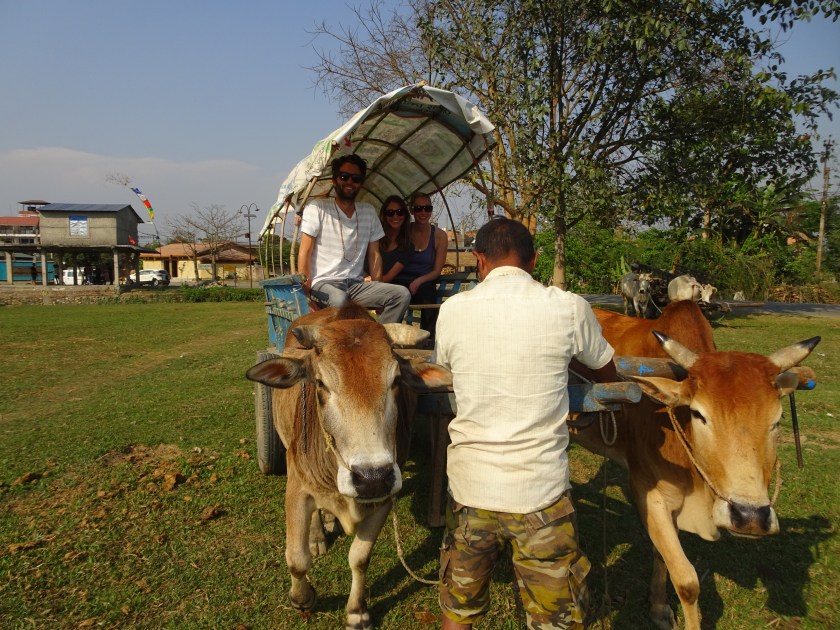
We settled in, had lunch, Jennifer went swimming and then around 3:30pm, we began our tour of a Tharu Village, which was conducted on an Ox Cart.  Yes, an Ox Cart.  We felt like we were living in The Oregon Trail game that was a huge hit in the 90’s. We literally traveled back in time and it was simply stupendous.

DSC05194

DSC05216

Tharu is an ethnic group indigenous to the Terai, the southern foothills of the Himalayas in Nepal and India. The Tharu people themselves say that they are people of the forest. In Chitwan, they have lived here for hundreds of years practicing a short fallow shifting cultivation. They plant rice, mustard, corn and lentils, but also collect forest products such as wild fruits, vegetables, medicinal plants and materials to build their houses.  Additionally, they hunt deer, rabbit and wild boar, and frequently go fishing in the rivers and oxbow lakes. They are recognized as an official nationality by the Government of Nepal. The majority of Tharu live in Nepal where they constitute 13.5% of the total population.  Interestingly, historians consider the Tharus to be the direct descendants of Gautama Buddha. This was the most simple village I’ve ever seen.  All of the houses were made by them, having no windows, which they believed kept out the bad demons.

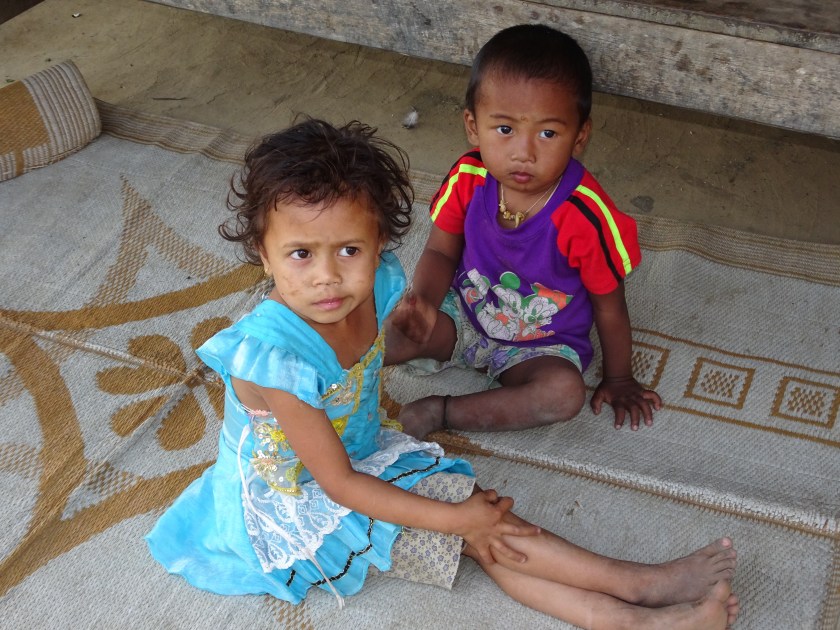
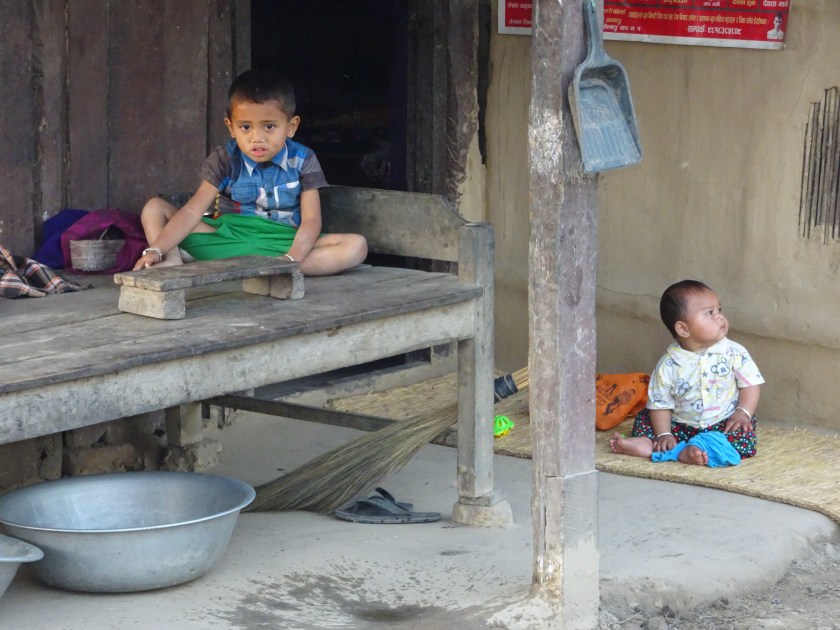
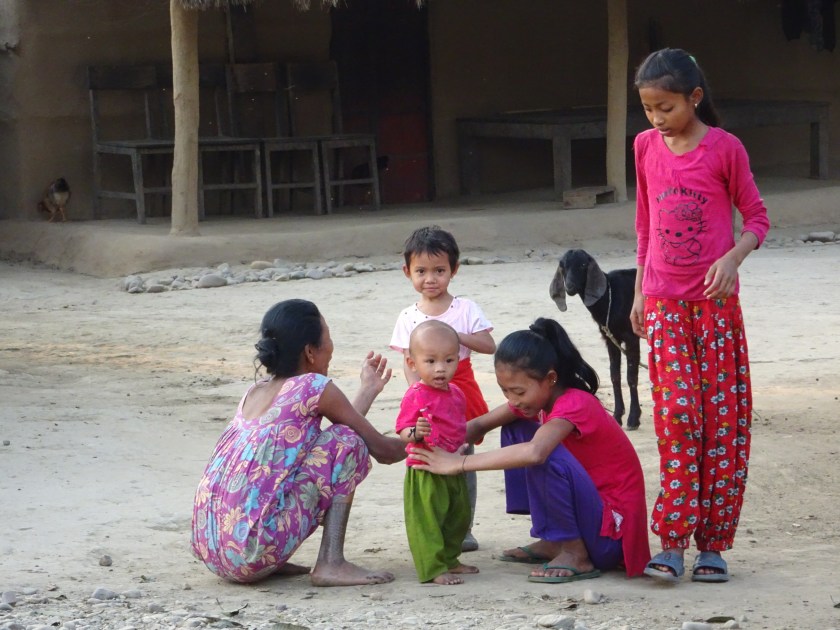
The kids were ridiculously adorable with larger than life smiles and the most infectious laughter.  They were the poster children for what genuine, unconditional happiness looks like (well maybe not on camera).

DSC05243

DSC05252

DSC05309

DSC05317

DSC05313

Women would get tribal tattoos upon marriage, which distinguished them as part of the Tharu Village.  Unfortunately, according to our guide Tommy, this tradition has been lost over time.  But this lady had one so I captured it.

DSC05239

Scenic beauty was taken to a whole new level here.  It was so calming to be in the middle of nowhere, at this village, with endless sights to observe.

DSC05244

DSC05268

An mysterious women watching after her goats…

DSC05292

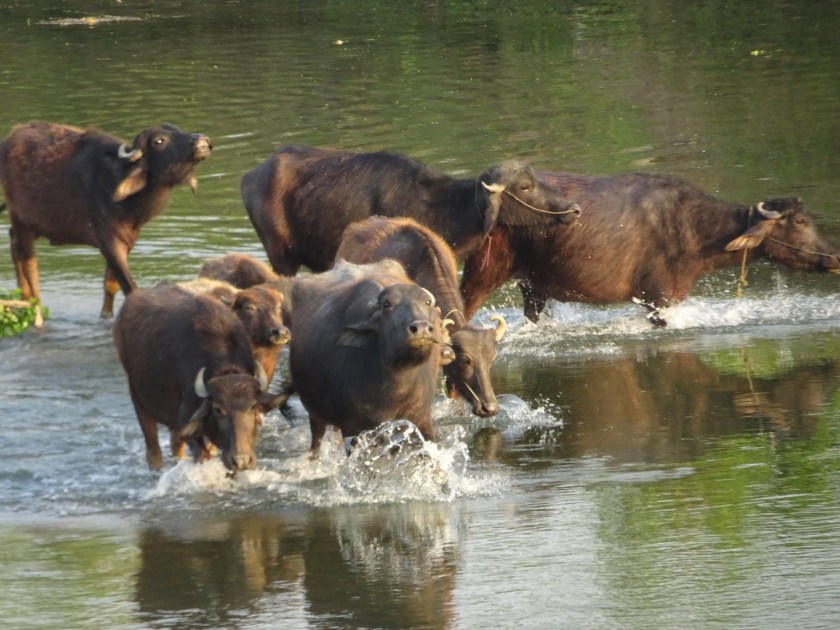
Buffalo bathing…

DSC05271

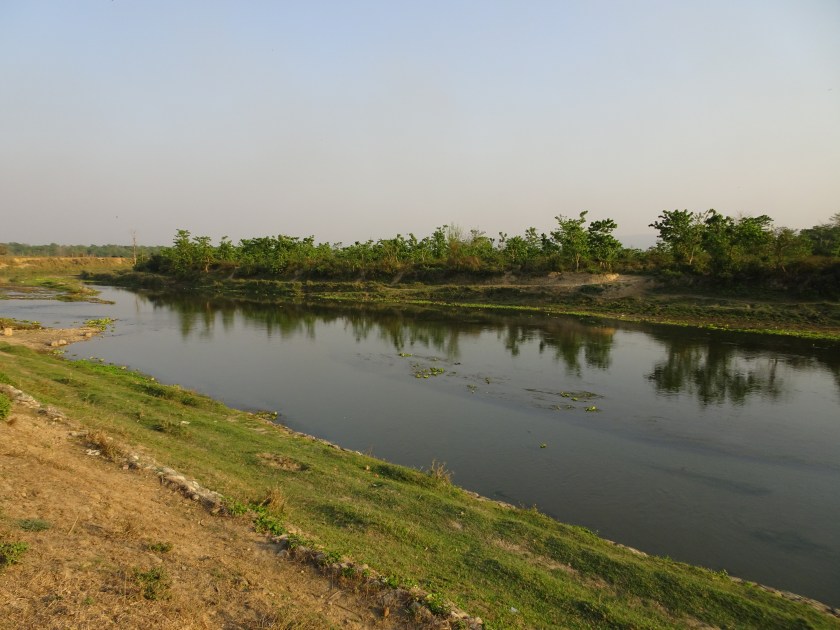
Hanging out along the river, enjoying the perfect weather with the perfect company…

DSC05260

DSC05263

Pleasant surprise of cannabis growing…

DSC05310

Open fields of grass, flowers and village homes…

DSC05296

DSC05298

DSC05295

DSC05283

DSC05297

The sun gracefully setting…

DSC05293

That night we went to a Tharu cultural dance at a local auditorium, which kind of felt like a high school performance in a cheesy yet entertaining way.  At the end, a peacock came out, showed us his moves and shook his tail feathers. It was extremely funny.  The whole crowd bursted into laughter.

DSC05325

DSC05324

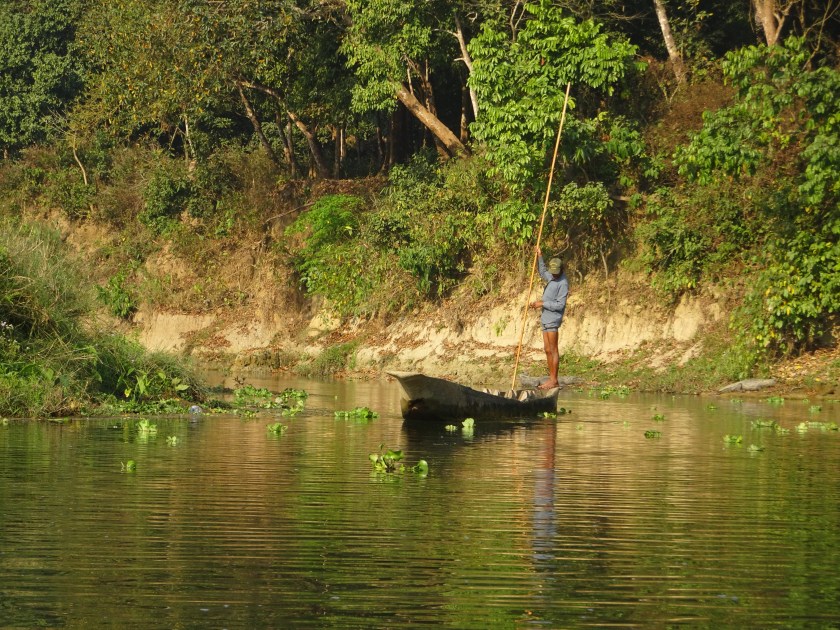
The next morning, we went on a canoe ride down the river.  This was a manmade boat that was completely submersed in the water more than it wasn’t.  We felt like we were going to tip over at certain points.  There were eight of us total.  Me, Jennifer, Vinny and Tommy (our guide), a rower in the front and a rower in the back, and then a random girl from Indonesia and her guide.  It sure was awesome.  Peaceful, serene, tranquil, calm and quiet. I kept wanting to burst out singing “Just Around the River Bend” from Pocahontas.

DSC05338

DSC05365

DSC05370

DSC05378

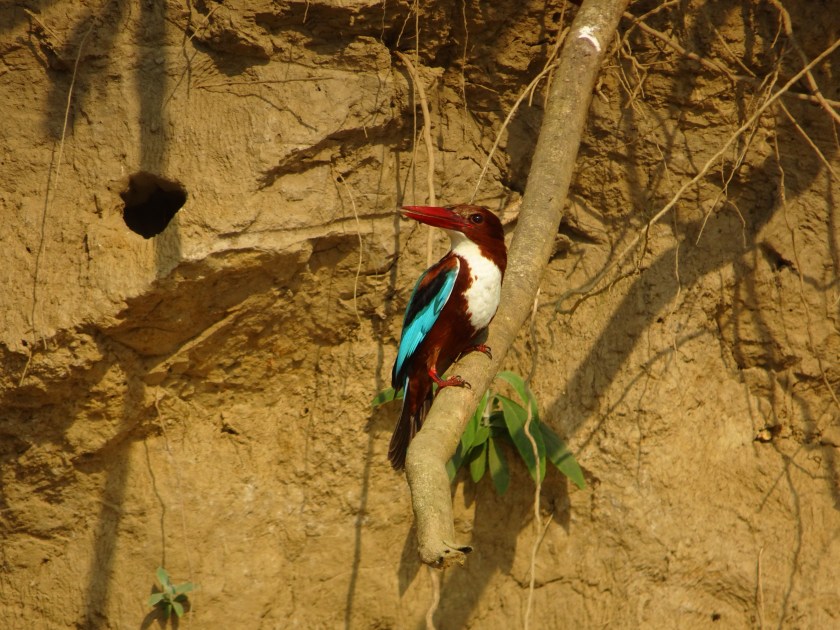
We saw colorful birds…

DSC05351

DSC05356

DSC05342

DSC05357

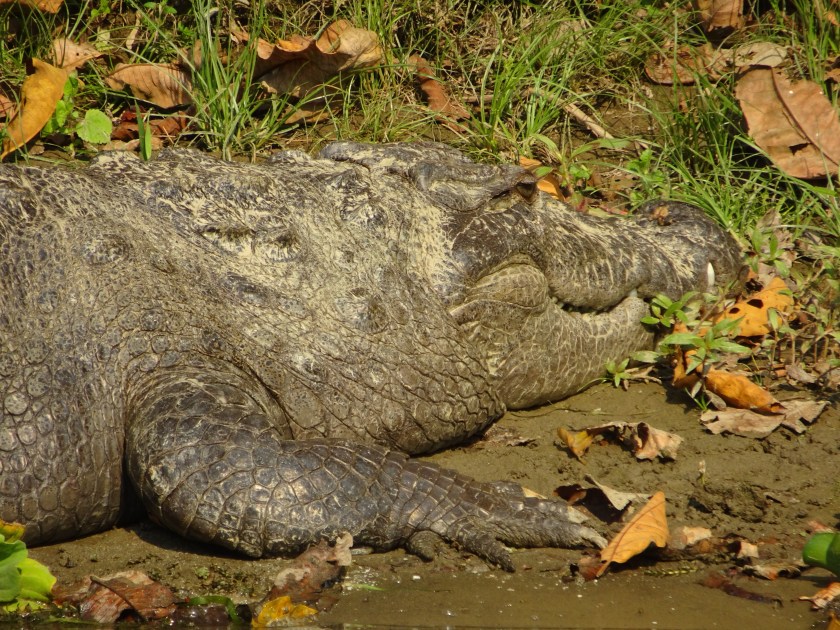
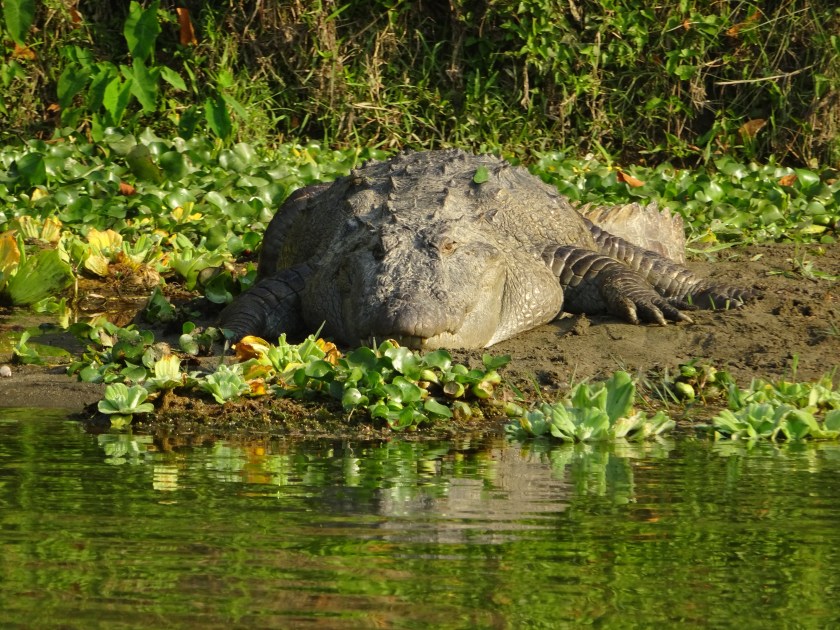
Tons of crocodiles, just laying there, almost lifeless…

DSC05384

DSC05352

DSC05539

DSC05387

DSC05347

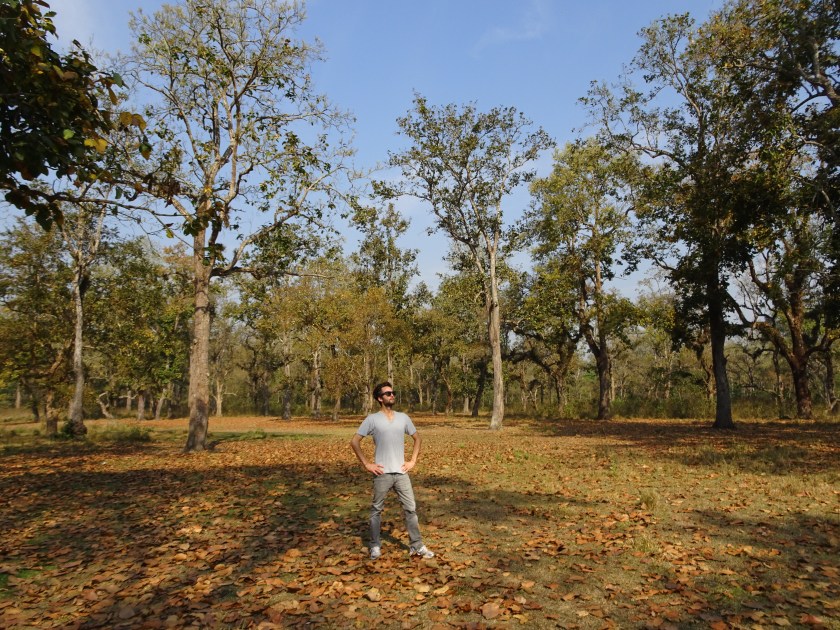
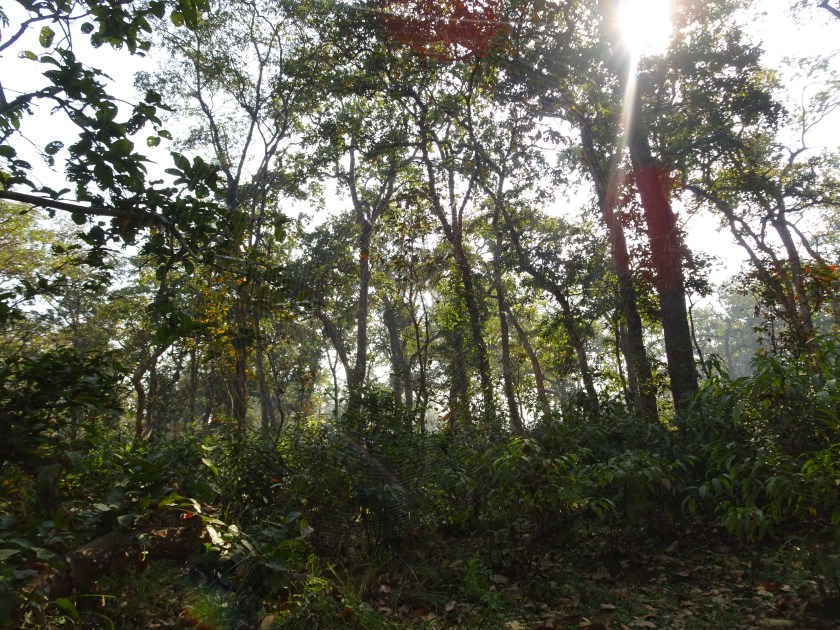
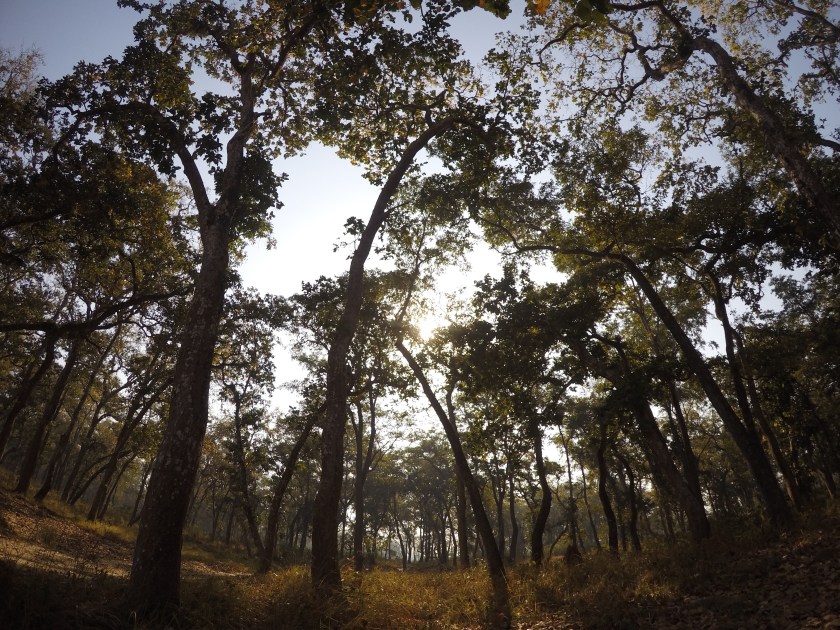
Then we walked through the forest for a little…

DSC05416

DSC05417

DSC05412

GOPR0069.jpg

DSC05405.jpg

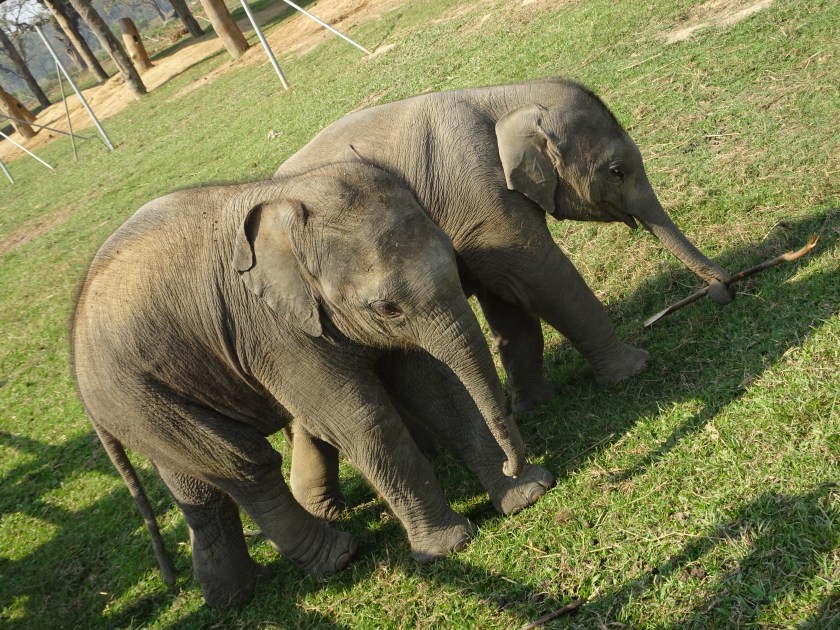
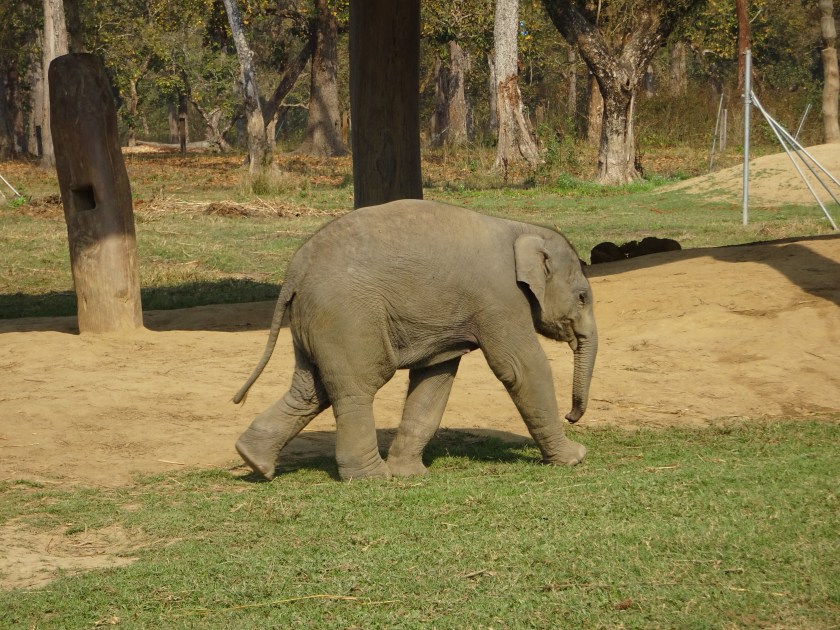
Next up, we visited an elephant breeding center, where a handful of Asian Elephants call home.  This center was created because the elephant population was becoming endangered in Nepal.  In 2008, for the second time in history, a set of twins were born here.  The first time was down in Sri Lanka.  Now that’s pretty cool.  The twins are all grown up now but there were two baby elephants present, both two months old (not related though), and it was so incredible watching the interaction between mother and child.  Plus, watching the multitask use of their trunk (which has a staggering 100,000 different muscles), was neat as well.  They would cover themselves in dust to ward off mosquitoes and avoid getting sunburn or scratch their backside with a bamboo stick or enjoy a refreshing shower by sucking water into their trunks and spraying it all over themselves.  One random fact we learned was that having a baby elephant is a serious commitment. Elephants have a longer pregnancy than any other mammal—almost 22 months. At birth, elephants already weigh some 200 pounds and stand about three feet. tall.  And we thought a nine month pregnancy with an eight pound baby was difficult?

DSC05459

DSC05448

DSC05427

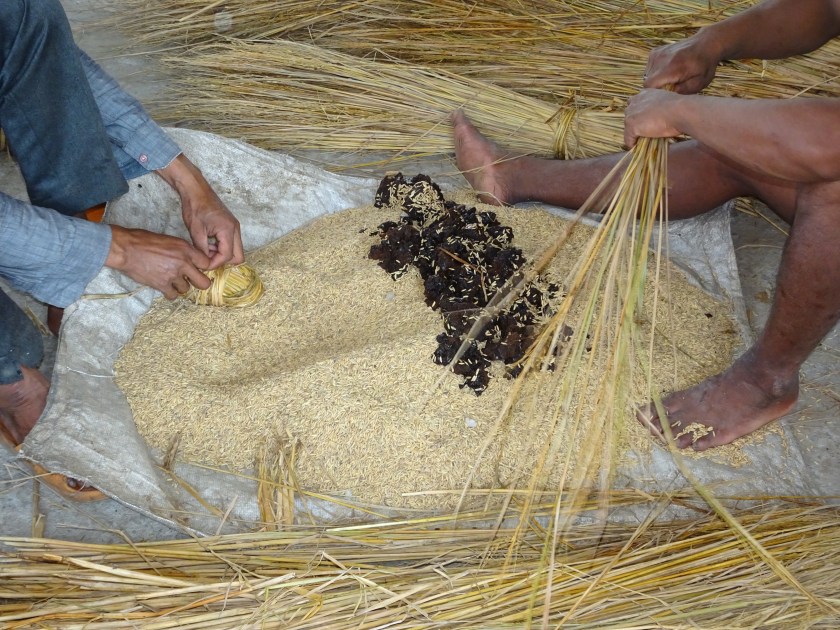
We also watched the mahouts (elephant carers) prepare kuchilis, which are elephant sweets made from molasses, salt and rice wrapped in grass.  The elephants apparently eat about a hundred of these a day.  Why were the elephants thrown out of the swimming pool? Because they couldn’t hold their trunks up!

DSC05478

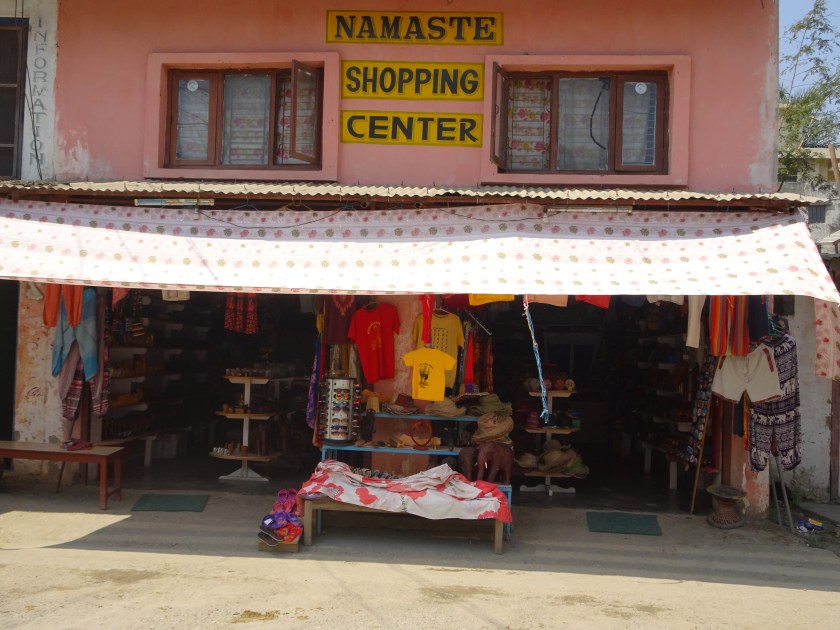
Jennifer and I then went into “town” while Vinny had his Vinny time.  It was pretty small and mostly consisted of shops filled with clothes, crafts and souvenirs.  The one thing I loved was the owners didn’t harass you or overwhelm you.  They almost didn’t even notice you were there.  This was a lot more enjoyable of an experience because of it too.

DSC05481.jpg

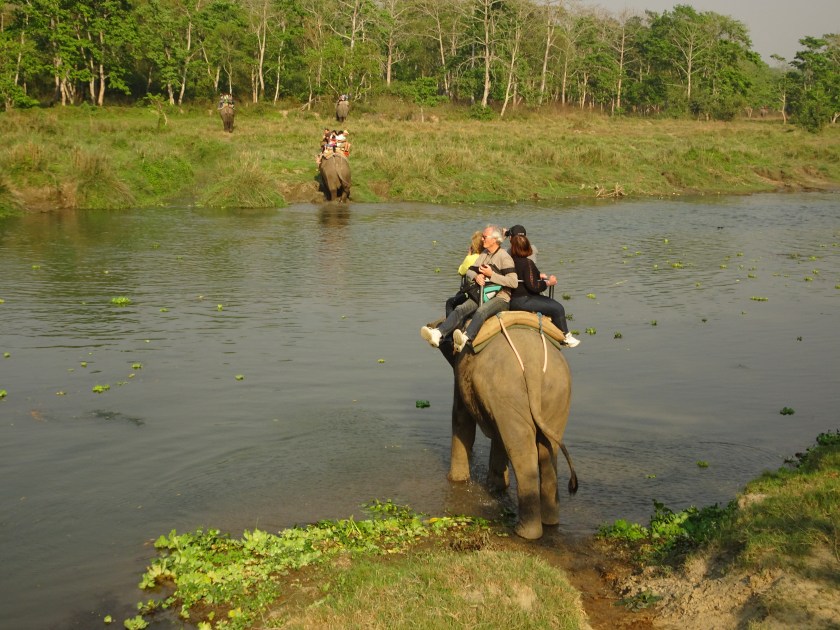
Our final activity of the day was an elephant ride through Chitwan National Park.  A total of 68 species of mammals, 544 species of birds, 56 species of herpetofauna and 126 species of fish have been recorded to live in the Park and it is especially renowned for its protection of One Horned Rhinoceros, Royal Bengal Tigers and Gharial Crocodiles.  A funny story about this.  When I was emailing with the woman at our hotel arranging for the elephant safari, I asked her if we were able to see the One Horned Rhinoceros.  Her response was “fingers crushed you’ll get to see them”.   I think she meant to say fingers crossed but the language barrier got in the way.  I sure hope my fingers don’t get crushed.

As we walked up a wooden platform of about six stairs, we slowly and carefully boarded our elephant.  It was me, Jennifer, Vinny and then a random local Nepalese guy.  About five minutes into our journey, our “driver” got a phone call.  In the middle of the jungle.  While on an elephant.  Of course he answered it, why not?  This isn’t the USA, talking and driving must be legal here.

DSC05490


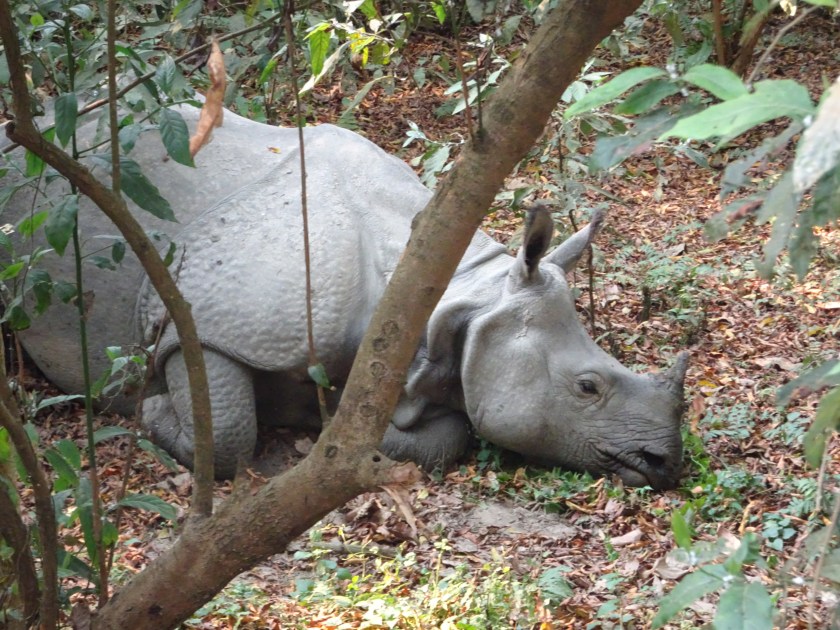
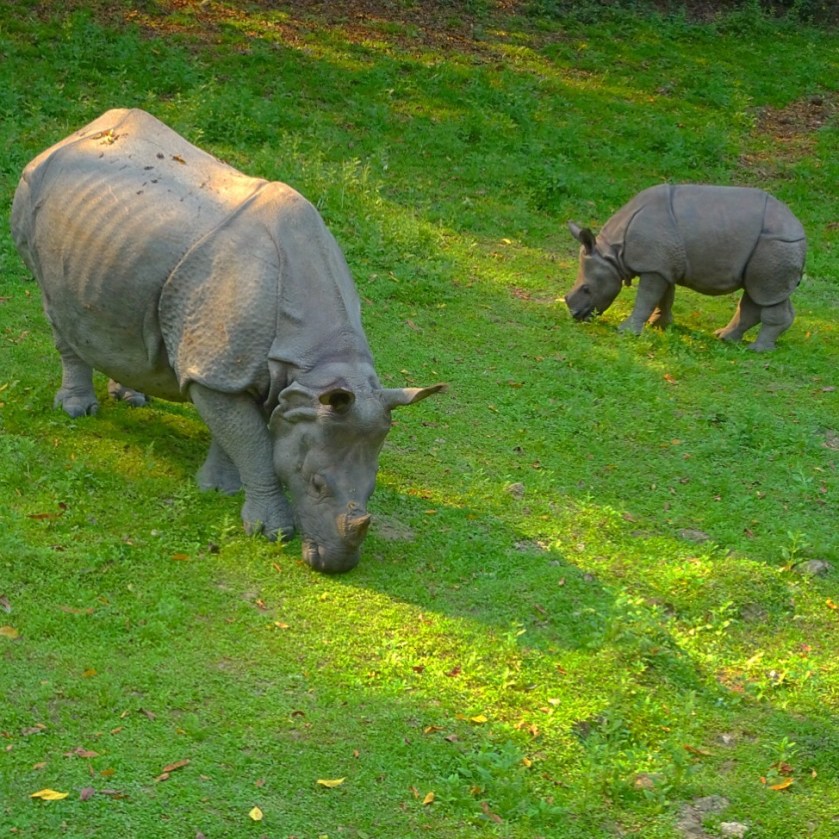
Then about fifteen minutes into our journey, we ended up seeing three different pairs of mamma and baby one horned rhinos.  One pair was sleeping (I think we inconsiderately woke them up), one pair was eating grass and one pair was lounging in the water.

DSC05497

IMG_1156

DSC05533

Greater one-horned rhinoceros, otherwise known as Rhinoceros unicornis (and trust me, they are just as magical as a unicorn), is the largest of the three Asian rhinos, with a length of about 10 feet, height of 5.5 feet, and a weight of about 2.2 metric tons. Today there are fewer than 2,400 greater one-horned rhinos left in the wild, with the major populations in Royal Chitwan National Park in Nepal and Kaziranga National Park in India.

These rhinos are so magical that they pee through their butt…

DSC05507

The jungle was for real.  There were no paved paths.  We had to part through massive tree branches like Moses had to part the Red Sea.   There were spider webs galore and bugs all over the place.  Of course I was brushed with some kind of plant or tree or leaf that gave me a rash on my forearm, almost resembling poison oak.  It wouldn’t be an adventure without some kind of skin reaction to remember it by.  We also saw Sabar, spotted deer, peacocks and more crocodiles along the way.  It was like a zoo but way better since all the animals were in their natural habitat.

While we were crossing the river at one point, an elephant must have been thirsty because he gathered water in his trunk, poured a little in his mouth and then poured the rest on the people he was transporting.  Maybe it was his way of getting back at them.

DSC05541

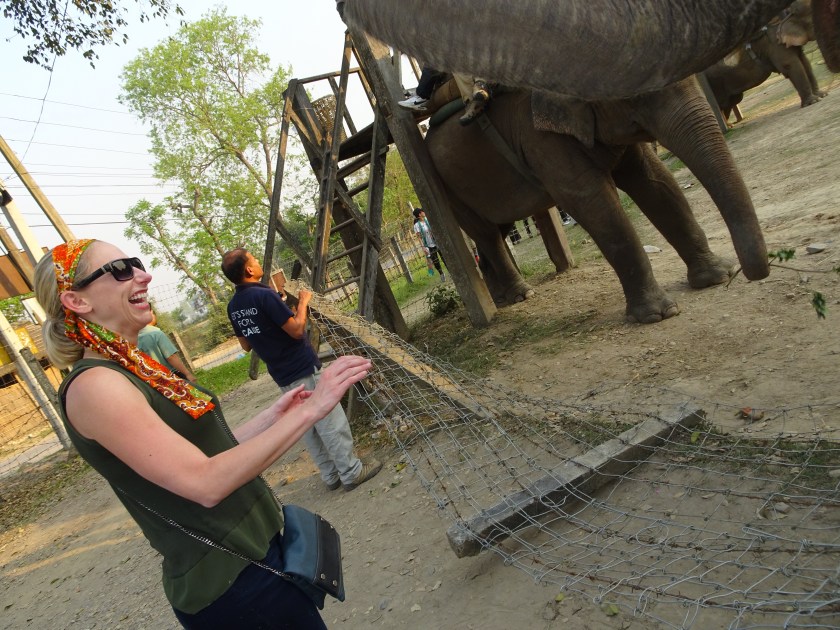
At the end, we wanted to tip our driver so Jennifer handed the money to the elephant via his trunk, which then lifted it to the guy.  But it startled her a little, hence the fantastic reaction of pure laughter…

DSC05563

Chitwan National Park was an unanimous winner for all of us.  From the warm hospitality at Green Park to the blast from the past Ox Cart to the cultural learning of the Tharu village to the bamboo canoe ride to the elephant safari, we were one with nature and animals for the past forty eight joyful hours.   And we truly enjoyed every minute of it.

Until our next stop in Pokhara, see you in a while, crocodile…

Bhaktapur, The City of Devotees

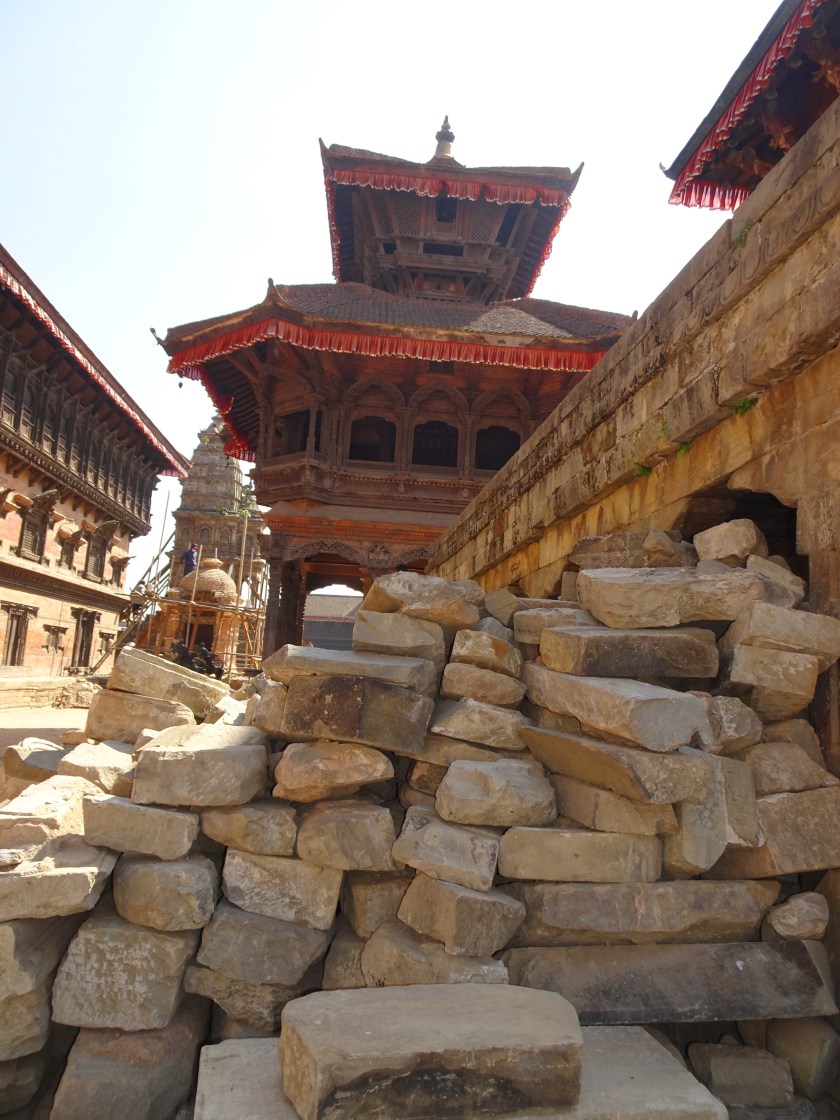
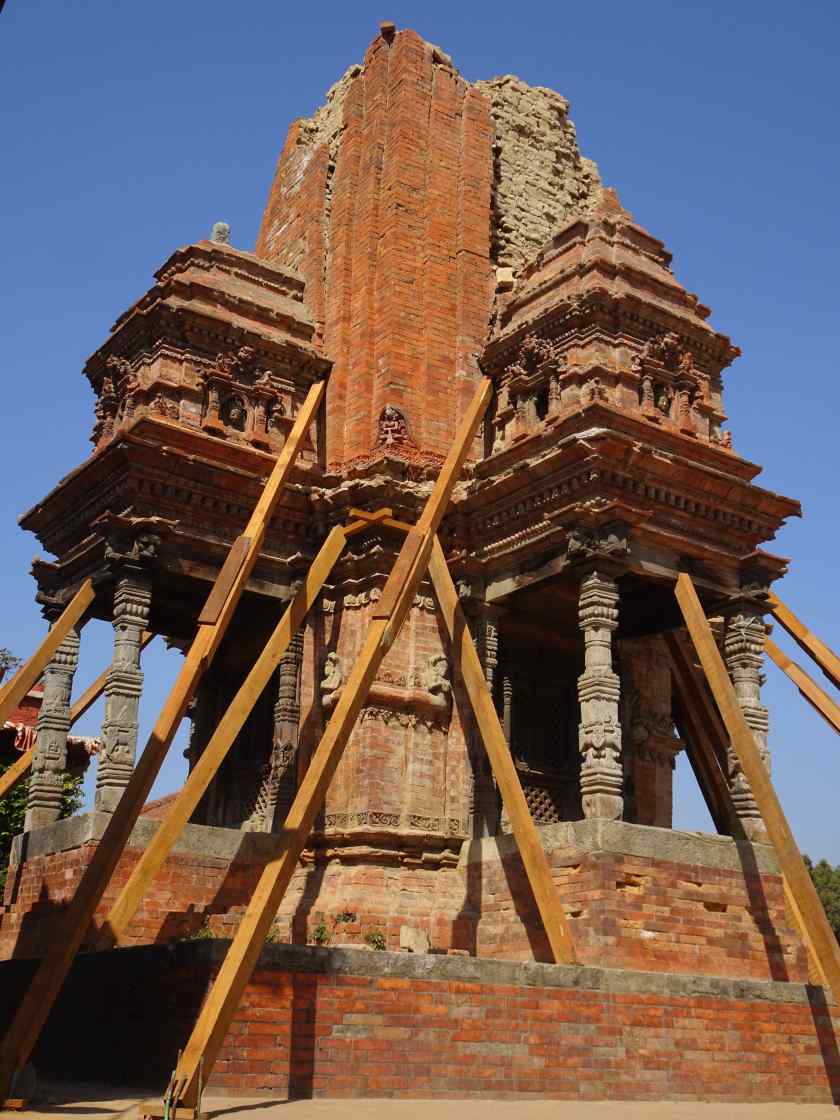
There are three royal cities that make up the Kathmandu Valley and since we had already seen two of them (Kathmandu and Patan), we decided to check out the third, which is called Bhaktapur.  Bhaktapur is known as the City of Devotees, the City of Culture, the Living Heritage, and Nepal’s Cultural Gem.  Don’t you wish you were as important as Bhaktapur to have that many nicknames?  Bhaktapur is an ancient city and is renowned for its elegant art, fabulous culture, colorful festivals, traditional dances and indigenous Newari community. It is just twelve kilometers east of Kathmandu but gives the feeling of prehistoric times given the ambiance of traditional homes, lifestyles and environment. Unfortunately, the city has been severely damaged by the recent 7.9 magnitude earthquake. Many buildings and historical temples, including some in the Bhaktapur Durbar Square, collapsed.  Regardless, it was still a charming, welcoming, jolly town.

DSC05075

DSC05123

DSC05121

DSC05069

Just like in Patan, we went on a two hour self-guided walking tour thanks to Lonely Planet.  And every step we took, every corner we turned, every person we passed, made us fall more in love with it.  The locals were beyond friendly and the overall demeanor made us feel like we were living hundreds of years ago.  Things were simple, easy and extremely old school.  It was the epitome of time travel.

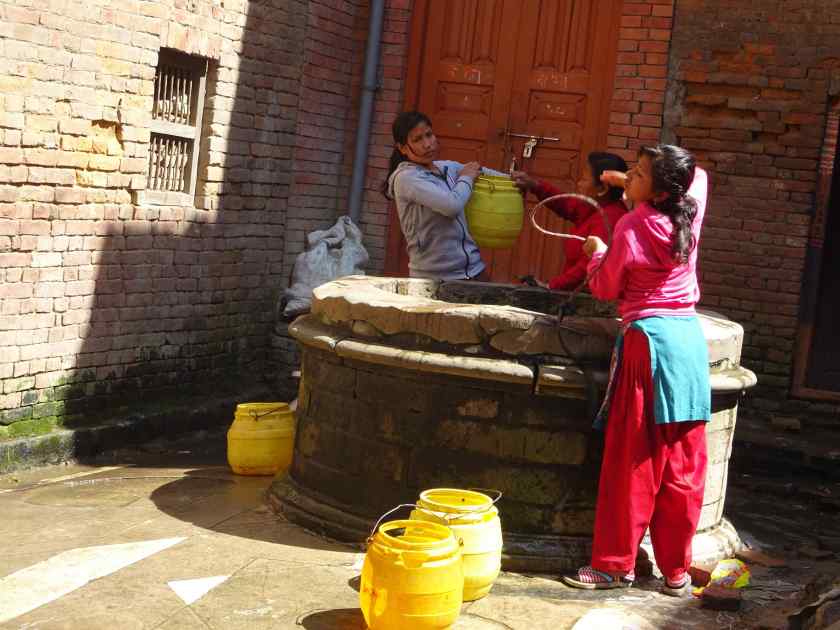
We saw a few girls getting water from an actual well…

DSC05130

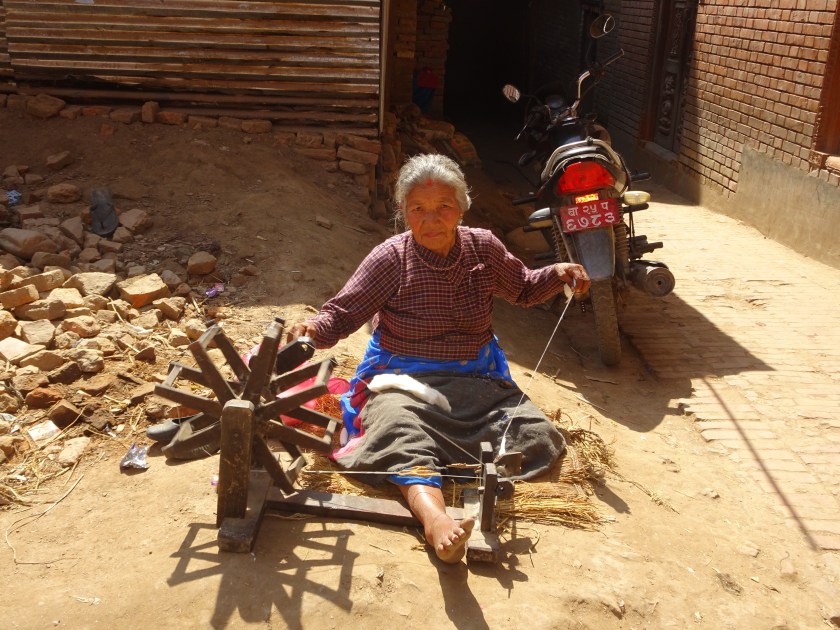
A woman balling yarn with a wheel…

DSC05120.jpg

Kids playing handball in a courtyard…

DSC05110

Two older gentleman enjoying an afternoon smoke…

DSC05073.jpg

A pretty young girl all dressed up for the Maha Shivaratri Festival…

DSC05147

Kids filling up their water balloons in the pond…

DSC05104

The streets were narrow yet lively…

DSC05090

The children were playful…

DSC05093

DSC05095.jpg

The Pagoda’s that were still in tack were mesmerizing…

DSC05142

DSC05082

And there was a somewhat scary yet entertaining spiritual dance being performed…

IMG_1148.jpg

As mentioned earlier, today is the Maha Shivaratri Festival, in honor of Lord Shiva.  And a long standing tradition on this day is for kids to block the roads and lanes throughout the city with strings and ropes, only to let you by once you’ve paid your dues.  Over the course of the day, between me, Vinny, Jennifer and Laxman, we all forked out about one hundred rupees in total, which is not a lot at all.  I think it’s more about the fun of game than the actual prize itself. It almost is their version of  Trick-O-Treating but this was done in broad day light and consisted of money, not candy.

road-blocking.jpg

Next up was the Kopan Monastery, a monastery in the Gelug tradition of Tibetan Mahayana Buddhism under the guidance of Lama Zopa Rinpoche. It is the home of 360 monks, lamas, teachers and workers. The monks come from all areas of Nepal and Tibet with ages ranging from seven to sixty years old. They have devoted their lives to the study and practice of the teachings of Buddha Shakyamuni, with special emphasis on the teachings of Lama Tsong Khapa, the founder of the Gelug Lineage.  It sits on top of a hill, high above the city, with refreshingly clean air, stunning three hundred and sixty degree views and intricately detailed traditional Buddhist architecture.

DSC05161.jpg

GOPR0052.jpg

GOPR0044.jpg

DSC05177.jpg

GOPR0048.jpg

GOPR0049.jpg

DSC05175.jpg

DSC05153.jpg

That night, we went back to Dhokaima Cafe for dinner, sat outside, shoved our faces with food and then for the cherry on top, we each ordered our own cake with ice cream.  And not one of the pounds I gained made me feel guilty in the slightest.  Cosy Nepal was hosting a small get together in the courtyard of our Newari house as their way to celebrate the Lord Shiva day.  About thirty people gathered for drinks, food and good times.  We took part in the festivities for a little but were heading to Chitwan at 6:30am tomorrow morning so didn’t stay too long.  Are you wondering why we needed to leave so early?  Well, I’m going to tell you even if you aren’t interested.  Apparently there is one road from Kathmandu to Chitwan and it is currently under construction (like everything else) so if we don’t get to a certain point by 11am, we will be stuck there until 4pm.  And that doesn’t sound fun.

I hope you enjoyed our three full days in the Patan/Kathmandu/Bhaktapur area as much as we did.  Despite the pollution, lack of electricity and severe damage from the earthquake, this small town captured our hearts in a very memorable, genuine, endearing way.  The people here are by far my favorite.  They had me at Namaste.

Look forward to reconnecting once we are one with the animals in Chitwan National Park!

Kathmandu, The City of Temples

Around 9am on Sunday, March 6, Jennifer walked over to our place, Sailesh made us coffee and we all chatted it up. We were asking him all sorts of questions about the April 2015 earthquake, what life was like for him growing up here and the most important of them all… what is the deal with no lights at night?  He basically informed us that a good majority of Nepal doesn’t have power, day or night, but a lot of the shops, restaurants and hotels run off generators.  He also mentioned that there is an app that informs the local residents of the electricity schedule and when they can expect to have power or not have power.  Just like with everything, “there’s an app for that”.  This blew our minds.  Yes the app part but really more the fact that electricity is such a luxury here.  That is something we never think twice about, and rightfully so, since we don’t know any better.  Could you imagine if the US had no WiFi, no running water, no power outlets to charge our electronics, no air conditioning to cool us down or heat to warm us up, and no lights inside or outside, unless one owned a generator?   It would be breaking news on CNN.  “United States Crisis Watch 2016 – no electricity for the night.  Watch to see how they survive.”  But here, it’s life as usual.  I will never take power for granted ever again.  Mark my word.

Today we hired a driver to take us around the Kathmandu area.  His name was Laxman and he was real suave.  Hair neatly gelled back, leather jacket as fresh as can be, jeans perfectly fitted.  This guy had style.  As we were driving, Jennifer was in the front and we were in the back.  The roads were extremely narrow and unpaved, the turns were tighter than Spandex and every minute that passed was a blessing if we didn’t hit a pedestrian or a motorbike or another car.  Watching her experience this was priceless.  Her eyes were as big as gum balls and her mouth dropped lower than a Basset Hound’s ears.  Her reactions were exactly how we felt our first week in India.  Now we are somewhat numb to it, for better or worse.

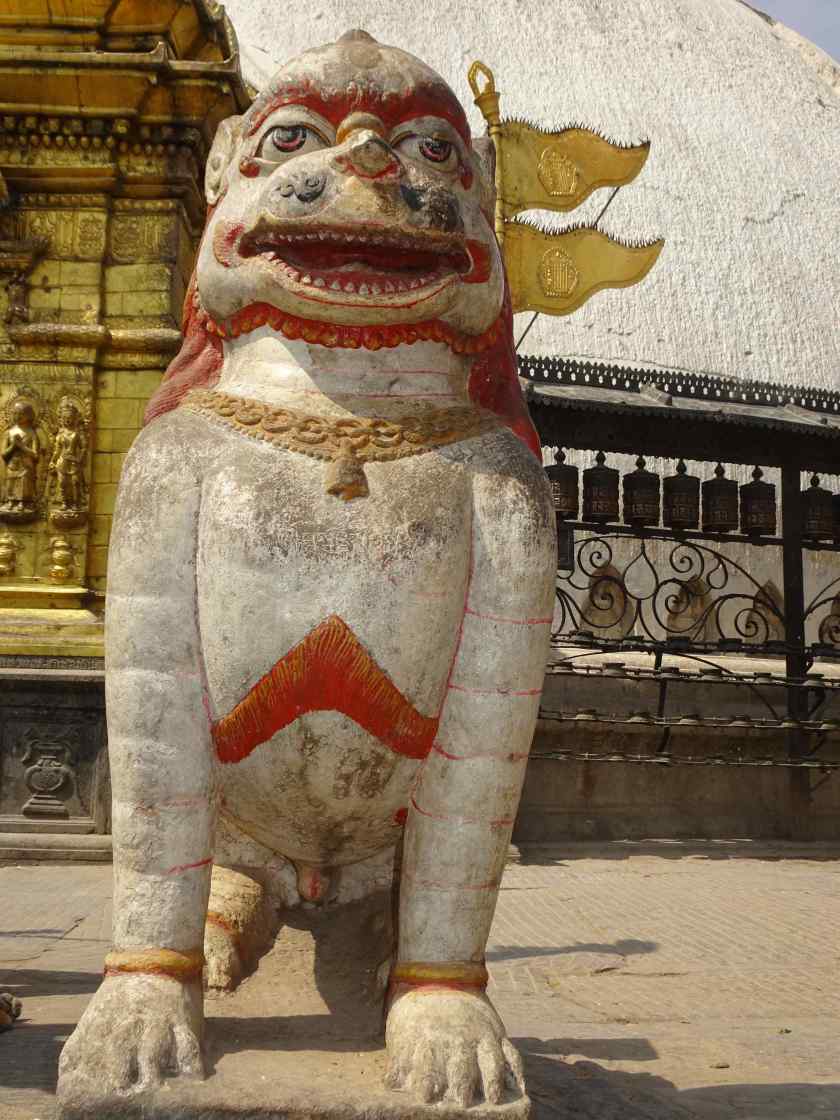
Our first stop was the Swayambhunath Stupa, which is the most ancient and enigmatic of all the holy shrines in the Kathmandu Valley.  Its lofty white dome and glittering golden spire are visible for miles and miles.  Each morning before dawn, hundreds of pilgrims will ascend the three hundred and sixty five steps that lead up the hill, file past the gilded Vajra as well as the two lions guarding the entrance, and begin a series of clockwise circumambulations around the stupa. On each of the four sides of the main stupa, there are a pair of big eyes, which represent wisdom and compassion (supposedly Buddha’s eyes).  Above each pair of eyes is another eye, considered the third eye, signifying the wisdom of looking within.

IMG_1149

DSC04951

DSC04949

DSC04993

DSC04987

DSC04970.jpg

DSC04982.jpg

I love my “what doesn’t belong here photos” so I am not going to stupa now…

DSC04998.jpg

Despite the hazy and polluted skies, you could still see most of the Kathmandu Valley and it sure was incredible.  We aren’t too bad either, right?

DSC04965.jpg

DSC04999.jpg

This stupa is also called the Monkey Temple because, well, there are a ton of holy monkeys that hang out here.  Apparently this monkey wanted a different view.  I like his style.

DSC04931.jpg

Our second stop was the Pashupatinath Temple, a 2,000 year old temple and one of the most significant Hindu temples of the god Shiva, the third deity in the Hindu trinity and known as the lord of creation, preservation and destruction.  It is considered to be the oldest and holiest Hindu temple of Kathmandu.  The Bagmati River, which runs next to the Pashaputinath Temple, has highly sacred properties. Thus, the banks are lined with many ghats (bathing spots) for use by pilgrims.  Arya Ghat, dating from the early 1900s, is of special importance because it is the only place where lustral water for Pashupatinath Temple can be obtained and it is where members of the royal family are cremated. If you are not of the royal family, the main cremation site is Bhasmeshvar Ghat, which is the most-used cremation site in the Kathmandu Valley.  This area has been referred to as the Varanasi of Nepal and that description couldn’t be any more accurate.  From the cremation ghats to the beggars to the smells, this was a very familiar scene to us.  There were people without arms, legs, fingers and toes sitting along the walls, with bowls waiting to be filled with rupees.  It’s hard to swallow sights like this, especially when you want to help but there’s just too many to make a difference.  It’s quite overwhelming to say the least.  But I just love the way the Hindus dress.  They are so bright, so spiritual and so decorative.

DSC05020.jpg

DSC05025.jpg

DSC05035.jpg

DSC05036.jpg

DSC05037.jpg

DSC05030.jpg

DSC05014.jpg

It was pretty cool to be here at this very moment because tomorrow, March 7, is the Maha Shivaratri festival, celebrated annually in reverence of the god Shiva.  Over one million people from all over Nepal are expected to come together by praying, covering their bodies with ashes and partaking of the God’s sacred cannabis-infused drink ‘Bhang’ or smoking chillums of hashish. Cannabis use has always been an integral part of the worship of Shiva.  Sounds like an epic weed smoking, beer drinking, music listening, food eating kind of party.  They were setting up various rides, games and booths as we were visiting.

DSC05015.jpg

DSC05017.jpg

The third stop of our Kathmandu sightseeing tour was the Boudhanath Stupa, which is the largest stupa in Nepal and the holiest Tibetan Buddhist temple outside Tibet.  Boudhanath was built in the 14th century, after the arrival of thousands of Tibetans following the 1959 Chinese invasion.  Today it remains an important place of pilgrimage and meditation for Tibetan Buddhists and local Nepalis, as well as the number one thing to see according to TripAdvisor for tourists.  When one thinks of Nepal, this stupa is usually front of mind.  It is the Eiffel Tower of Paris, the Great Wall of China, the Sistine Chapel of Vatican City, the Taj Mahal of India, the Empire State Building of New York.  We were all pretty stoked to see it in person.  After we paid our two hundred and fifty rupees to enter, we quickly realized, there was no stupa.  It was currently undergoing a facelift since it was badly damaged in the earthquake.  Are you serious?  Why didn’t anyone tell us this was happening?  We were all so sad.  But this wasn’t the first time our luck snuck away.  When Vinny and I were in Rome, the Trevi Fountain had no water and was completely covered in scaffolding.  And when Jennifer was in Brazil, the Statue of Christ the Redeemer, was being cleaned so she couldn’t see it.  Okay, she wins.  That really sucks.  Oh well.  Even though the main attraction wasn’t fully there, the surrounding area was still great to explore.  The tiny town was lined with restaurants, shops, hotels and Tibetan Buddhist monasteries.  We had lunch at Flavor’s Cafe, located inside the Boudhanath Square.

DSC05041.jpg

DSC05049.jpg

DSC05050.jpg

This is what the stupa looks like now…

DSC05048.jpg

And this is what it usually looks like (a picture of a picture)…

DSC05052.jpg

Oh, and because the pollution is so bad in Kathmandu, Vinny decided to buy a mask to help save his lungs.  All the locals wear them too so it wasn’t offensive to the culture if you are wondering that.  Children, beware.  He is quite scary.

IMG_1145

After an unsatisfying stupa experience yet a very satisfying lunch, we met back up with Laxman and headed to the Kathmandu Durbar Square.  On the way, we drove through Durbar Marg, what seemed to be the Rodeo Drive of Nepal.  A posh area with luxury hotels, restaurants, pricey boutiques, travel agencies and brand name stores including Nike, Zara, Levi’s, etc.  Very different than the rest of Kathmandu with paved roads and modern buildings. When we arrived at the Durbar Square, we learned that we had to pay one thousand rupees, or about $9 USD, to just enter.  We decided to pass on this not so much because of the steep price but because it looked like it was also going through some renovations.  It is so tragic to see how much a natural disaster can completely ruin a city filled with so much history, charm and exquisite architecture.  Almost a year later, they are still struggling to rebuild what was severely destroyed.

A handful of times today we saw a line of roughly sixty or more motorbikes waiting to fill up at the gas station.  When we asked Laxman if they were giving away free trips around the world, he laughed and told us Nepal is currently in a shortage of petrol, which is a result of the “blockade” they are having with India.  Gas, along with electricity, are now both hard to come by.  People will wait in line for hours if they have to.  And one day is for motorbikes while the next day will be for cars.  It’s become such a problem that most people are buying their petrol off the black market which is increasing the price for everyone else.  I mean, poor Nepal.  First the earthquake, then the lack of power and now no gas.  For a country with some of the absolute nicest people in the world, it certainly sucks to see them have to go through this.

That night, we walked to The Village Cafe, which is owned and operated by indigenous women who grow and make their own food.  As we picked up Jennifer (on foot of course), we attempted to walk to the restaurant, although we weren’t quite confident we would actually make it since directions are a little inaccurate with no street names or real roads.  Being pitch black wasn’t our only issue tonight. It started raining and the wind not so nicely started throwing a dirt fight, which was aggressively entering our eyes and mouths.  The word miserable doesn’t quite explain the emotions we were all experiencing at this very moment.  I could tell Jennifer wanted to give up and go back while Vinny was determined to make it there.  I was neutral but didn’t really enjoy the taste of dust going down my throat.  Eventually, we arrived, a little wetter and a little dirtier than when we had left.  And to be honest, the food wasn’t worth the trek in our opinion.  No biggie though, at least we supported an all women’s initiative and have a great story to tell.

DSC05065

DSC05062

Despite the Boudhanath Stupa being nonexistent, the Kathmandu Durbar Square going through renovations and the unsuccessful first attempt to fall in love with local Nepalese food, we still thoroughly enjoyed our day.  What we were lucky enough to see was quite impressive.  Excited for what tomorrow brings!

Patan, The City of Beauty

On Friday, March 4, we said goodbye to India and hello to Nepal, the birthplace of Buddha. We landed in Kathmandu around 3:30pm after a two and a half hour flight from Mumbai.  Before we left Los Angeles, we both had a handful of passport size photos taken at Costco because a few countries require it upon arrival for visas.  Nepal was one of those. However, I completely forgot to put them in my little backpack and Jet Airways made me check my big backpack so I didn’t have them in my possession when I needed them most.  Of course I was freaking out because on the visa application form it clearly has a section for a photo.  How could I be so organized prior to leaving yet so disorganized when push comes to shove?  As we approached the immigration officer, my palms profusely sweating and my heart rapidly beating, I fearfully told him our photos were in our checked luggage. Nevertheless, he didn’t seem to care at all as he looked at me, smiled, stamped our passports and on we went.  Phewwwwww.  I guess having the $25 USD to pay for our visit was all they really cared about.  Works for me.  Nepal is fifteen minutes ahead of India (so weird) and now thirteen hours and forty five minutes ahead of LA.  And their currency is also called Rupees but Nepalese Rupees.  The exchange rate is more in our favor being 106 to 1 versus India which was about 66 to 1.  Cha Ching.

As we exited the airport, there was someone waiting for us from our AirBnB (I pre-arranged this and it cost about 1500 Rupees or $14).  While following him in the parking lot, we noticed there was another guy tagging along.  We figured they came together.  When we were approaching the car, the random sidekick offered to take our bags and help put them inside.  Well, wasn’t that nice of him.  But about forty seconds later, he pulled out a wad of American bills and said “feel free to tip now”.  Excuse me?  That’s like picking up a girl on the first date and kissing her before she can even say hello.  A little too aggressive and a little too premature.  Especially when all he did was lift our bags off our back and threw them about five feet.  Ummm no thank you.  Good thing we listened to our gut because it turns out, he wasn’t even with us.  A few minutes later, we saw him pull the same move on three other Americans.  I always have to give these guys props though for having the nerve to be that straightforward.

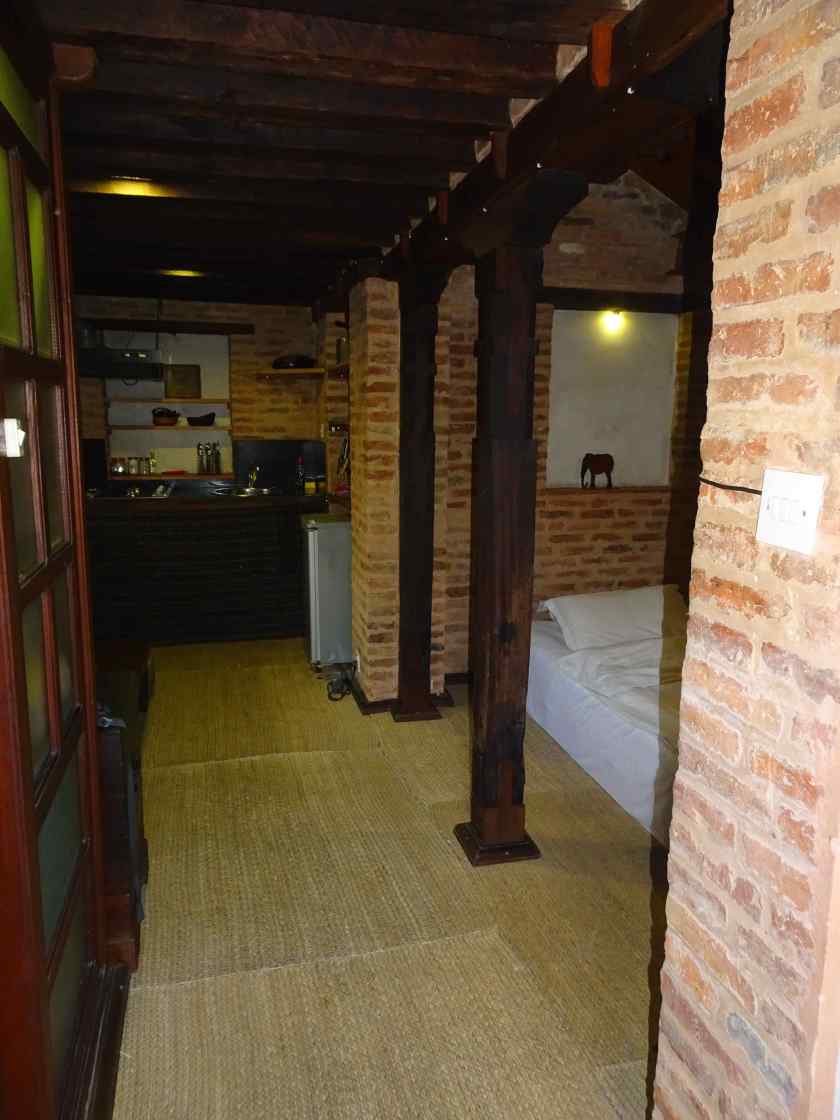
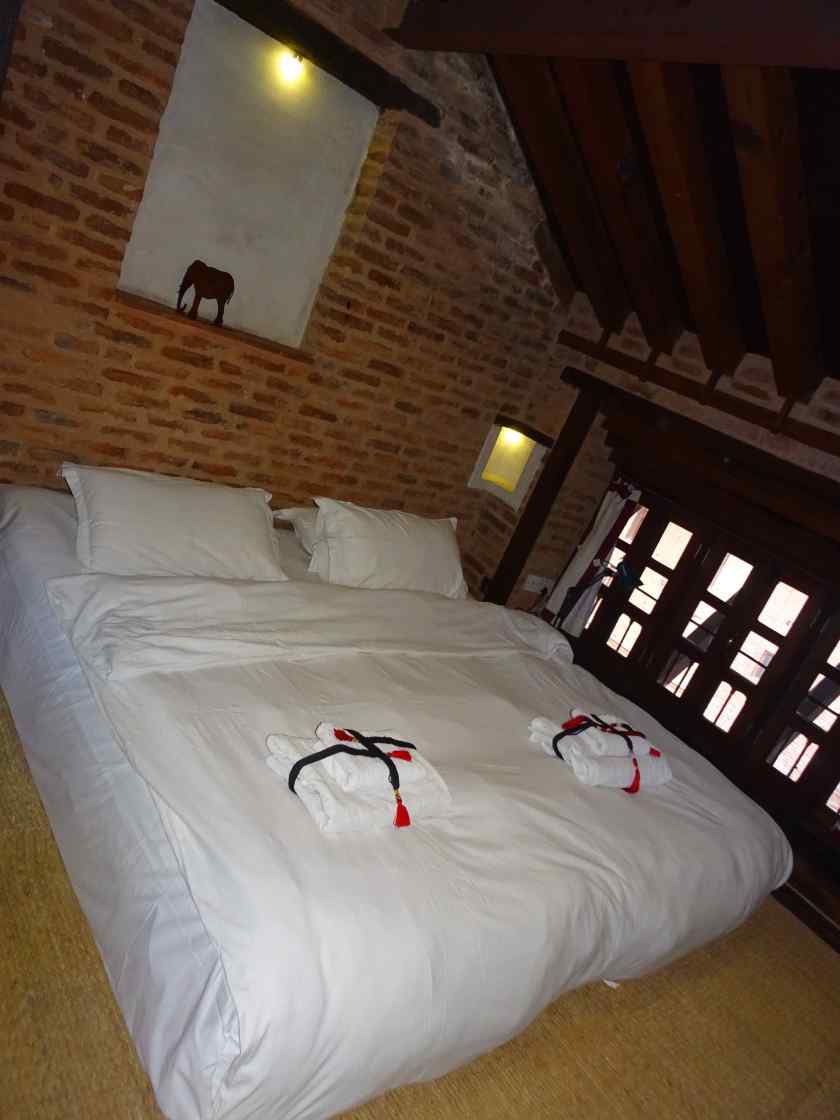
After an eventful thirty minute drive from the airport taking in all the sights of this new foreign country, we finally pulled up to our home for the next four nights around 5pm.  As we walked up twenty five wooden stairs, then up eleven windy metal stairs and then down five more wooden stairs, we joyfully entered our “roof terrace studio in a Newari House”, owned and operated by Cosy Nepal.  It sure was an adorable little place with a patio in front, walls made out of brick, a kitchen that we most likely weren’t going to use, floor made out of bamboo and a simple mattress, no bed frame or box spring, on the ground.

DSC04799

DSC05059

DSC04790

DSC04789

DSC04784

DSC05067

We decided to stay in a town called Patan, which is located about five kilometers south of Kathmandu, in the Kathmandu Valley, on the southern side of the Bagmati River.  It is the oldest of the three Kathmandu Valley cities (Patan, Bhaktapur, Kathmandu) and is believed to be one of the oldest known Buddhist cities in the world.  The official name is “Lalitpur”, meaning City of Beauty.  Reading more and more about Kathmandu while we were in India, I realized that it is just another chaotic big city and we wanted something a little more quiet, quaint and charming.  From the looks of it, Patan was exactly that.  We took a few hours to settle in and then decided to head out around 7:30pm to grab some dinner.  Sailesh, the twenty four year old guy I had been communicating with through Cosy Nepal (who was quite a cute Nepalese hipster by the way), recommended a restaurant that was a short two minute walk away.  But first we needed to go to the ATM and get local currency.  When we walked outside our room, down the thirty one stairs, and out of the front door of the main building, it was pitch black.  No street lights, no shop lights.  Did they have a power outage?  We would randomly get some relief whenever a moped would drive by with its headlights but other than that, you couldn’t see two feet in front of you.  Plus, the roads were all unpaved and we had no idea where we were going.  Something tells me this is normal though because the locals were going about their everyday life, pretty unfazed at the lack of electricity.  We quickly decided to give up on our ATM mission but luckily, Cafe Swotha took credit cards so we were good to go for now.  In India, restaurants didn’t open until 7:30pm as everything seemed to start later there than usual.  Now in Nepal, or at least Patan, restaurants seem to close before 8pm.  That’s the beauty of traveling.  You are always adjusting to new cultures and new lifestyles.  It doesn’t allow you to get too comfortable, always forcing you to sit on the edge of your seat.  That night I stayed up to 1:30am (I know, I’m such a wild child) because I couldn’t go to bed until I knew Jennifer (my family friend/childhood friend/somewhat sister/pseudo cousin) had arrived safely at her Cosy Nepal AirBnB down the street.  I felt like a mother waiting for her child to get home from a rebellious friends high school party.  I just remember how overwhelmed I felt landing in India at night after twenty four hours of flying and I had Vinny to protect me (that macho man he is).  Jennifer was all on her own so knowing that she was in one piece allowed me to get a restful night sleep.  Welcome to Nepal, Jennifer!

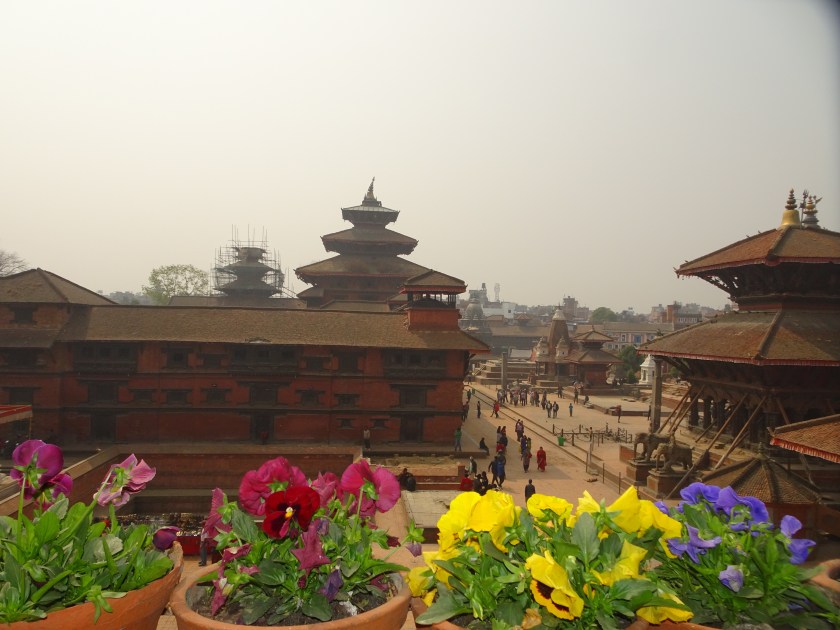
The next morning we all met up around 9am.  It was so great to see her outside of Los Angeles, outside of California, outside of America and not to mention, have a familiar face in such a foreign place (besides Vinny who I’ve stared at for the past seven weeks).   She walked to our house, then we all walked to Patan Durbar Square, which was filled with temples, statues and fantastic people watching.

DSC04802

DSC04805

DSC04808

DSC04809

Afterwards, we grabbed breakfast at Cafe du Temple, a rooftop restaurant that overlooked Patan Durbar Square.

DSC04820.jpg

Then we went on a three hour self guided walking tour of Patan thanks to Lonely Planet.  We saw kids playing marbles, soccer with an empty plastic bottle and table tennis…

DSC04850.jpg

DSC04848

DSC04874

Buildings that were colorful and made of brick…

DSC04856

DSC04853

A “catering company” preparing for a wedding that night…

DSC04875

A few older ladies chilling outside, enjoying the weather…

DSC04844

DSC04845.jpg

DSC04872.jpg

DSC04906

A group of older men contemplating who had the better hat…

DSC04851.jpg

Someone washing their hair, in a bucket…

DSC04839

A giant Buddha statue…

DSC04863

A traditional Nepalese stupa…

DSC04847

One of the main highlights of Patan is the Golden Temple (Hiranya Varna Mahavihar), built in the 12th Century by King Bhaskar Verma, located just north of Durbar Square. This three-roof Buddhist monastery is adorned with a golden facade, four large gateways, a clock tower, and two lion sculptures. Inside are golden images of Buddha, wall carvings, and a prayer wheel.  The outside features more bricks while the inside shines with gold.

DSC04880

DSC04896

DSC04887

DSC04900.jpg

DSC04891.jpg

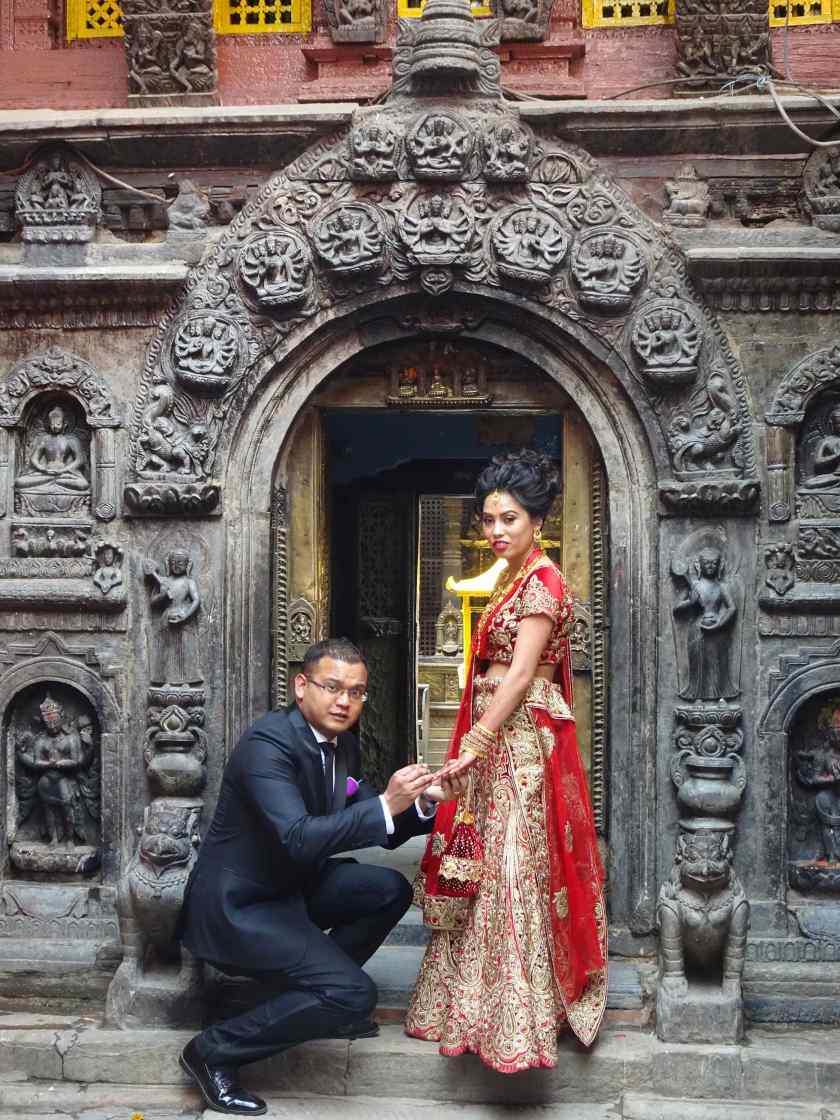
While we were at the Golden Temple, we saw a bride and a groom taking what looked like some pre-wedding photos.  I just love how different their attire is than what we are used to.  Red and gold, jewels galore, midriff showing.  Stunning in my opinion.

DSC04909

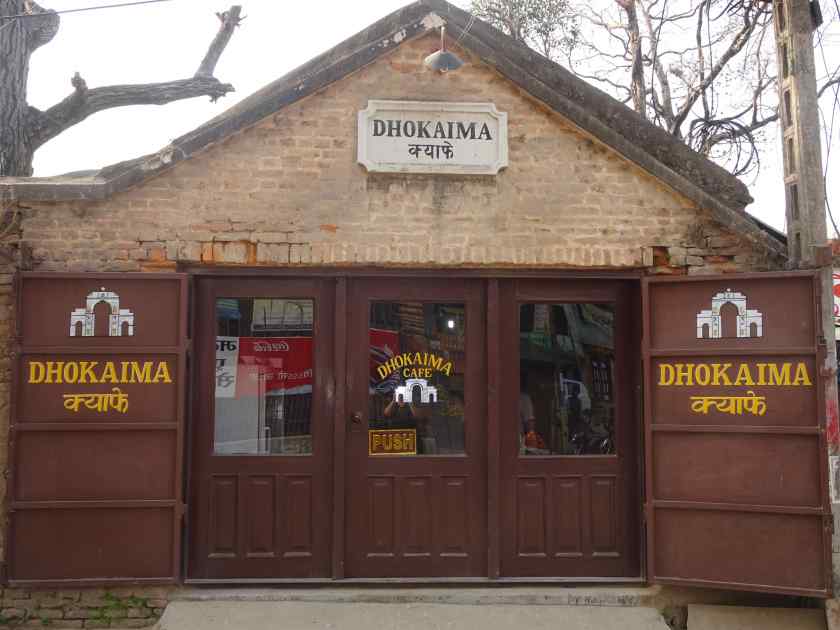
Now that we had worked up an appetite, we grabbed a rather late lunch at Dhokaima.  They had a lovely outdoor patio that we thoroughly enjoyed.  Nepal is famous for their Momos, which were delicious, almost resembling a Chinese steamed dumpling.  A random observation that we all noticed was that restaurants here always tend to bring you mustard and ketchup, even if what you ordered doesn’t call for it.  Weird but okay.  I mustard not ask any questions (HA HA!).

DSC04917

DSC04922

Then we wandered to a “super store” to buy some snacks, water and whatever else we laid our eyes on.  This was the first legit market we’ve seen since our trip began.  Certain aisles smelled so bad we all gagged at the same time.  Still not quite sure what it was but hopefully I’ll never have to experience that again.  And on the left hand side here is a Head & Shoulders sponsorship activation testing for lice.  Oh the good old days of selling advertising to brands.  I think I like my life now a little better, although I know it can’t last forever, I’ll enjoy it while it while I can.

DSC04924

DSC04925

After a few hours of some much needed R&R, we went to pick up Jennifer at her house (about a three minute walk from our house) and then headed to find a restaurant that was still open.  Here is the street we walk along between our two houses as well as a photo of her house (both taken earlier in the day when there was light).  The door is so tiny.  If you are taller than 5’6 and larger than 150 pounds you most likely won’t fit.  Sorry.

DSC04823

DSC04824

Without cell service, without street lights, without street signs, and without knowing where to go, we tried a few places that we had read about but unfortunately, they were closed already.  I’m telling you, this town is made for senior citizens but that’s what makes it so  special.  I honestly think it is because it is so dark at night.  When the sun goes down, the people go down too.  So we headed back to Cafe Swotha again, which was just as delicious the second night, but we definitely prefer variety if and when possible.  Something is telling me that variety isn’t possible here in Patan.

The Nepalese, at first glance, all seem so happy, so friendly, so welcoming.   They smile and say Namaste, which is by far one of my favorite things about this country.  Namaste means hello in Hindi so it’s exchanged all day, every day.  You feel like you had a quick hot yoga session every time someone passes by.  Namaste.  Namaste.  Namaste.  Namaste.


Farewell, India

As our absolutely incredible journey through India sadly comes to an end, I wanted to take the time to share with you a few final thoughts.  Seven weeks is by far the most amount of time I’ve ever spent in a country other than my own.  No words or photos can truly describe what we saw, how we felt or what we experienced along the way but I hope my stories have offered an in-depth look into what our day to day life has been like.  India is dirty, polluted and over crowded (there’s no denying that) yet it’s fascinating, intriguing, inspiring, amazing and beyond memorable at the exact same time.  I can genuinely say I fell in love.

Here are our top ten memories…

  1. Taj Mahal
  2. Camel safari through the Thar Desert
  3. The food – anywhere, anytime and always
  4. Jade Munnar
  5. Khem Villas along with seeing the tigers
  6. Watching a cremation in Varanasi
  7. Shashi’s cooking class in Udaipur
  8. Watching the sun set almost every night
  9. Riding scooters throughout Goa
  10. Sunrise bike tour in Mumbai

Here are some random observations we gathered…

  • Everyone has a shop and everyone says “looking is free” but it’s really not, there is always a hidden agenda
  • Being left handed is disrespectful and unsanitary
  • Men are always showing affection towards one another, which is a sign of friendship and respect
  • Swastika has a whole different meaning here as the symbol was originally from the Hindu religion before Hitler turned something positive into something negative
  • We met very few Americans throughout the fourteen cities we visited.  The French and Australians win for most traveled.
  • Five minutes really means thirty minutes
  • Some locals love taking photos of you and with you.  But when you ask to take photos of other locals, they will only allow it for rupees.
  • There are no cents in the Indian currency so all bills either round up or round down.  Why even have items that include cents if you can’t pay them?
  • Despite having 29 states and 7 union territories, the whole country is on the same time zone
  • There are 22 official languages, English and Hindi being the largest, although I’m pretty sure honking should be number 23
  • Gandhi is on all the rupees (5, 10, 20, 50, 100, 500, 1000)
  • Tata owns everything (Tata Steel, Tata Motors, Tata Consultancy Services, Tata Power, Tata Chemicals, Tata Global Beverages, Tata Teleservices, Titan, Tata Communications and Indian Hotels)
  • There are prayer rooms in airports
  • We saw more Baskin Robbins in almost every city than Starbucks or McDonalds
  • Everyone asks you to leave a review online whether it’s a hotel, an activity or a restaurant.  Sometimes they would even follow up with me via email as a reminder.  Business must be competitive these days.
  • Forming lines, driving and walking all have no flow to them but somehow, it works
  • Negotiate everything, with respect of course
  • The phrase personal space means absolutely nothing, which made me realize how much I need my personal space
  • Men and women have to enter security lines separately at places such as airports and metro stations

Here are some random facts we learned (please don’t quote me on these though)…

  • India is the worlds largest democracy with 1.2 billion people
  • India invented chess, buttons, the ruler, and shampoo (not the commercial liquid ones we use today but the method by use of herbs. The word ‘shampoo’ itself has been derived from the Sanskrit word champu, which means to massage)
  • India is the worlds largest producer of milk
  • India’s name was derived from the Indus River
  • India was the first country to develop extraction and purifying techniques of sugar. Many visitors from abroad learned the refining and cultivation of sugar from India.
  • India has the largest number of vegetarians in the world.  Be it because of religious reasons or personal choices or both, around 20-40% are vegetarians.  And egg is considered non-vegetarian.
  • There are more road deaths in India than any other country in the world
  • India is the world’s biggest producer and consumer of mangoes
  • India is the worlds second largest English speaking country, only next to the USA,  with around 125 million people speaking the language, which is only 10% of their population. This is expected to grow by quite a margin in the coming years.
  • India gave the world Yoga, which has existed for more than 5,000 years
  • India created Martial Arts
  • Snakes and Ladders originated in India.  Earlier known as Moksha Patamu, the game was initially invented as a moral lesson about karma to be taught to children. It was later commercialized and has become one of the most popular board games in the world.

“India is the cradle of the human race, the birthplace of human speech, the mother of history, the grandmother of legend, and the great grandmother of tradition. Our most valuable and most instructive materials in the history of man are treasured up in India only.” – Mark Twain

“We owe a lot to the Indians, who taught us how to count, without which no worthwhile scientific discovery could have been made”. – Albert Einstein

Here is a snapshot of what our journey entailed…

  • 7 weeks
  • 14 cities
  • 8 flights
  • 2 daytime trains
  • 1 overnight train
  • 25 rickshaw/tuk-tuks
  • 22 cabs
  • 15 Ubers
  • 5 metro rides
  • 8 road trips of more than three hours from one city to the next
  • Slept on a train, a plane, a bamboo boat, in the desert under the stars, hotels, AirBnBs and homestays

Our budget was spent on…

  • 50.58% on accommodations
  • 14.03% on food
  • 11.41% on transport
  • 9.69% on flights
  • 9.16% on entertainment
  • 2.69% on tips
  • 2.25% on miscellaneous
  • .18% on water

Final words for you, India…

Traveling can be exhausting, stressful and sometimes brings out characteristics that you didn’t even know you had, not always for the best.  But it’s so worth being out of your comfort zone to see a whole new world, experience a whole new culture, and live a whole new lifestyle.  We have to always strive to better ourselves which will in the end, better the world.  I can’t thank my grandma enough for giving me a reason to experience this absolutely fascinating place.  She traveled her life, visiting almost every country, and India was her favorite.  I wanted to come here to see what she saw and fall in love with what she fell in love with.  And although it was a love-hate relationship at times, in the end, love always wins.  India, you will forever hold a special place in my heart.  It was our first time meeting but it certainly won’t be our last.  Until then, thank you for opening my eyes and my heart to something so unfamiliar.  Don’t ever change.

Mumbai, Part II

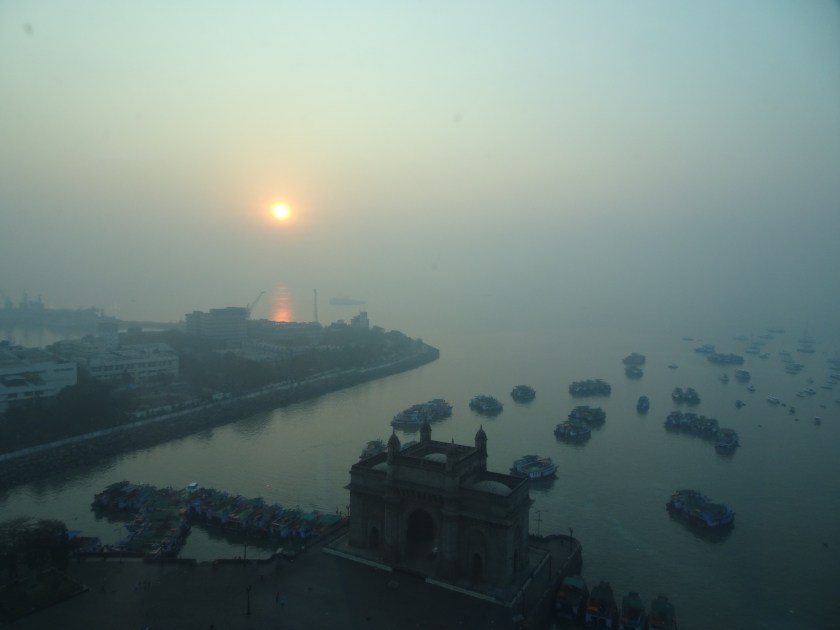
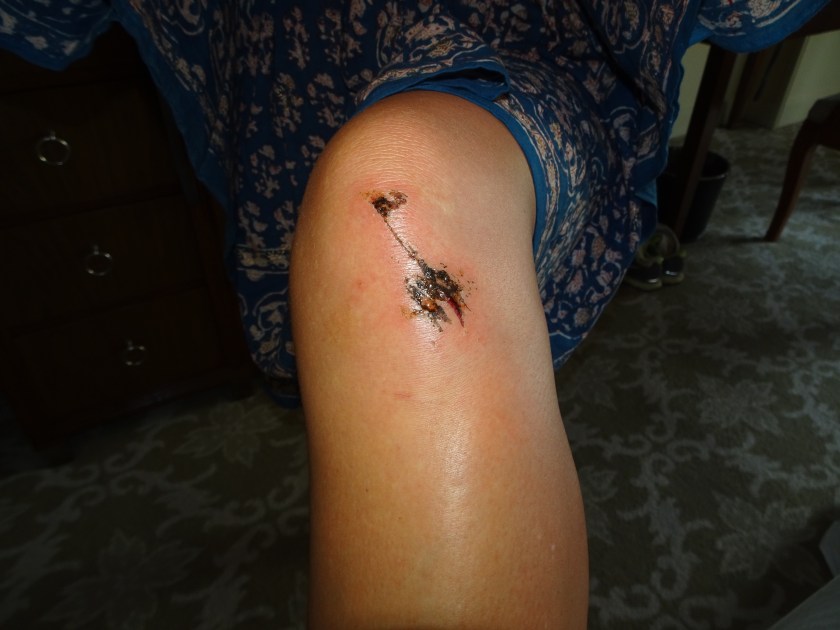
After a restless night sleep thanks to my wounded knee, we woke up around 7am and had breakfast on the 20th floor of the Taj.  The restaurant overlooked the Gateway of India and the Arabian Sea.  We got up there just in time to watch the sun slowly rise for the day.  I couldn’t help but drool out the milk from my cereal because it was just so lovely, despite the haziness.  You felt like you were on top of the world, so high above everything else (typical American thought process).  And the food options were equally as amazing.  It was all complimentary so we ate enough for Kate Plus Eight.

DSC04559

DSC04555

DSC04554

Today we were going to see the Dharavi Slum and Dhobi Ghat with Reality Tours, who took us on the bike tour yesterday as well.  Our call time was 8:30am at their corporate office down the street from our hotel so we walked there, arriving ten minutes early (just the way I like it).  But no one was there.  Okay, give it time.  Five minutes, ten minutes, fifteen minutes go by and no one shows up.  No guides from Reality Tours and no other tourists.  Are we in the right place?  It says we are and we feel we are but where is everyone?  I gave it until 8:50am then used a nice gentleman’s phone to call the woman I had been corresponding with.  The language barrier is always hard in general but I feel like when you talk to someone on the phone it adds a whole new challenge.  Maybe because you can’t see their lips moving?  Who knows.  Either way, I got the gist of what she was saying but I sure didn’t like it.  Apparently she took the initiative to book us on the 2pm tour versus the 8:30am tour I requested, confirmed and paid for a week prior.  Ummmm how does that happen?  I was so annoyed.  Inefficiency is one of my biggest pet peeves and her making this minor mistake made my morning very inefficient.  Oh well, we are in Mumbai, stop whining and go make the most of it I told myself.  Which is exactly what we did.

After I let the steam blow out of my ears, we hopped in an Uber and made our way to Gandhi’s house.  Yeah, no big deal.  He invited us over for some biscuits and tea.  Sorry your invitation got lost in the mail.  I’m just kidding, Gandhi didn’t really invite us.  I’m sure if he was still alive he totally would have loved to kick it but unfortunately, he left this world in 1948.

DSC04578

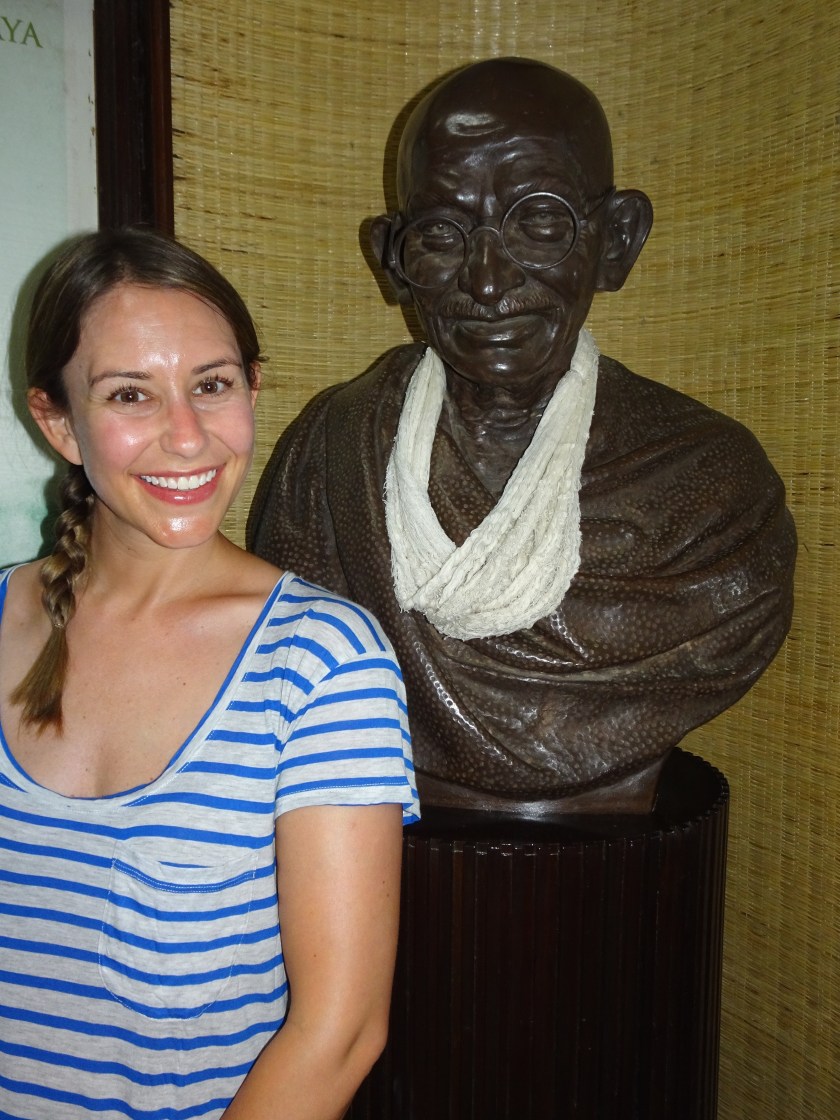
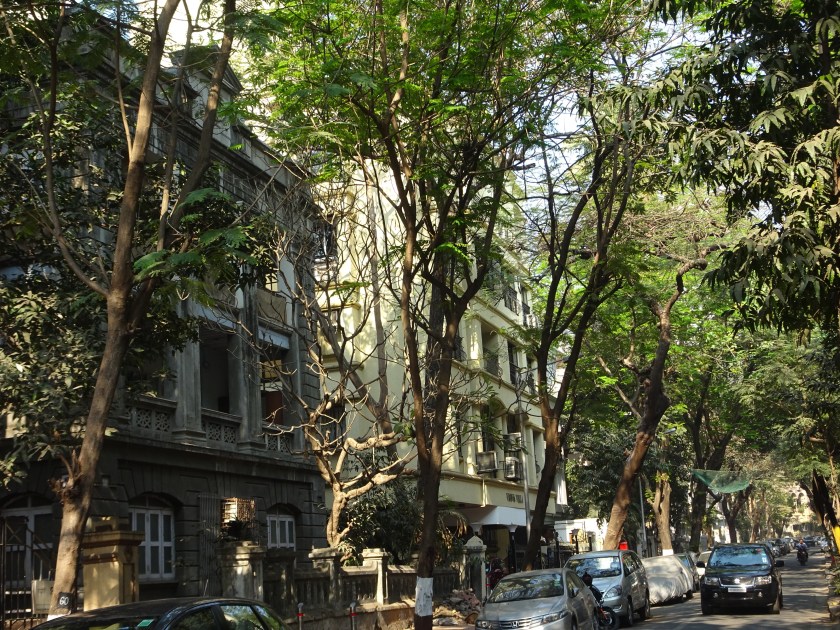
Mani Bhavan, a modest two-story building on Laburnum Road in a comparatively quiet area called Gamdevi, was Gandhi’s residence in Bombay from 1917-1934 and has since been turned into a museum memorial in his honor.  It was in this house that he launched Satyagraha (nonviolent protest) in 1919 and the Civil Disobedience campaign in 1932.  It was pretty rewarding to step foot in the same place he laid his head at night.  The street that the house lived on was unique in itself.  Trees upon trees upon trees, well maintained buildings, a slower pace of life and a peaceful break from the hectic city.

DSC04567

DSC04569

For those of you who aren’t too familiar with who Gandhi is and what he stands for, I will provide a very brief snapshot into the challenges he overcame and the accomplishments he achieved. Born in 1869 as Mohandas Karamchand Gandhi, he later became knowns as Mahatma, which means “great soul”.  He was a prominent Indian political leader who led India to independence against the British rule.  He was arrested many times, organized many marches and undertook long fasts as a means of both self-purification and social protest. Gandhi’s actions inspired future human rights movements around the globe, including those of civil rights leader Martin Luther King Jr. in the United States and Nelson Mandela in South Africa. In the late afternoon of January 30, 1948, the 78-year-old was tragically assassinated by a Hindu extremist who was upset at Gandhi’s tolerance of Muslims.  This was posted on one of the walls: “January 30th will be known as the blackest day in India’s history; but, for Mahatma Gandhi, it was a supreme moment.  He was the victorious one in death as in life.  He had said “If I am to die by the bullet of a mad man, I must do so smiling.  There must be no anger within me.  God must be in my heart and on my lips.”  Years have gone by.  A thousand more may go, and yet he will continue to live in mankind.”  To believe in something so strongly you are willing to die for it is beyond inspiring.

In 1931, the colors of the National Indian Flag were changed at Gandhi’s request.  Saffron standing for courage and sacrifice, white for truth and peace, green for faith and strength and the spinning wheel represented the hope of the masses.

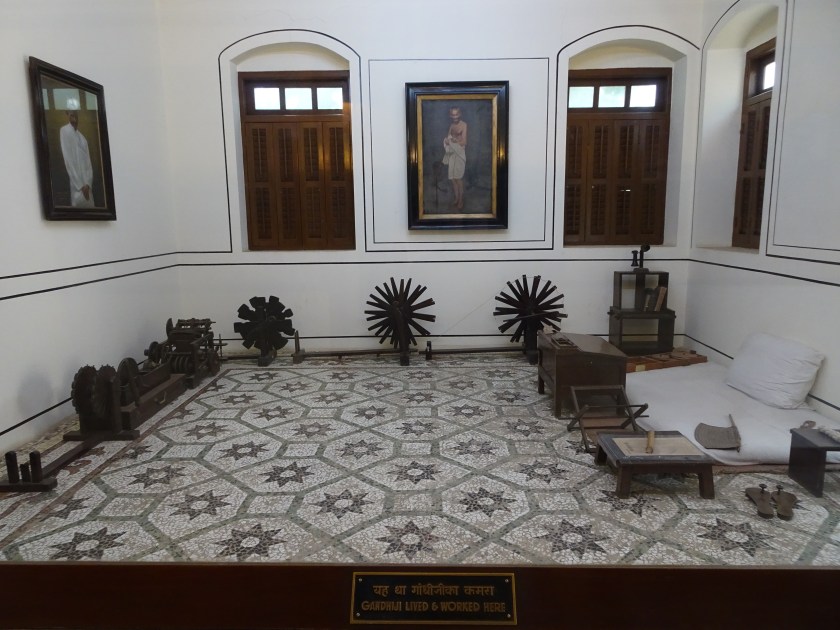
There were three floors and various rooms that told the history of Gandhi’s life and legacy including photos, letters, biographies, dioramas, artifacts, etc.  On the second floor, the room where Gandhi lived and worked is preserved in its original setting.  Talk about being a minimalist.

DSC04597

Here are letters he wrote to Hitler and President Roosevelt.

DSC04586

In 1888, Gandhi’s mother consented to his going to England for further studies only after he took a vow not to touch wine, women and meat.  Good for him.

DSC04601.jpg

On January 31, 1948, Gandhi’s body was laid on a sandalwood pyre at Rajghat, Delhi.  From the prye comes the message.  “Lead me from the Unreal to the Real, from darkness to light, from death to immortality.”  I liked this scene because it showcases a variety of national flags in the background, not just Indian or Britain.  The world came together to celebrate a pertinent figure who stood for strength, determination and courage.

DSC04602

One quote that sums up Gandhi’s non-violent approach is “I do not want my Country’s happiness at the sacrifice of any other Country’s happiness”.  If only other leaders would think this way we would be living in a much safer world.

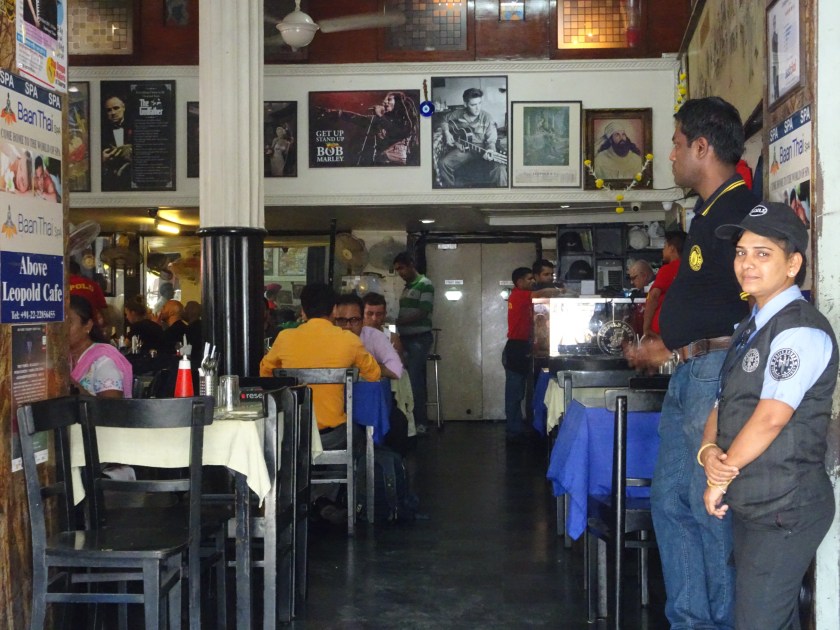
It was lunch time, and you know we don’t ever miss an excuse to eat, so we headed to Leopold’s Cafe, which was established in 1871.  In the book Shantaram, it was the local hangout for Linbaba and all of his friends.  To put it in modern terms, Leopold’s was to Shantaram as Peach Pit was to 90210, The Max was to Saved By The Bell, Central Perk was to Friends and Cheers was well, to Cheers.  Sadly, Leopold’s was one of the six locations targeted on 11/26/08 and there are still bullet holes in the walls today.  Kind of eerie.

DSC04758

DSC04612

DSC04610.jpg

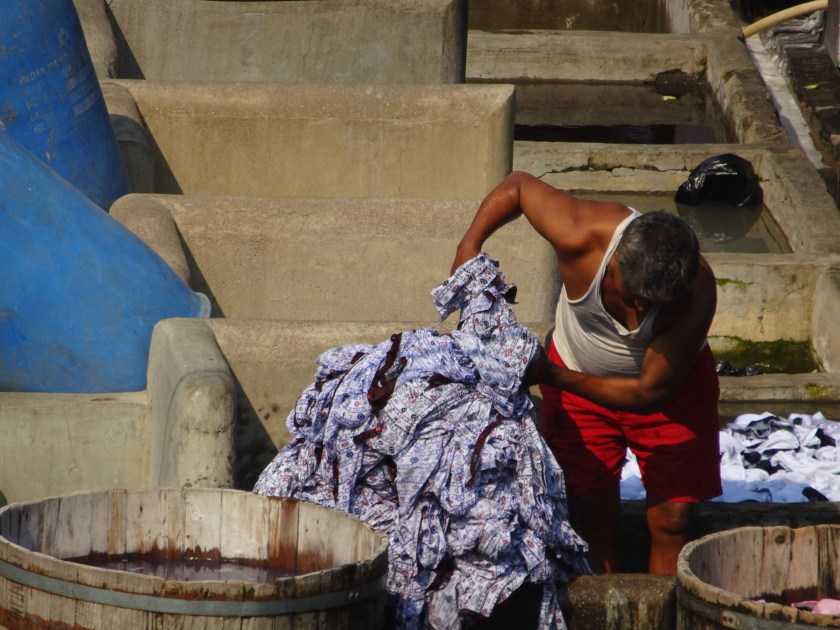
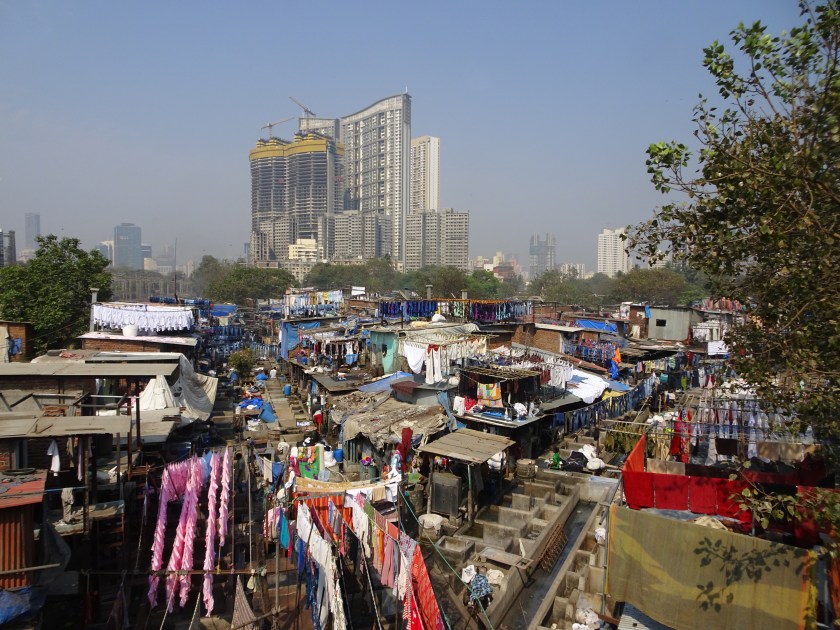
2pm was quickly approaching and that meant it was time to head back to the meeting place for our tour.  Thankfully, our guide and driver were both there waiting, with a much appreciated air-conditioned car.  Our first stop was the Dhobi Ghat, which is the largest outdoor laundry area in the world.  Over 10,000 pieces are washed and dried each day while over 5,000 people work here.  Besides the old-fashioned method of washing, the Ghat is also equipped with automatic laundry machinery which remains on the sidelines because the dhobis in their wash pens are the real stars of the show.  They scrub, slap, soak, dry, drape and deliver every article of clothing in their vicinity with remarkable competence and calmness and somehow, get them back to their owners by evening. The dhobis are part of a caste system (around 200 dhobi families work together here), making only three hundred rupees a month, living in a ten square feet space with ten other people.  Hotels, hospitals, schools and many other insitiatuions all send their laundry here.  What an incredible sight to see.  So many colors were brightly displayed, hanging from a rope, eagerly waiting for the sun to works its magic.

IMG_1124

DSC04621.jpg

DSC04630

DSC04632

DSC04615

Next up was the Dharavi Slum, the largest slum in Asia and one of the largest slums in the world.  You may already be familiar with it from the movie Slumdog Millionaire, because this was the exact slum that Jamal (the main character) grew up in and many of the scenes were shot here. About one million people live within one square mile, making it the most densely populated area on planet earth.  It is it’s own community consisting of post offices, hospitals, primary and secondary schools, restaurants, police stations, retail markets, community halls, libraries, fire stations, and numerous factories.  The Dharavi residents are some of the hardest working individuals I have ever come in contact with.  The conditions aren’t anywhere near ideal either – it’s hot, dirty and everyone is on top of everyone.  Each year, the slum produces over $65 million USD through various small-scale industries such as pottery, snacks, leather goods, rubber and plastic recycling units, scrap, electronic waste, handicraft, garments, embroidery, papads, foundries, restaurants, sweet-making, soap and detergent factories, bakeries, kite making, export oriented units, printing press, suitcase, umbrella manufacturing, etc.  It is beyond saddening how they only make, on average, $1-2 USD per day, yet they contribute to a business that generates millions if not billions.  How is that fair?  And with all of these factories, the noise level is almost unbearable from an outsiders perspective.  The crackling of fried food, the shredding of plastic at the recycling units, the honking of cars, the whirring of sewing machines, the tinkering of pots, the burning of metal.  Every inch of the slum is one ear drum away from being blown.  Regarding the residential area, there is a Muslim sector and a Hindu sector.  And although multiple families sleep under one roof, we did see a good amount of TV’s.  The alleys that you had to walk through to get around were extremely narrow with tight turns at every corner.  There is only one toilet for every 1,500 people.  Yes, you read that correctly.  1,500 people.  We lived in a three bedroom one bathroom house and Vinny wished he had a second bathroom to himself.  Puts things into perspective a little, huh?

Despite all the hardship a foreigner might pinpoint since it is so unfamiliar to our first world eyes, the local people of Dharavi truly seem to love living there.  All of the kids were so happy, so playful and so excited to see us.  They would all say hello, ask how we were and wonder what our name was.  Despite how little they had, they were richer than rich in love.  And after much convincing, I played a few games of badminton with some adorable young girls whose laughter sure was contagious.  Unfortunately, out of respect to the residents of Dharavi Slum, we were asked to not take photos so I don’t have any of my own to share.  However, if you just Google Dharavi Slum, you will get an abundance of images that will help paint the picture as to what this community is all about.

Today was a very powerful day in terms of seeing how life in Mumbai is lived for most. It was certainly an eye opening, heart breaking, reality check kind of experience.

The next morning was our last full day in this magnificent city as well as our last full day in this incredible country.  We had breakfast in the Sea Lounge of the Taj Mahal Palace and felt like royalty.  It exudes old colonial charm accompanied by enchanting live piano music and spectacular sea views.  And then we revisited a few places that we saw on our bike tour because we were eager to see them mid-day with the hustle and bustle of real life versus before sunrise when it was quiet and uneventful.  Both times offer something different so we wanted to it all.  So greedy of us.

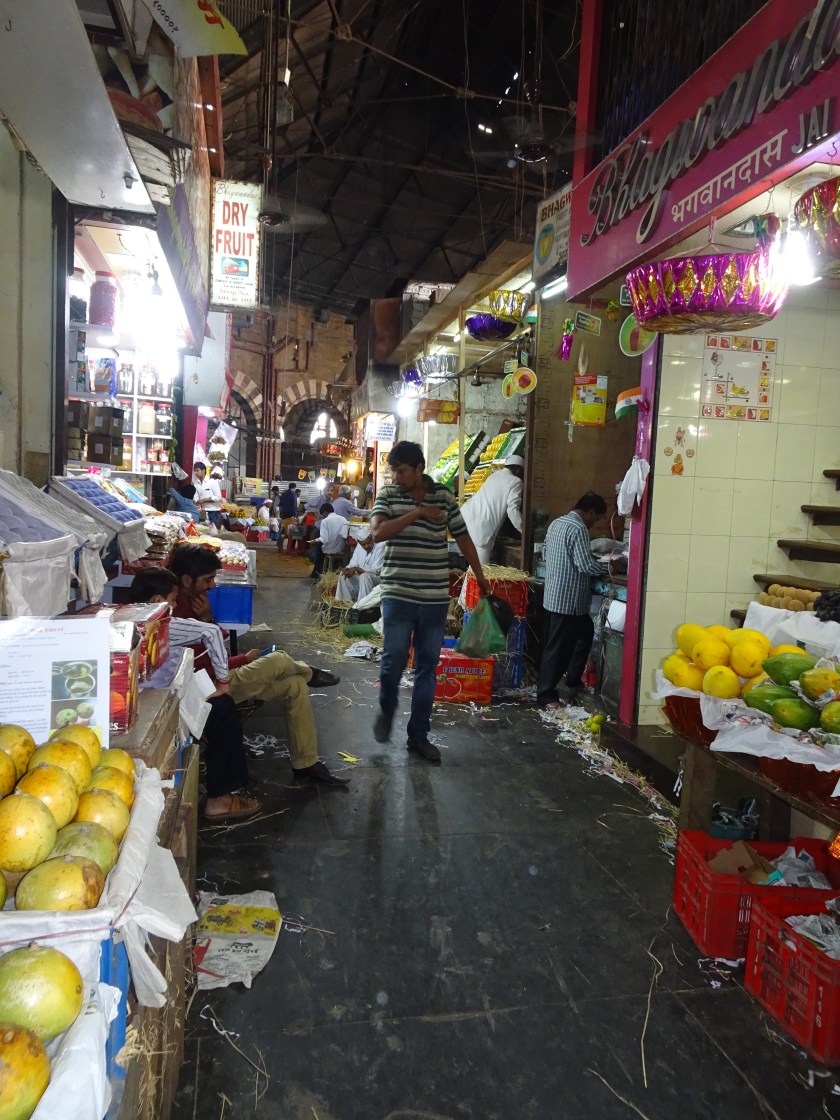
Here are a few images of Crawford Market…

DSC04647

DSC04651

DSC04648

DSC04650

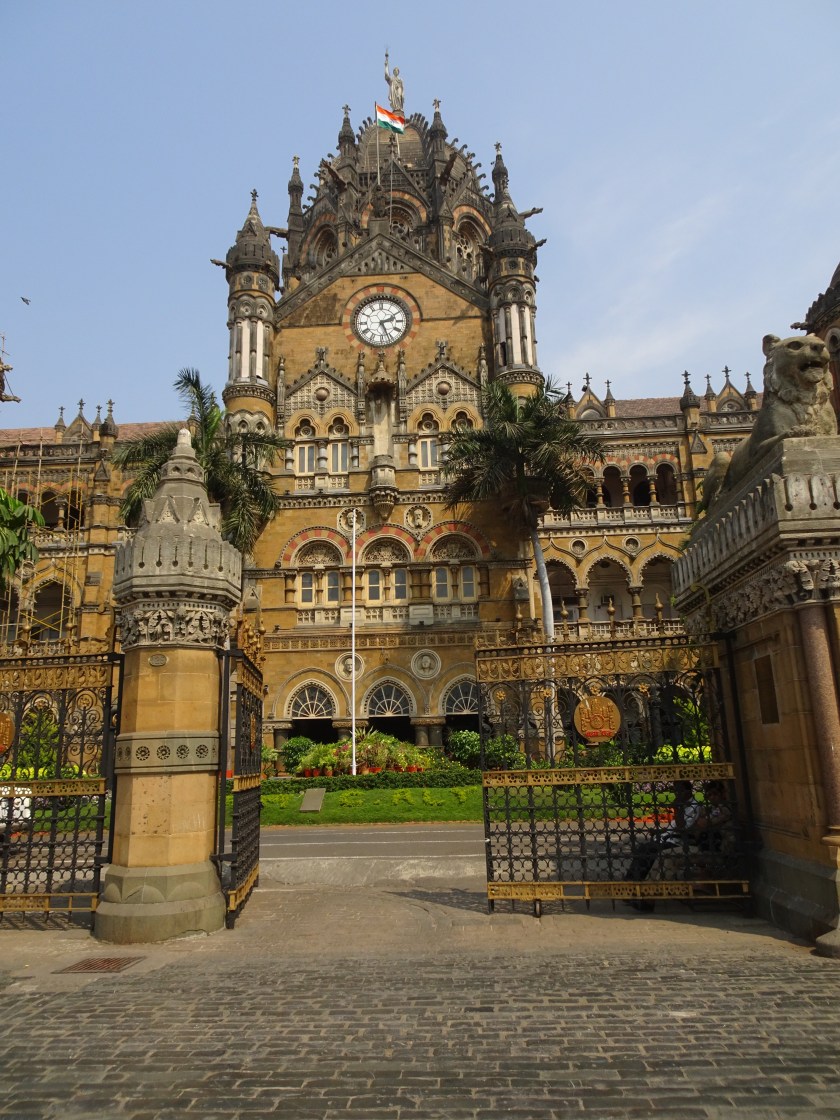
Here are few images of Chhatrapati Shivaji Terminus (CST) – this time we went inside as well and wow is all that comes to my mind…

DSC04697

DSC04657

DSC04691

DSC04655

DSC04686

DSC04663

DSC04660

DSC04659

This pretty much captures the train commute in India…

DSC04675

Later in the afternoon we took a cab to Malabar Hill, located across the bay from Marine Drive, and known to be one of the richest areas in India.  It was very apparent too as houses were much larger, flowers were much brighter and cars were much nicer (Mercedes, Porsche and Audi).  We just strolled along the streets, enjoying the beautiful weather, soaking in every minute we had left in India.

DSC04703

DSC04709

There was a very random, really big shoe hanging out in the park…

DSC04713

Great views of Mumbai from across the bay…

DSC04725

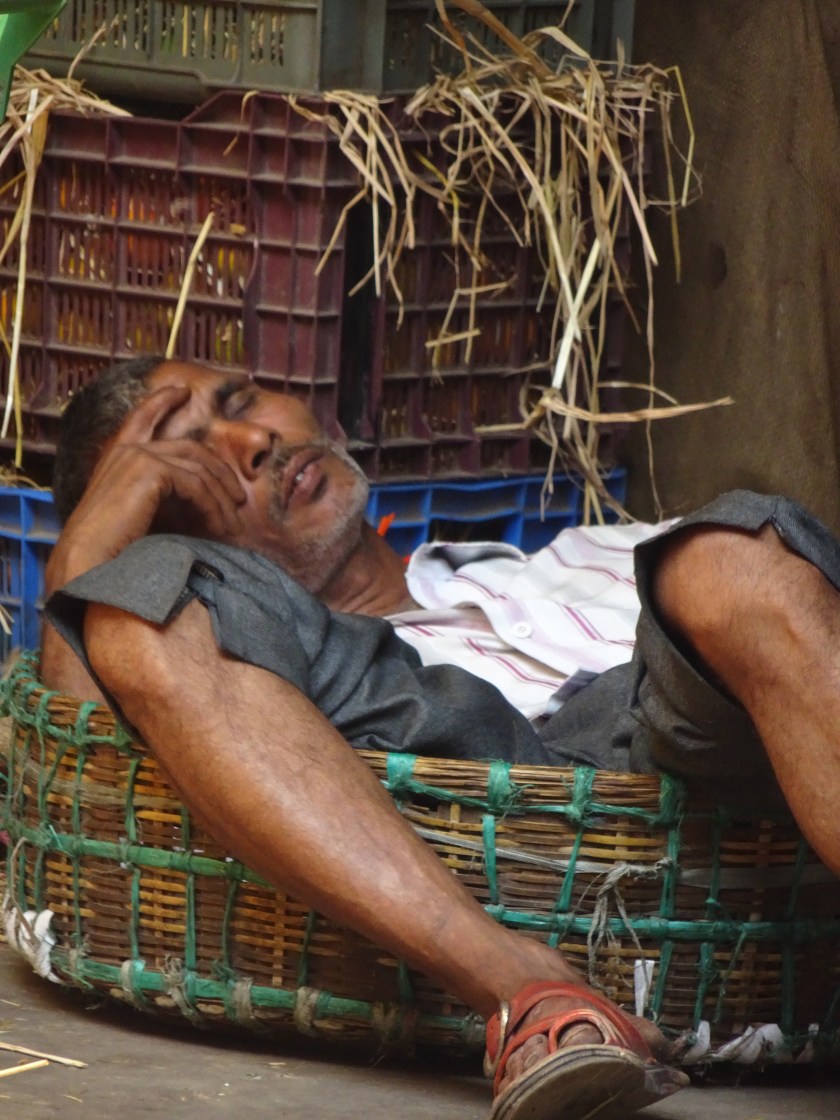
A man sleeping in what seemed like a very uncomfortable position…

DSC04706

A bright, colorful almost Rastafarian looking bus…

DSC04707

And the most expensive house in the WORLD, valued at over a billion dollars and consisting of twenty seven levels, six hundred staff, three helipads, six floors of car parking, rising gardens, a theatre and a ballroom.  It is referred to as Antilia and was built for India’s richest man, Mukesh Ambani – ranked by Forbes as the ninth wealthiest person in the world with a fortune of $27 billion.  Crazy how one day we can see one of the poorest areas in the world (Dharavi Slum) and then the next day, see one of the richest houses in the world, located only a handful of kilometers apart.  Isn’t it ironic?  Don’t you think?  A little too ironic?  Yeah I really do think (Alanis Morissette).  But in my opinion, it is appears to be an ostentatious display of wealth in a country where most people live on less than $2 a day.  A little tacky.

DSC04736

DSC04742

DSC04737

For our last supper, we went to Khyber, which was ranked 3rd of 13,186 on TripAdvisor.  We got there around 7:15pm but I guess it didn’t open until 7:30pm so we anxiously wanted outside twiddling our thumbs like losers until they would let us in.

DSC04767

DSC04769

DSC04773

To end our night, we headed to Marine Drive and enjoyed a pleasant walk along the strip.  The city was brightly shining with lights, which were graciously reflecting on the water.  There were young couples making out, active individuals going for a run and others just enjoying the perfect weather on this perfect evening.  I couldn’t have asked for a better way to say goodbye to a country that has treated us so well and taught us so much.

DSC04775

DSC04780

It is with great sadness that we must say goodbye to India tomorrow morning.  We certainly had our highs and lows, ups and downs, happy times and sad times but it was more than worth the struggles to enjoy the triumphs.  We learned, we lived and we loved every minute of this chapter.  We realized how lucky we are to have we what have yet at the same time, how happy others are with very little.  It’s all relative.  In the end, love the life you live because it’s the only one you’ve got.

Mumbai, Formerly Bombay

On Monday, February 29 we had a non-stop, fifty minute flight from Goa to Mumbai, which was the last city on our seven week tour through India.  I can’t believe our time here is almost over.  It went by as fast as a shooting star, which is a pretty good indication we thoroughly enjoyed ourselves.

Walking off the plane and getting a cab was so much easier than when we first landed in Delhi on that late January 14th night. Maybe it’s because we’ve been in this country for forty seven days and have acclimated to the culture or maybe because it was mid-day and we weren’t exhausted from twenty four hours of travel.  Either way, it was an easy breezy, smooth as a baby’s bottom kind of experience.  While we were on the highway, we saw some creative messaging to promote sober, safe driving that made us chuckle out loud.  The first one said “driving hammered will get you nailed” and the second one said “drive like hell and you’ll soon be there”.  Given how absolutely insane the roads are, it’s refreshing to know that they not only realize it but are taking a unique, almost funny, approach to changing it.  Two thumbs up to that.

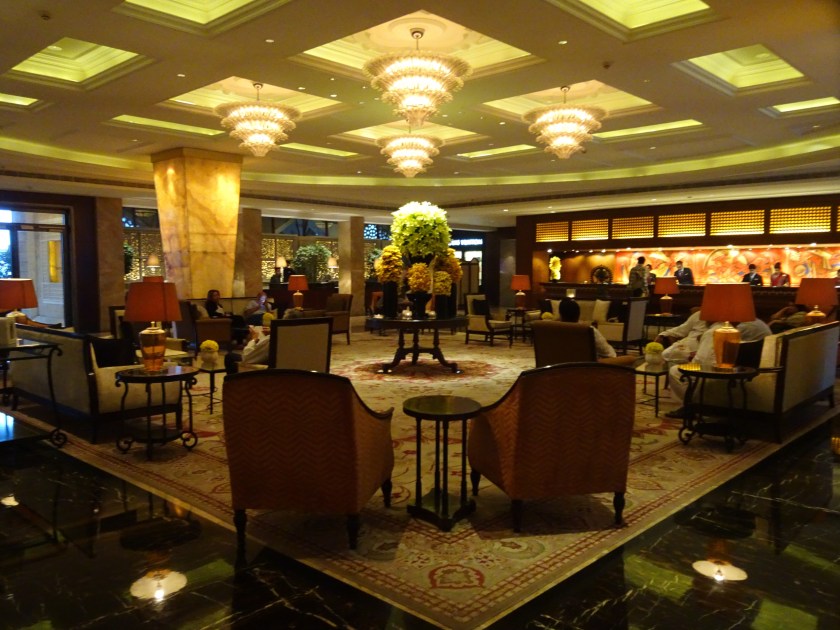
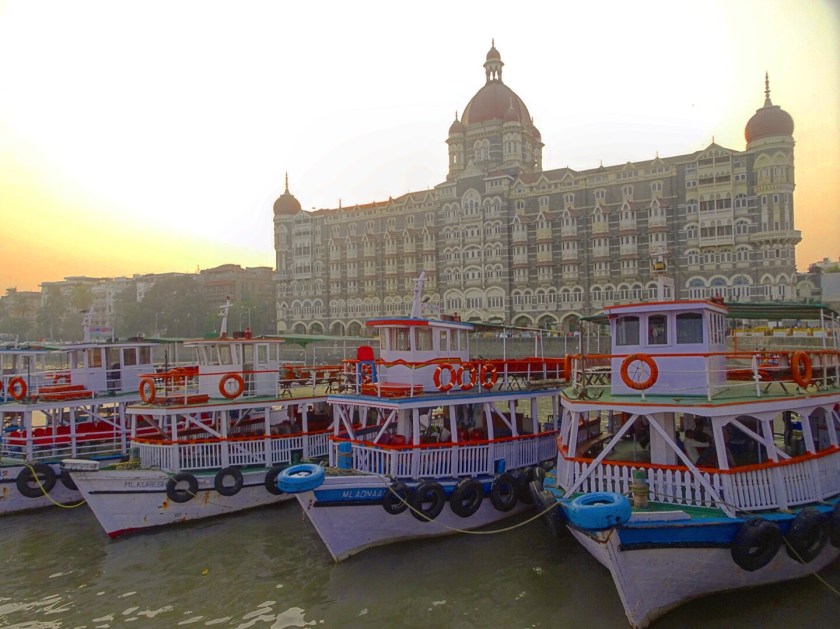
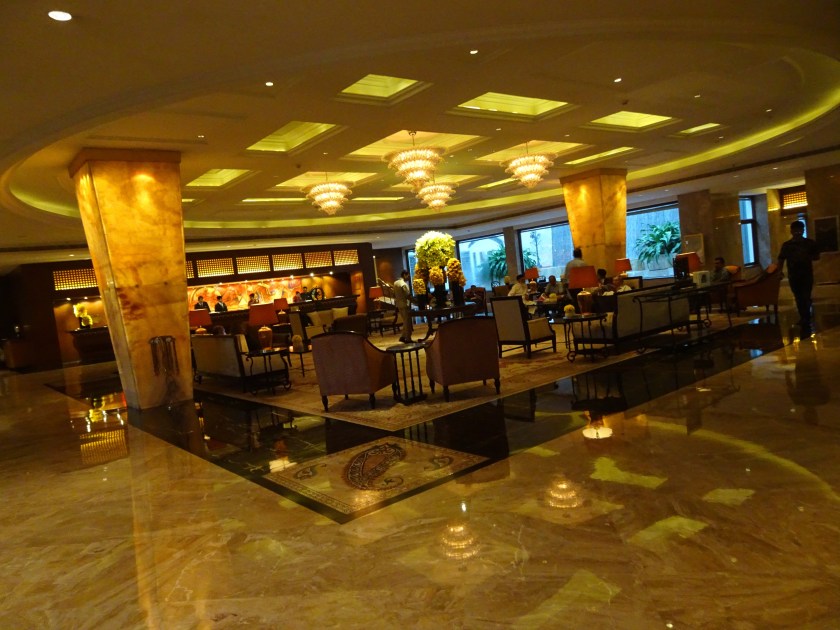
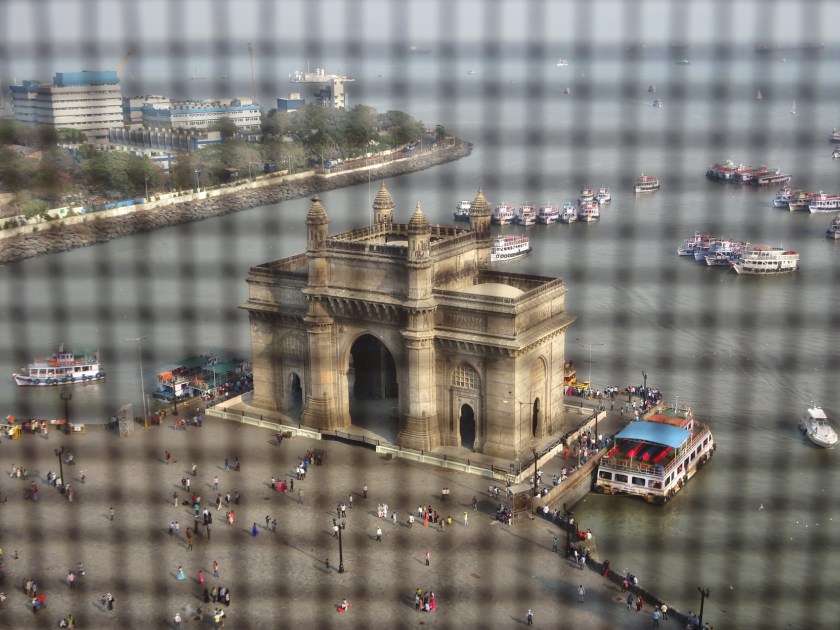
After about an hour drive, we arrived at the Taj Mahal Palace, our home for the next three nights. You are probably thinking, wow, that’s so fancy pants of you.  What happened to that tight budget you keep mentioning?  And you are totally right.  However, we gathered all of our credits from Hotels.com and some of our points from our Chase Sapphire card in order to have the privilege of staying at this iconic establishment.  We were seriously like eight year old kids collecting every penny they had in their piggy bank to buy that new cool toy everyone else had but couldn’t really afford.  And it was sure worth it.  The architecture on the outside was stunning and the moment we stepped foot inside, it smelled of fresh roses and Benjamin Franklin bills.  You could see, taste and hear the money being spent.  The people working and the people visiting all radiated class.

DSC04498

DSC04553

IMG_1122

DSC04552

DSC04763

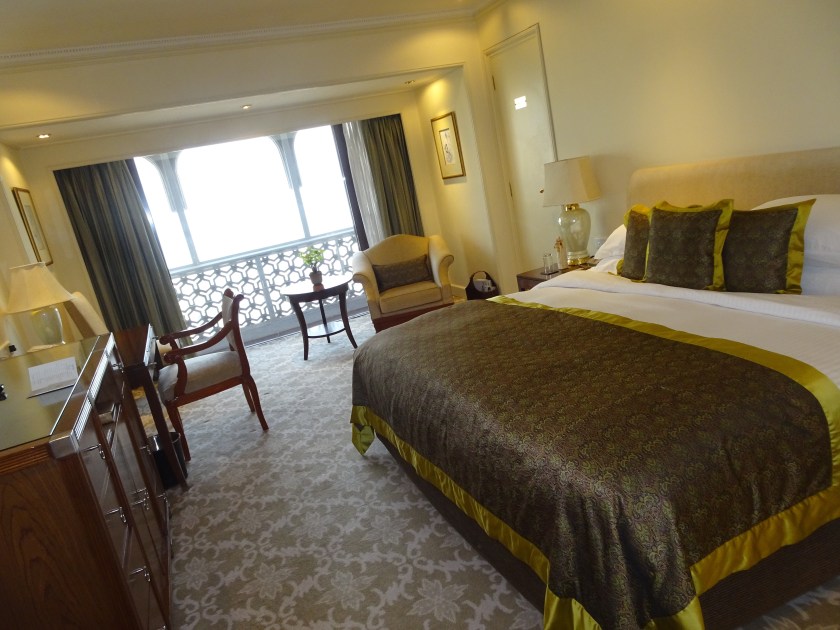
And then there was us.  Two young adults, with backpacks, wearing the same clothes they’ve been wearing for weeks and weeks.  There was nothing about this place that made us fit in but we didn’t care.  At least we shower every night, that’s a plus.  They welcomed us with necklaces that are believed to attract good luck and ward off evil (so yes, we’ll be wearing those proudly), Moksha (third eye in the Hindu religion) and the very much appreciated surprise of a complimentary upgrade (never argue that).  Shortly after we entered our room, which overlooked the Gateway of India and the Arabian Sea, they had cappuccino’s sent up.  Something tells me I’m going to really really like it here.

DSC04385

DSC04377

DSC04381

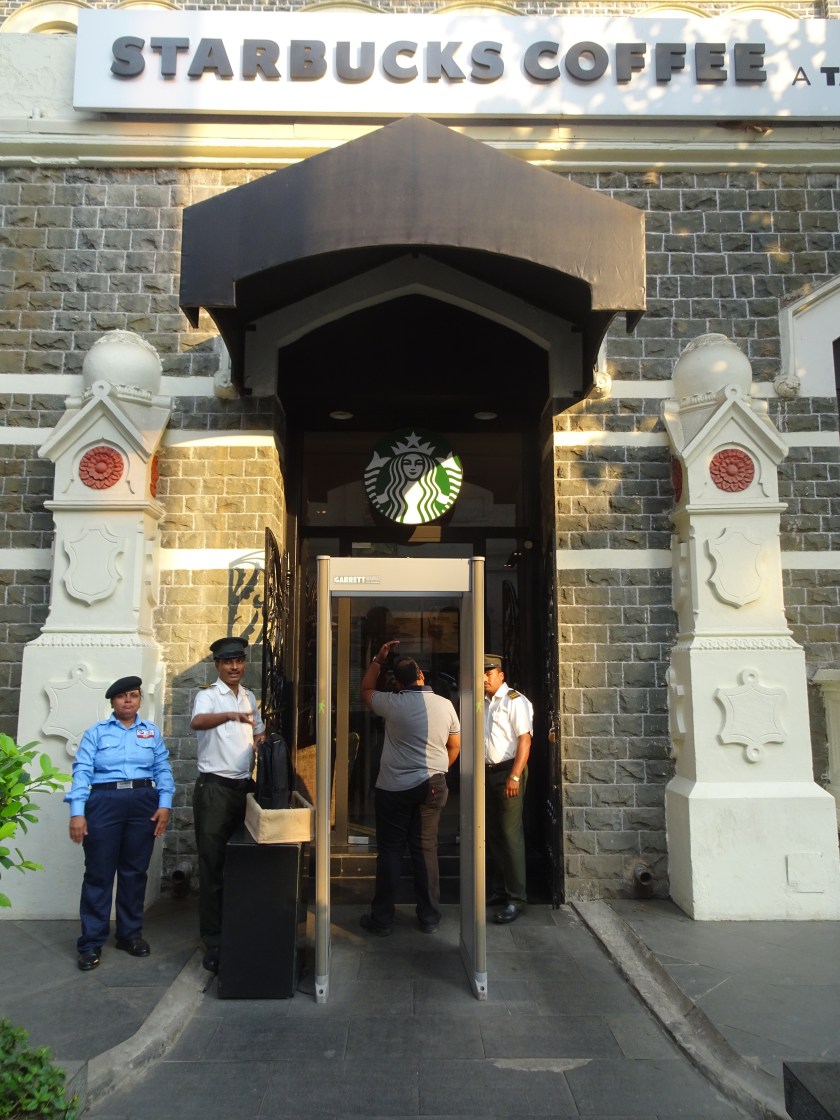
The Taj Mahal Palace has a wealth of history behind it. Since it was built in 1903, many notable guests have stayed here including past US Presidents, Oprah Winfrey, the Beatles, Brad Pitt and Angelina Jolie, Mahatma Gandhi, Mick Jagger, Prince Charles, Jacqueline Onassis and so many more pertinent figures.  Additionally, during World War I, it was converted into a 600 bed hospital.  Lastly, but certainly not the most positive memory, was on November 26, 2008 when it was part of a four day, six location attack on Mumbai.  Today, the security is extremely intense to prevent such a horrific act like this from reoccurring.  All cars have to stop outside the property before entering to be searched (tires, hood, trunk), all guests have to walk through a metal detector and have their bags scanned.  Even those just wanting the attached Starbucks has to go through these same measures.  Better safe than sorry.

DSC04497

Around 7:30pm, we were getting hungry so per usual, we went on TripAdvisor to get some ideas of where to eat.  But when the page listing out all the restaurants in Mumbai loaded, we both were instantly overwhelmed.  There were 13,186 different options one can choose from.   And Mumbai is a fairly large city so it’s not like everything is right in your backyard.  And we have no idea where we are located nor where we should be going.  Oh geez.  We took a few deep breathes, narrowed our search as much as we could and decided on Mahesh Lunch Home, ranked 6th.  Don’t be fooled by the name though, they are open at night too.  Mahesh sure didn’t disappoint either.  Garlic prawns soaked in butter with a little spicy kick to them made us two very happy tourists.  Not to mention the service was the best we’ve had yet.

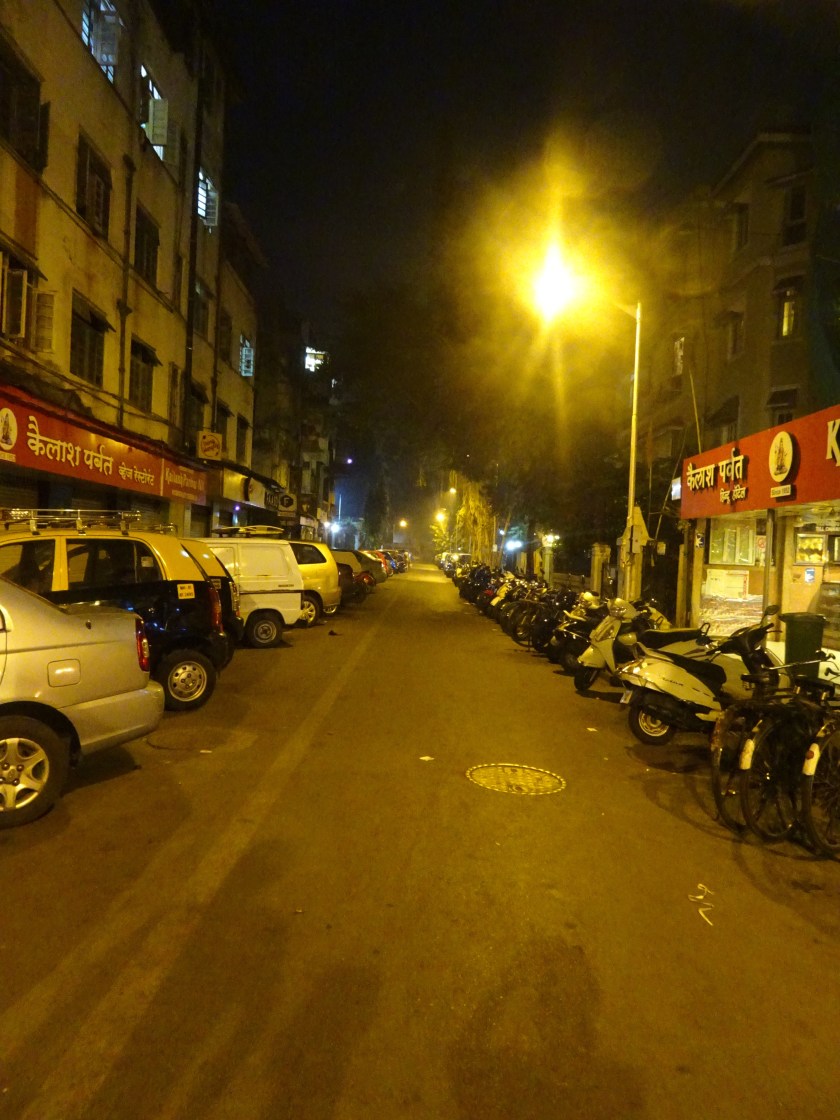
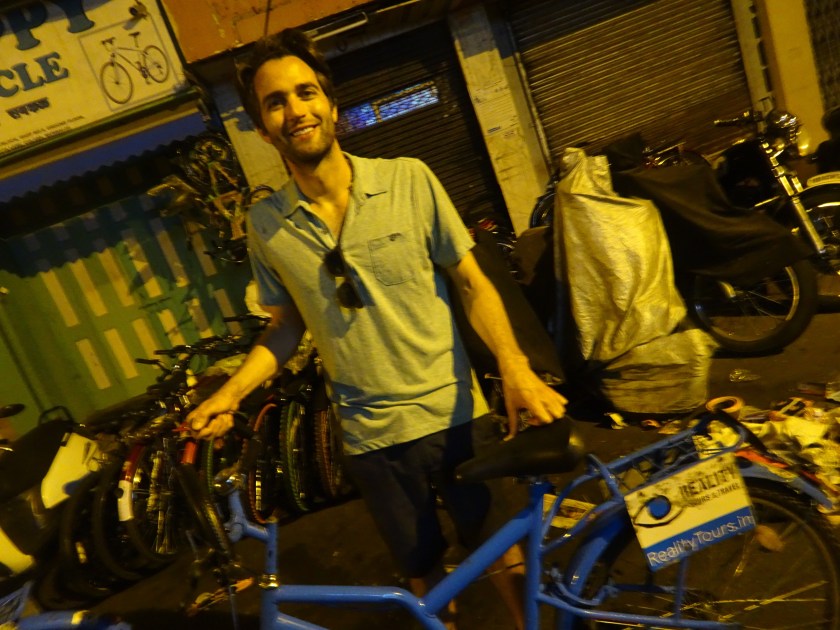
The next morning, our alarm went off at 5am because we were going on a 6:15am sunrise bike tour through Mumbai.  Reality Tours, the company who organized the excursion, has a mission to improve the quality of lives in their communities by having 80% of the profits fund their sister-NGO, Reality Gives.  It felt good to know that we inadvertently helped out those that are far less fortunate than us.  Our contribution wasn’t a lot but it was still something.  The Taj was a short twelve minute walk to the meeting place so we decided to take advantage of having the city to ourselves while everyone else was still dreaming.  The streets were so quiet you could hear a leaf drop.  The air was so pleasant given the humidity hadn’t fully hit nor were there thousands of cars driving all around you.  The shops were all closed and the lights were all of.  It’s fascinating to see one of the largest cities in the world at this very moment before everyday life begins.

DSC04397

DSC04391

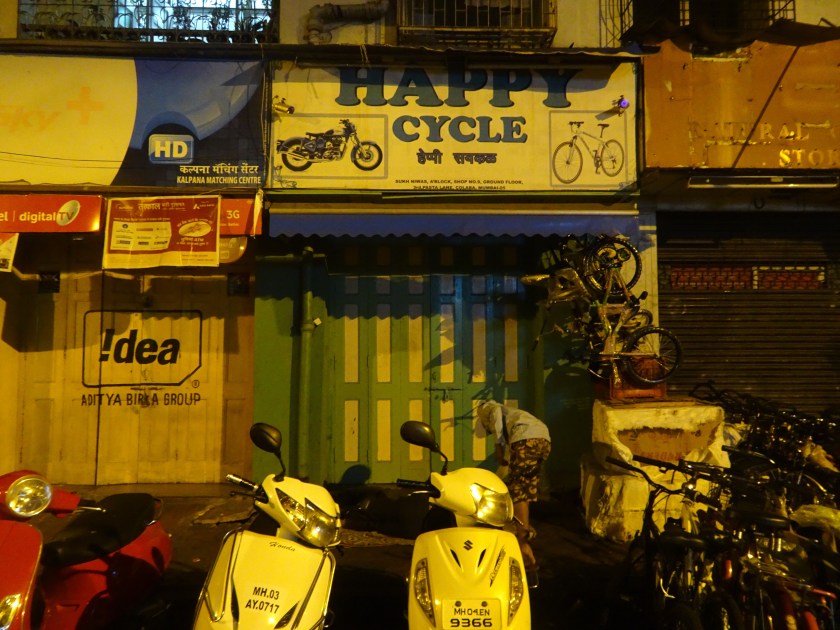
When we safely made it to our destination, we were greeted by our guide, Rajesh (Raj for short).  He was an energetic little thing.  I could tell this was going to be a fun adventure with him leading us.  As the other four people showed up (two guys from London, a girl from Italy and her husband from Belgium), Raj casually mentioned that he had to wake up the bicycle shop owner in order to retrieve our bikes. Hearing this, I figured he had to make a quick phone call or possibly walk a short distance to his house.  But no.  The owner sleeps on the ground, outside, in front of his shop.  I was speechless.  I thought I had overcome my culture shock weeks ago but just when I assumed I had fully adjusted, this happened.  Crazy.  We all got on our bikes and rode away.

DSC04392

DSC04394

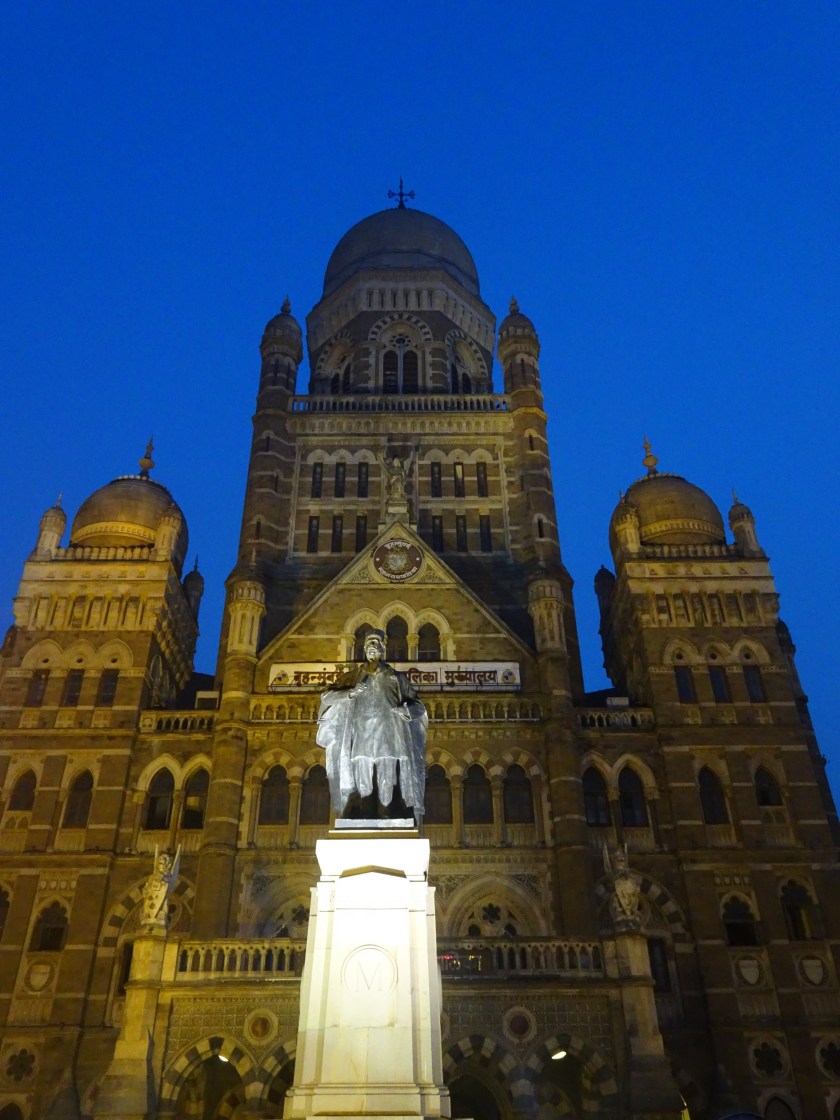
The first stop was Chhatrapati Shivaji Terminus or CST, where over seven million people travel by train each and every day.  Built in 1888, this was originally called Victoria Terminus Station (named in honor of Queen Victoria from Britain) but just like many other places throughout the country, names are being transitioned from the British reference back to an Indian reference. The building is absolutely beautiful on the outside with the architecture resembling that of a Victorian-Gothic Revival style.  Many scenes of the Oscar-winning feature, Slumdog Millionaire, were shot here.  And CST was also witness to India’s first flash mob, where 200 people broke into an impromptu dance on a popular Bollywood song in 2011.  I wish I was there for that.

DSC04402

DSC04401

The second stop was Crawford Market, which was built in 1871 and became the first market in India to receive electricity in 1888.  Spanning around 72,000 square yards, it is a popular spot for buying fresh fruits, fresh vegetables, spices, condiments, pet food, imported foods, meat and poultry, imported cheese, homemade chocolate, bakery products, household items and even animals.  Yes, animals.  You can buy dogs, cats, birds and random other creatures of your liking. Since we got here so early, we saw tons of people sleeping on the ground, in front of their shops, just like the bicycle owner was.  Raj was telling us that since most don’t have homes, they sleep outside when its hot and inside when its cold.  Completely breaks my heart to not only know this, but to see it first hand.

DSC04406

DSC04405

DSC04412

DSC04409

DSC04408

As the clock struck 8am, Mumbai went from a quiet sleeping town to a loud bustling city within the snap of a finger.  Shops were beginning to open, cars were beginning to honk, people were beginning a new day.  And all of this chaoticness definitely intensified our ride as we were no longer the only ones on the roads.  Good thing we stopped for some Masala Chai tea to soothe our soul.

DSC04444

Next up was the historical Mumbadevi Temple, which is what Mumbai was named after when the Indians no longer wanted the British name of Bombay in 1995.  Built in 1731, it is one of the oldest temples in the city and was dedicated to the goddess Mumba, the local incarnation of the Devi (Mother Goddess).  We couldn’t take any photos of the inside or the outside due to the November 26 attacks, which was unfortunate but most certainly respected.  As the Hindus entered the temple, they would ring a bell letting the Gods know they are entering then kiss each step that lead them inside while saying a prayer.  The visits don’t seem to be for a long duration but they do seem to visit quite often.

After the temple, we rode our bikes to Bombay Panjrapole, a sanctuary for the welfare of more than three hundred and fifty cows nestled away in the heart of the city.  In the Hindu religion, there are over thirty three million gods and goddesses and all of them are believed to live in the stomach of a cow.  Which is why cows are so holy.  Holy cow.  So people come here to increase their karma by feeding the cows which in turn, is feeding the gods and goddesses.  And some ducks reap the benefits as well.

DSC04430

DSC04437

DSC04439

Following the cow sanctuary, we moooooo-ved on to Marine Drive, which is a three kilometer long, six lane concrete road that stretches north along the coastline, forming a natural bay.  Large crowds of people come to this place to stride along the walkway and to view the stunning sight of the setting sun at dusk (assuming the pollution doesn’t get in the way). The scenic beauty of the perfectly lined palm trees adds to the already calming atmosphere. One way you look has the Arabian Sea and the other way you look has restaurants, offices and hotels.  Marine Drive is also referred to as Queen’s Necklace because the street lights make the road look like a string of pearls in the evening.  Across the water on the other side is a very rich neighborhood called Malabar Hill. But we couldn’t see it this morning due to the overwhelming amount of smokey haze and pollution.  Yummy.

DSC04461

DSC04456

Here are some random action shots…

DSC04448

DSC04447

DSC04465

The final stop on our bike tour was the Sassoon Dock, which opened in 1875 .  This dock is the main fish loading and trading center in South Mumbai. The people working here are Kolis, original inhabitants of Mumbai and represent the city’s original culture.  Men go out to sea to catch the food while women and children stay back to peel, clean, sort and sell everything including lobsters, baby shark, calamari, eels, shrimp, prawns and endless varieties of fish.  As I was walking by, trying not to slip on the wetness of the floor, I kept reciting to myself the Dr Seuss book “One fish. Two fish. Red fish. Blue fish”.  It was mind boggling.  Piles and piles and piles of sea life, displayed as mountains on the ground, took up every inch of the walkway for miles.  There were live auctions happening and people were bargaining hard core.  It was dirty and smelled awful but it was one of the most exhilarating scenes I’ve ever witnessed.  Due to the 2008 attacks, we couldn’t take photos or video.  It is believed the group of people who were behind this awful initiative came into Mumbai through this dock.  I was so bummed because this scene was just too good not to capture.  I did get a few from a distance prior to realizing I couldn’t.

DSC04477

DSC04471

DSC04469

After a fantastic four hours of cycling through the fascinating city of Mumbai, we all treated ourselves to a much deserved breakfast at Madras Cafe, which included maysore masala dosas and chai tea.

DSC04482

DSC04480

Oh and I forgot to mention that I completely fell off my bike about twenty minutes into our ride.  Go figure.  Typical Cantor move..  It was still pretty early in the morning so I can’t even use the craziness of the streets as an excuse.  I’m obviously still alive and nothing major broke; however, I did rip my only pair of pants (maybe it’s a sign that I should buy new ones) and I did scrap my knee.  Being the tough girl I am, I didn’t cry on the outside but on the inside, I was sobbing.  I refused to give up so I continued along as if nothing happened but my knee sure was paying the price every pedal at a time.

DSC04490

When we got back to the hotel, I called the front desk because I wanted a first aid kit to clean up the area a bit and make sure it didn’t get infected.  But little did I know, The Taj had their very own doctor on the third floor.  Seriously?  Of course they did.  Why was I so foolish to not think of that myself.  Well this was convenient.  She examined my boo boo, cleaned it up as much as she could, put some ointment on, then wrapped my knee like a Mummy.  I couldn’t bend it and I couldn’t put pressure on it.  Boy did that hurt.  I was in a good amount of pain but all I kept thinking was it could have been a lot worse. Thankfully I didn’t get hit by the bus I initially swerved away from.  I wouldn’t look good as a pancake.  1,500 rupees ($22) for the consultation and 470 rupees ($7) for two different antibiotics later, I slowly hobbled back up to my room.  As I laid on the bed resting for a little, there was a knock at the door.  “Come and knock on our door, we’ve been waiting for you”.  Ring a bell?  Three’s Company?  Anyways,  It was someone from the front desk with a dozen red roses, an octopus stuffed animal (not sure the meaning behind this one but it’s the thought that counts) and a “get well soon” note.  Wow.  Talk about hospitality and white glove service.  I carelessly fell of my bike, I’m not dying.  But to them, it’s all about the little touches.  And it sure was touching.

DSC04494

Since I needed to take my medication with food, we grabbed a bite to eat at Pizza Express, which is a chain restaurant originally from London.  Nothing makes me feel better than pizza. And when we returned to the room, there was yet another surprise of a “get well soon” pillow on our bed.  I mean, come on.  This is too much.  But I’m not going to lie, it feels good to be important.

DSC04496

Later that day, we visited the Gateway of India since it was literally across the street from our hotel and I couldn’t do much anyways.  What an impressive monument.  It was built to commemorate the 1911 royal visit of Kings George V, but wasn’t completed until 1924.  Ironically, the British builders of the gateway used it 24 years later to parade the last British regiment as India marched towards independence. Locals and tourists alike were all hanging out, laughing, people watching, taking selfies and enjoying the beautiful day that was slowly coming to an end.

DSC04509

DSC04530

DSC04526

IMG_1109

DSC04511

That night, which was March 1st, we wished my mom a very happy birthday via FaceTime.  Missing celebrations like this makes me sad but being able to see her made me feel better.  My mom’s strength, energy and unconditional love has greatly contributed to the woman I am today so for that, I am forever grateful.  And it was my best friend since preschools birthday, Lindsey.  For dinner, we walked (extremely slow) to a place called Woodside Inn which was an awesome gastropub with delicious food, fun music and fabulous energy.

So far, we absolutely love Mumbai.  The area that we are staying in, Colaba, seems to be where all the happenings are.  Streets are made out of cobblestone, canopies of trees shelter you from the intense sun, buildings all have a Victorian charm to them and the overall vibe leaves you feeling alive.

DSC04506

DSC04505

DSC04546

DSC04503


Goa, An Indian Paradise

On Wednesday, February 24, we flew from Kochi, Kerala, which is the world’s first airport completely operated on solar power, to Goa, which is the smallest state in India.  We had another layover in Mumbai but this time things went much smoother than our previous layover there.  We still had to exit then re-enter (I’ll never fully understand this); however, there were half the amount of people so it made the process a lot more manageable.  Hip hip hooray to that.

Goa is divided into two main parts, North and South.  The North is a more cosmopolitan and developed affair, befitting its status as the place where tourism began back in the hippy days.  The South tends to be a slower paced, more bucolic region, dominated at first by a long range of five star hotels then followed by heritage homes and Portuguese mansions.  The North is basically known for its drugs, its parties and its love affairs.  Without realizing this reputation, we booked our accommodations in the North.  Party on, Wayne.

Around 4pm, after an hour and a half drive, we arrived at Yab Yum, our hotel for the next five nights.  Right when we pulled up, we could tell this was going to be a super duper, veg out like a veggie platter, kind of vacation.  Masala Chai Tea will be replaced with sweet lime soda, hopping from one historical monument to the next will be replaced with hopping from one beach to the next, lakes will be replaced with oceans, saris and leggings will be replaced with bathing suits and sarongs, and eating will be replaced with, oh yeah, eating.  Thats universal.

DSC04060

DSC04115

DSC04326

DSC04327

Yab Yum was one of the most unique lodgings I’ve ever stayed in.  Hidden away behind 2 acres of lush palm grove, sheltered by sand dunes and facing directly west across the Arabian Sea, every inch of the property was immaculately green with stunning landscaping and a much appreciated shady oasis.  One can either sleep in a dome or a cottage.  We chose the dome.  They had a space-age design to them and were constructed of locally available materials such as lava rock, palm leaves, grass, mango wood, local clay and sand.  We took glamping to the next level, the $125 a night kind of level.

DSC04069

DSC04045

DSC04052

DSC04056

DSC04068

We were a little nervous staying in the North given what we had heard and read but at Yab Yum, you are in your own little world.  It is located directly on Ashwem Beach, which is one of the most peaceful and least developed beaches in Goa.  We literally walked outside our hut, dragged our bare feet in the sand and within seconds, the ocean breeze welcomed you with a nice big wave (HA, you get it?).  This beach was long, wide, clean and relatively secluded.  It was paradise.  Not Hawaii paradise or Caribbean paradise.  But Indian paradise.  And I never knew that existed until now.

DSC04063

DSC04077

DSC04090

Since it was already 5:30pm by this point, we decided to take a leisurely stroll with no destination in mind.  The weather was absolutely perfect and the water temperature was more than ideal, giving you that sense of refreshment without being unbearably cold.  It was low tide so we were able to enjoy the hard sand, watching as our feet left prints behind us, then quickly washed away within seconds.  I couldn’t wipe the smile off my face at this point.  There is something about the ocean that brings me so much happiness.  I feel free and alive.  On our walk, we saw some dogs fighting over a dead crab, a man reading a book titled “Jesus Lived in India” and a woman walking topless.  We also saw an artsy design created by a tiny crab, a group of people enjoying some Yoga on the beach and a natural born happy face.

DSC04073

DSC04160

DSC04082

And then all of a sudden, as we looked to our right, there was the sun, on it’s way down for the night.  What a beauty she was.

DSC04080

IMG_1076

As I mentioned earlier, we are taking malaria pills to avoid getting malaria in Goa.  Ironically, as Vinny was examining the packaging, he noticed that the pills are actually manufactured in Goa.  Random.  Another amazingly cool thing about Yab Yum is that they light cow dung on fire around dusk time to turn away the mosquitos.  Ummm, yes please.  Can I take the melted cow dung and rub it obsessively all over my body?  It was so nice not to have to anxiously worry about thousands of mosquitos sucking your blood one slurp at a time.

DSC04091

DSC04139

That night, we had dinner in their bamboo restaurant and ordered a Thali, which is a selection of various dishes served on a round platter. The idea behind a Thali is to offer all the six different flavors of sweet, salt, bitter, sour, astringent and spicy on one single plate, in individual bowls. According to Indian food serving customs, a proper meal should be a perfect balance of all these tastebud stimulants.  Let’s talk about how delicious it was.  My stomach had more waves in it after finishing this Thali than the ocean did.  We sure did sleep well in our hut, with our mosquito net, listening to the most quiet atmosphere we’ve had yet.

Every morning, breakfast is personally delivered to you, on the table right outside your room, at the time frame you checked, with the order that you requested the night before.  And there were a handful of options.  Eggs eight different ways, five different fresh juices, four different teas, cereal, bread, Indian dishes, etc.  Life is just so beautiful when you can wake up, walk two seconds out the door, dig your feet into the sand and enjoy the most important meal of the day.  Good thing we have four more mornings to do this over and over and over and over again.

DSC04123

The next five hours were spent at the beach.  We were as lazy as dogs, took the day at a snails pace, frolicked in the ocean like wild dolphins and laid on chairs like beached whales.  Local women were walking up and down selling anything and everything you could imagine from fresh coconut water to sarongs to necklaces to massages to pedicures to henna tattoos.  They stop to talk to you, ask you what your name is, inquire what country you are from, sweetly compliment how pretty your teeth are and then start their pitch.  I’m never interested simply because I don’t have the room in my backpack but they always walk away by saying “promise you’ll look tomorrow, so many girls, please remember my name”.  When they do find a tourist though to buy their stuff, I noticed they take the money, kiss it, say a little silent prayer and then put it in their fanny pack.

DSC04191

DSC04134

DSC04127

For the remainder of the evening, we enjoyed the sunset (it’s hard not to when it literally happens right in front of our hotel) and walked along the beach to La Plage for dinner.  What a splendid place this was.  Tables are in the sand, trees are wrapped with little white lights, music was French inspired and the food was superb.

DSC04154

DSC04143

DSC04177

DSC04170

DSC04173

Day two was started with talking to our good friends, Emily and Dustin. They are an incredible couple who inadvertently inspired us to take this trip.  Years and years ago they backpacked through Europe as early twenty year olds on a very tight budget with no internet or cell phones.  The stories and experiences they came back with, good or bad, pretty or ugly, will remain as memories for the rest of their lives.  And that’s what we wanted.  We wanted memories and experiences not material possessions.  So thank you to them for giving us the motivation we needed to make this dream come true.

Apparently, renting scooters is the thing to do in Goa.  We were pretty hesitant for many reasons at first but then figured when in Goa.  So we took a ten minute walk down the road to get our very own scooter but unfortunately, they were all sold out.  This made me so bummed because I now had my heart set on the experience yet I couldn’t do it.  But there is always tomorrow so we’ll try again.  Instead, we laid at the beach for a few hours and I finally finished Shantaram.  Wow.  What an amazing book.  It was long and kind of went on some random tangents but overall, it was extremely enjoyable. The characters became your friends and being familiar with the various Indian cities referenced throughout the chapters made it even more interesting.  I’m excited to go to Mumbai next and visit some of these infamous sites Linbaba was always talking about such as Leopold’s Cafe, Crawford Market, Colaba, etc.

The end of February always marks our anniversary.  We don’t have a particular day, we just know it’s after Valentine’s Day and before March.  Since we were in Indian paradise, we figured we would celebrate five years of being together here.  So I put on some makeup and Vinny did his hair for the second time in forty four days.  However, it ended up being an epic fail.  It was so beyond windy on the beach we couldn’t enjoy the sunset.  I know, poor us.  We then walked about twenty minutes to a restaurant we were recommended but no one was there and the menu was super overpriced so we were those obnoxious people that sat down and then go right back up.  After all the effort to make our date night special, we ended up back at our hotel, in their bamboo restaurant,  in a casual environment, enjoying each other’s company.  Which was equally as romantic. Don’t worry, eat curry!  That was our motto.

IMG_1073

DSC04335

Around 9:30am on day three, we had breakfast outside (per usual) but this time around, there were quite a few ants speed racing to eat our food before we could.  The eggs were a little runny so there was some left over water residue on our plate.  After I took my last bite, I looked up at Vinny and saw him meticulously picking something up with his knife.  When I asked him what he was doing, he responded with “I’m trying to save this ant from drowning in the water from my eggs”.  Are you serious?  When I say he would never hurt a fly, I guess I should add an ant in there too.  Gotta love him and his sincere heart.

Four hundred rupees, or $5, got us a scooter for the entire day.  Here goes nothing.  While Vinny cautiously drove, I was in the back, holding on tightly, feeling like a dog with its head outside the window, letting the wind hit my face and my hair blow in every which direction it wanted.

DSC04201

IMG_1084

We drove through little towns and big towns, got lost then found, crossed a few bridges and enjoyed some people watching along the way.

DSC04208

DSC04218

DSC04209

DSC04217

And after an hour or so we finally arrived at our first stop, Baga Beach.  This beach was very developed, maybe even overdeveloped, packed with locals, umbrellas, restaurants and a variety of water sports including parasailing, jet skiing, boating, tubing, etc.  We didn’t feel the need to stay long so we hopped back on our scooter and rode away.

DSC04226

Next up was Vagator Beach, which was a lot less crowded.  Through the grapevine, we heard that this crescent shaped beach has become a favorite spot among tourists for midnight parties.  But we are more like grandma’s and grandpa’s so never experienced them first hand.  There are two beaches in Vagator known as Big Vagator and Small Vagator (so creative). Big Vagator lined with dense palm plantations and white sand is the main beach that is undeniably beautiful. However, as it is a prime bus stop for domestic tourists, a lie on the sand or a peaceful swim is out of the question here. Small (or Little) Vagator to the south is more secluded. Also known as Ozran beach, one has to walk from Big Vagator to reach here. At the end of Little Vagator is a prominent landmark of the face of Shiva sculpted by someone on a rock on the shore. Unfortunately, it has been eroded by wave action.

DSC04247

DSC04238

DSC04237

DSC04253

DSC04263

One observation we noticed along the way was that Indians don’t swim in bathing suits like we are used to.  Instead, they either swim in their underwear or they swim in their clothes.  And this cow knows how to have fun…

DSC04260

Fresh coconut water for sale…

DSC04239

Always a balancing act…

DSC04258

This little piggy went to the supermarket…

DSC04278

Our mission was to find a restaurant called Thalassa for lunch.  It was a greek restaurant that was highly recommended in a blog I’ve been following on Goa.  But a mission is an understatement.  We thought it was directly on the beach so we walked and walked and walked but couldn’t find it.  We asked a few people but no one knew what we were talking about.  I was getting hungry and you know that means, watch out.  But after a few more attempts, we were finally pointed in the right direction.  We had to climb up a rocky hill, hop over a fence, turn left at the large tree, walk down the road and it should be on our right hand side.  Cha-ching.  There it was.  And it was worth every minute we took to find it.  Sitting on top of a cliff, the views were impeccable and the food was tasty.

DSC04268

DSC04264

DSC04275

DSC04270

I ordered a chicken gyro and Vinny ordered a lamb gyro.  Here is his lunch being prepared.

DSC04267

Following lunch, we drove our little scooter to Anjuna Beach, which is the queen of them all.  In order to get there, we had to ride down these little streets filled with markets and locals asking if we wanted drugs such as marijuana, cocaine, hash, etc.  They weren’t even trying to be sly about it.  Always love transparency.  But don’t worry, we didn’t buy anything, I promise.  Anjuna Beach was filled with tourists, mainly backpackers, and it almost felt like a Vegas pool party the way restaurants were blasting trance music.  But it was full of energy and radiant vibes.  Everyone seemed happy.  Happy to be alive, happy to be in Goa, happy to be happy.  I was very happy to witness this scene yet very happy to not be staying here as well, although the scenery was mesmerizing.

DSC04280

DSC04287

DSC04301

DSC04306

DSC04285

DSC04298

Would you like some wine with that cheese?

DSC04292

The clock was ticking down for sunlight so we decided to head back to Yab Yum before dark.  Somehow, I remembered how to go and we didn’t get lost once.  I am not sure how that happened, especially knowing my sense of direction isn’t half as impressive as my sense of humor (HA! Just kidding).  Since we were going to be taking the scooter to dinner, we needed to fill her up…

DSC04314

When we got back safely and in one piece, we had a non-stop ticket to the ocean.  It was so wonderful to be swimming at 6:30pm, under the setting sun.  No words or photos can accurately describe just how sensational this moment was.

IMG_1094

After we dried off, changed our clothes and got back on the scooter, we made our way to Sublime for dinner, which was a super cute, delicious food kind of place, yet again.

DSC04344

DSC04345

From 10am-9pm, we had such an exhilarating fun day.  By far one of our favorite experiences to date.  Having the freedom to ride around a beach town was just so cool.  In the famous words of Ice Cube “today was a good day”.

Day four was our last and final day in beautiful Goa. When I went to brush my teeth in the morning, I couldn’t help but smile because there was this little frog on our shower head who was just chilling, minding his own business.  Look hard because he sort of blends in.

DSC04350

We ended up taking a walk up to Arambol Beach, which is a very hippie culture where locals and tourists alike meet to play drums, dance and enjoy life together.  We had lunch, people watched and then walked back.  It was a nice four hour excursion.

DSC04360

DSC04361

DSC04370

I’m always so fascinated with all the different sizes, shapes and colors of humans.  Some are short and stubby, some are tall and skinny, some are hairy and some are not, some are bottom heavy while others are top heavy.  No two people are exactly alike and that is what makes life so intriguing.  But I don’t think anyone is every fully happy with who they are.  Curly hair wants straight hair.  Brown hair wants blonde hair.  Green eyes wants blue eyes.  Short wants to be tall.  And vice versa all the way around.  Happiness is the one common thing that we are all pursuing in this world but if we are always striving for something different or better, will we ever be genuinely happy?

Our time in Goa has been absolutely incredible.  Yab Yum and Ashvem Beach are the perfect combination to create the perfect vacation. We went swimming in the ocean all four days, we watched the sunset all five nights, we tried almost half of the dishes on the hotel’s menu, we made friends with the staff, we went on a stupendous scooter adventure and we celebrated a whole handful of years together.  It doesn’t get much better than this.

That wraps up our time in paradise.  Goa’s yoga flowing, hippie going, tree hugging, beach laying, Xpat living, backpacker tripping, sun soaking, soul dancing kind of vibe was so majestic.  I hope we meet again soon.

Alleppey, Kerala

On Saturday, February 20, we arrived in Alleppey around 1:30pm after yet another safe and smooth drive with Mr. Tomy.  Just like Munnar to Thekkady, the scenery from Thekkady to Alleppey was picturesque.  It made me not want to get out of the car because I was enjoying my surroundings so much.

Our hotel for the next two nights, Deshadan Resort, was about fifteen kilometers outside the city center, which was on purpose.  We didn’t want to be where everyone else was.  We wanted to be in a quiet area, on the backwaters, with as little commotion as possible.  It was so removed that Mr. Tomy couldn’t even find it.  He had to ask at least three different random locals on the side of the road where it was.  Luckily, everyone was helpful and kept pointing him in the right direction, one turn at a time.  Mr. Tomy had made a comment that this hotel was off the beaten path so at that moment, I got a little nervous that maybe we were too secluded.  But after a few minutes down this small, quiet, kind of random, potholed filled road, we passed The Oberoi, which gave us all the confidence in the world that we were in a good location.  Funny how a high class brand name hotel can be that stamp of approval you need to breathe.  Deshadan, however, was not a high class hotel but it was just perfect for us.

DSC03806

DSC03800

When we checked in, we were upgraded to a superior lake view room, which basically gave us the second floor versus the first floor. And a better view.  Hey, we’ll take it.

DSC03790

DSC03804

Alleppey’s weather was much like Kochi’s weather, hot and humid.  Very tropical.  But this time around, our hotel was comfortably sitting on the backwaters, with a gentle breeze and a decent pool that loudly screamed “come join me!”.  And we did exactly that for the next two hours.  Laid by the pool, bellies full of naan, rice and curry (so attractive, I know) and released enough sweat out of our pores to water a dried out lawn in California.
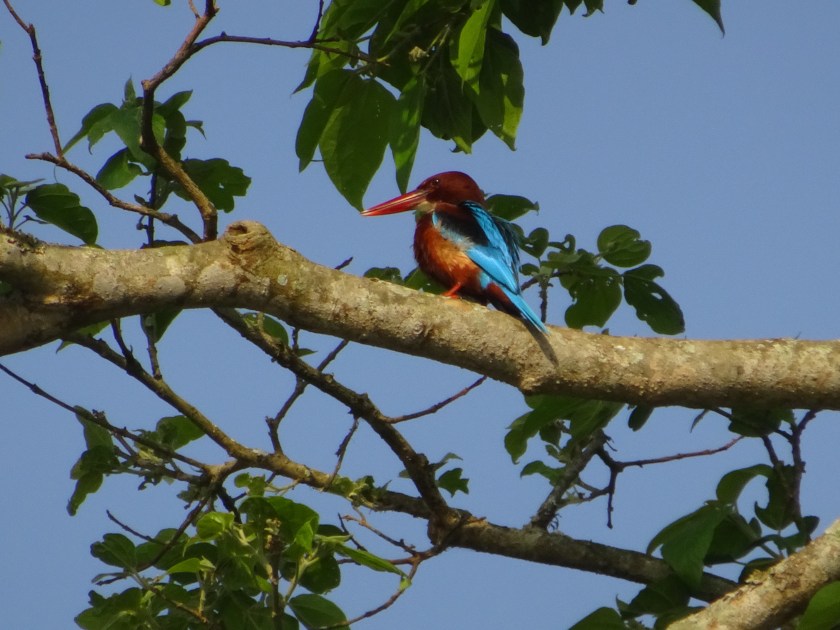
DSC03792

After our pool session, we borrowed the hotel bikes and rode them around the tiny villages that existed outside of Deshadan’s gates.

DSC03830

DSC03812

It was so awesome to see the locals in their everyday life, performing their everyday routines, such as fishing with a net, not a pole…

DSC03814

An adorable shy young kid…

DSC03816

A man taking a photo of Vinny (admirers everywhere he goes)…

DSC03819

Playing a pickup game of Cricket…

DSC03826

Cruising down the backwaters…

DSC03820

A young boy asking me to take a photo of him modeling by the moped…

DSC03821

As the sun set, we decided to make our way back to the hotel because we had no idea where we were and didn’t want to get lost in the dark. It was such a good thing we did because as soon as we entered our room and shut the door, it started down pouring. Raining cats and dogs. Lightning and thunder.  It was so cool to watch from our balcony as this out of nowhere storm threw its tantrum and then with a snap of your fingers, stopped about an hour later.  Just in time for us to walk to dinner and eat yet again.

The next morning we woke up at 5:45am to watch the sunrise.  Yes, the sunrise.  I know we are always bragging about the sunsets so we decided to change it up a bit.  Plus, our hotel faces the East and we were told it was well worth the early wake up call.  When I first walked outside and turned my camera on, the lense fogged up as if I was wearing goggles in a steam room.  It was that humid.  Yuck.  To add the cherry on top, I started to build up some frustration because it was a bit on the overcast side so I was worried this incredible sunrise wasn’t going to be so incredible after all.  Wha wha.  Regardless, it was still stunning.  The sky went from pitch black to pink and purple in a matter of minutes.

DSC03843

DSC03848

Since it was dawn, that automatically meant mosquitos and I wasn’t willing to be their first meal of the day, so I decided to watch the rest of the show from inside our room.  But, around 6:55am, it quickly went from a low budget documentary to a multi-million dollar blockbuster film.  The sky was magical and the sun was so in your face, I refused to let the mosquitos win this fight.  I rushed back downstairs, sat on the hammock and enjoyed the sun actually rising, vibrantly glistening on the water in front of me.  Welcome to a brand new day.

DSC03853

DSC03856

DSC03865

After breakfast, we arranged for a three hour boat ride through the tiny canals along the massive backwaters of Alleppey.  It was so quiet, so calming.  It still fascinates me just how beautiful the south truly is.  When one thinks of India, they narrow mindedly think of dirt roads, pollution, poverty and over population (which is definitely accurate more for the north) but very few people even know about what the South can offer in terms of nature and scenery, myself being one of them before this trip.

DSC03881

DSC03933

DSC03937

DSC03950

DSC03934

About twenty minutes into our cruise, we entered Kumarakom,  which is a cluster of little islands and sits on the Vembanad Lake, the largest freshwater lake in the state of Kerala.  Fresh is definitely a loose term as it did not look too clean from up close.  That didn’t stop the locals though from fishing for their dinner or washing their clothes or playfully swimming.

DSC03943

DSC03938

DSC03944

Kumarakom is a very rural area and most people get around either on bicycles, boats or foot.  If they need to accomplish some errands, they just hop in their canoe and row away.

DSC03916

DSC03924

We did see some pretty neat happenings over the course of our boat ride including a woman washing her cow (look closely at this sequence)…

DSC03940

DSC03941

DSC03942

Colorful houses drying out their laundry…

DSC03904

A man carefully studying me as I carefully study him…

DSC03906

It was so peaceful and relaxing that even Vinny fell asleep on the way back (that’s usually my role)…

DSC03955

For the rest of the day, we laid by the pool, swam, laid by the pool, swam and repeated multiple times.  Like Dory from Finding Nemo said “just keep swimming, just keep swimming”.

Random side note.  When we received all of our vaccines for this trip from Passport Health in Los Angeles, they highly recommended we take malaria pills for a handful of locations on our travel list.  So we had sixty total prescribed at our local Walgreens but by this point, we didn’t have any insurance.  Ouch, that left a hole in our wallets for sure.  But you can’t really put a price on your life.  We were definitely hesitant to take them because a variety of people dramatically mentioned what a horrible reaction they had.  Nausea, vomiting, hallucinations, vivid nightmares, etc.  Well that doesn’t sound fun.  For weeks, we were going back and forth on whether we take the risk and get sick while on the trip with not so pleasant side effects or take the risk and potentially get sick after the trip with malaria itself.  Neither were winning us over.  That was until I read an article about a young girl who planned a six month trip to India but had to cut it four months short because she too got sick from the pills, went off of them and then got malaria.  Okay, time to swallow these pills fast.  Goa was the only place in India that was considered “at risk” and that is our next stop so today is day one and we will need to take a total of fourteen.  Two before we head to Goa, five while in Goa and seven after we leave Goa.  Seems like overload but don’t question the pharmacist.  Here goes nothing.  Wish us luck.

That afternoon at 12pm, contrary to what some suggested, we boarded our Kettuvalom, otherwise known as a houseboat.  This boat is made from local materials like bamboo poles, mats and carpets, coconut fiber, ropes, etc.  It was much bigger than we expected being two bedrooms versus one bedroom yet slightly dirtier than we expected too.  But then again, we are in India, on a boat.

DSC03968

DSC03960

DSC03957

DSC04037

It was extremely hot this day, of course.  And we weren’t allowed any air conditioning until after dinner around 8pm.  Oh geez.  This is going to get nasty.  Between my sweat, my sunscreen and my mosquito repellent, I was pretty irresistible. If you are sexy and you know it clap your hands. It was so stale for about thirty minutes but as soon as we started cruising and the wind slowly picked up, I could breath again.  Over the next five hours, we sat back, took in all the gorgeous scenery to the left of us, to the right of us, in front of us and behind us and enjoyed life without WiFi, distractions or anywhere to be.  And drank coconut water straight out of a coconut…

DSC03962

The grass is greener on the other side here…

DSC03995

DSC04033

Vinny took over the role as Captain for a little…

DSC03981

Then, we ate.  At 2pm, they served us a home cooked lunch.  At 4:30pm, they served us coffee and cookies.  At 8pm, they served us a home cooked dinner.  I can definitely get used to this.  Everything up to this point was magnificent.

IMG_1015.JPG

But what we didn’t realized was that all houseboats had to stop cruising around 6pm and tie up to a wall with tons of other boats for the night.  I was under the impression we slept in the middle of nowhere, on the lake, with no one else around.  That certainly wasn’t the case.  Oh well.  When we were all secured to land, we got off the boat and walked around the village to of course, take in all the sights and smells of the locals.

DSC04030

DSC04011

There was a woman who caught some fish, washed it in the lake, then aggressively scrubbed the scales off on the rocks .  You go girl.  What’s a fish without an i?  Fsssshhhhh.  Definitely a joke that needs to be told in person.

DSC04022

Next we saw a guy climbing a palm tree to grab some coconuts…

DSC04021

Then we saw three guys washing their hair, bathing their bodies and brushing their teeth…

DSC04026

I don’t think the houses have running water so everything they do, they do it in the lake.

When light turned to dark, we returned to the boat and laid on the wooden benches in the main area.  My head was gently resting on Vinny’s stomach, moving up and down with every breath he would take.  We didn’t say much.  We just held hands, on a boat, at night, with no lights on and thought to ourselves quietly, life is good.

As our crew started to bring out dinner, they turned on the lights and within seconds, hundreds of bugs swarmed to the brightness.  Good thing I smelled like a dump truck and had my Deet repellent on.  Just like M.C. Hammer once said “Can’t touch this, oh-oh oh oh oh-oh-oh”.  Once we finished dinner, we were able to turn on the air conditioning in our room which was heavenly. And although we didn’t shower or brush our teeth, we still managed to sleep like a baby.  A really dirty baby that is.
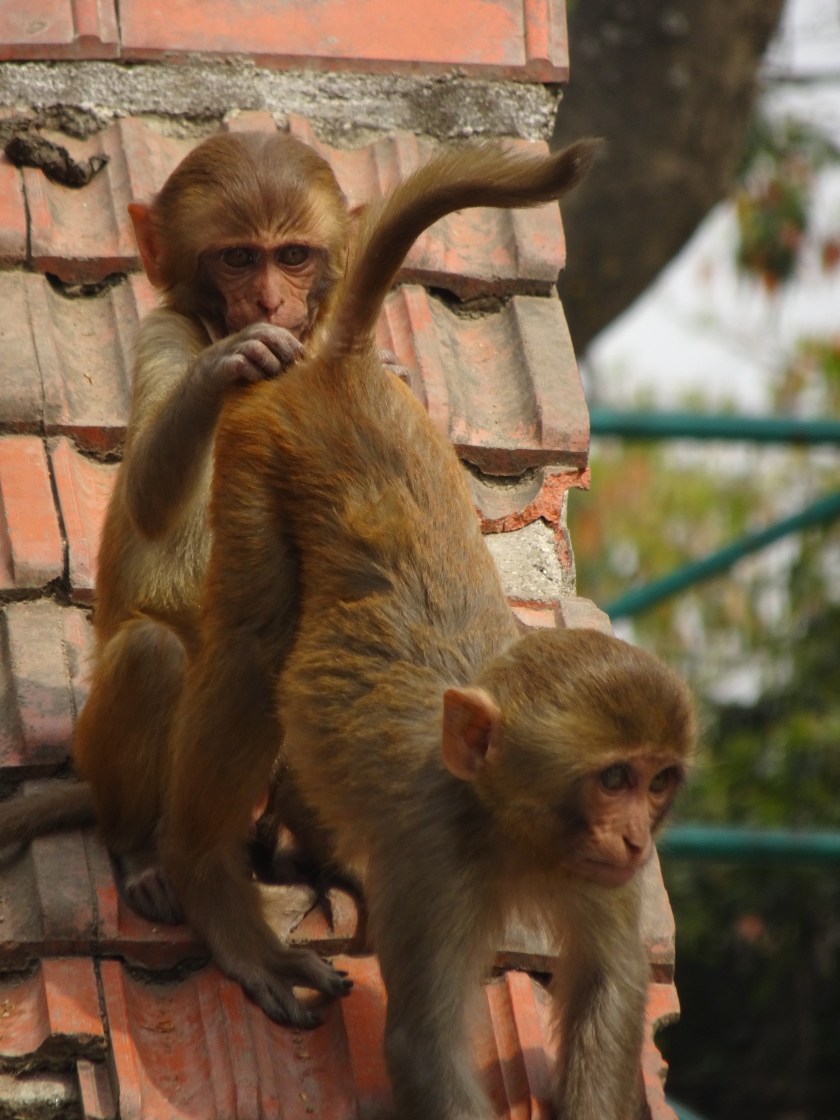
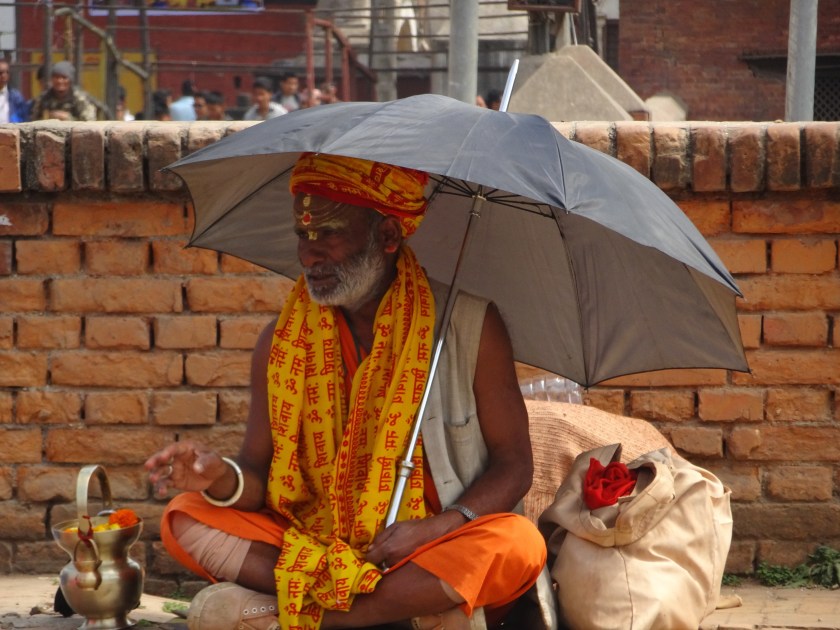
When the sun woke up, we woke up.  They served us breakfast at 8am and we said goodbye to the crew.  Overall, I am happy we did this.  It wasn’t as cool as I had envisioned since we were held hostage to a wall but it was still a worthwhile and memorable experience.

IMG_1036.JPG

DSC04036

Kerala treated us very well over the past twelve nights.  God’s Own Country sure is a beauty.  Thanks for the slower pace, the happy smiles, the splendid scenery, the memorable moments and the adoring people.  Your state is exactly what the doctor prescribed.

Our plan for the rest of the day is drive back to Kochi, which is about two hours, check into our airport hotel, rinse all of this sweat, sunscreen, mosquito repellent off and chill out until we board our flight tomorrow morning to Goa.  I am really excited for some sand, ocean and good vibrations.